Emergency Tree Service in North Florida | Arborman
When a Tree Becomes an Emergency in North Florida
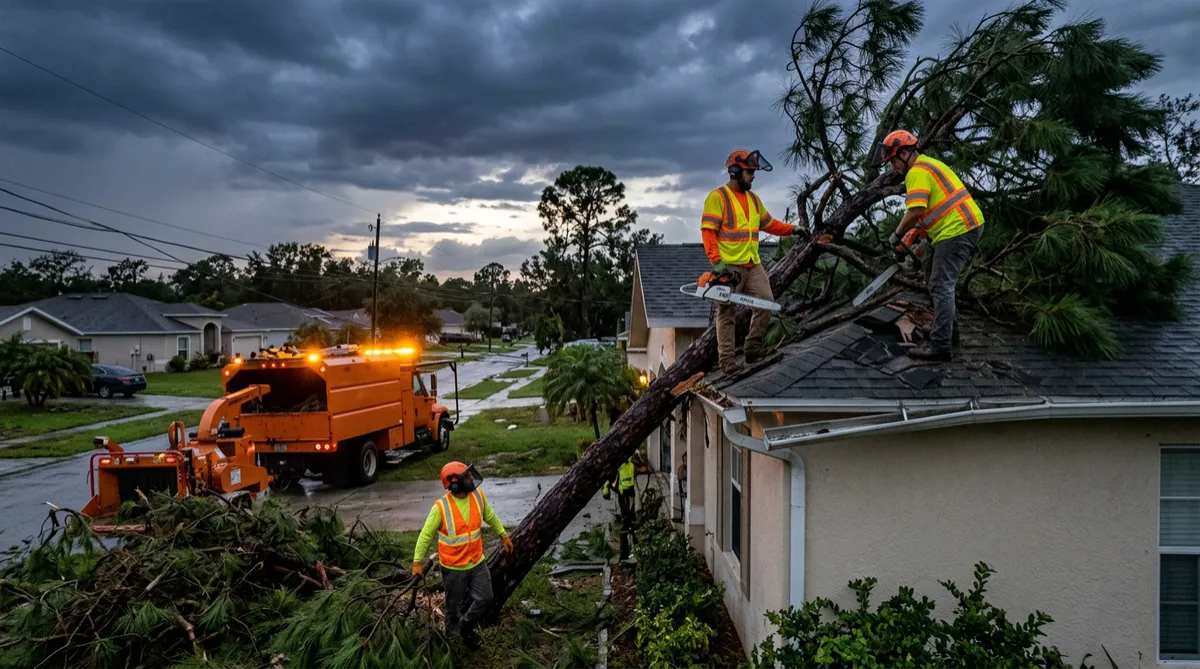
A fallen limb across a driveway, a tree leaning toward a home, or a trunk split by a storm can turn an ordinary day into a dangerous one. In North Florida, sudden downpours, saturated soil, strong winds and tropical weather can expose weaknesses that were not obvious before. The safest response is to keep people away from the hazard, document what can be seen from a safe location, and bring in qualified tree professionals for the work that requires specialized equipment and training.
From historic St. Augustine near Castillo de San Marcos, the Bridge of Lions and the St. Augustine Lighthouse to Green Cove Springs and Interlachen, tree emergencies affect homes, rental properties, businesses and road access throughout the region. Arborman Tree Services serves homeowners and property managers in Volusia County, Flagler County, St. Johns County and Putnam County, including communities around Daytona Beach, Flagler Beach and Palatka. The places that make this area distinctive—from Washington Oaks Gardens State Park to Ravine Gardens State Park and Blue Spring State Park—also remind us how closely North Florida communities live alongside mature trees.

What Counts as a Tree Emergency?
A tree emergency is a condition that creates an immediate or developing threat to people, structures, vehicles, utilities or safe access. A tree or large limb that has already struck a house is an obvious concern, but a tree does not have to fall completely to warrant urgent attention. A newly leaning trunk, fresh soil lifting around roots, a deep crack at a major fork, hanging branches over an occupied area, or a tree resting on a power line can signal serious instability.
Storm damage can be deceptive. A branch may remain caught in the canopy after breaking, while a partially uprooted tree can stay upright until another gust or a shift in saturated ground causes it to move. A split trunk, a suspended limb, or a tree pressing against a roof, fence or neighboring structure should be treated as an active hazard—not as a routine trimming job. If anyone is injured, trapped, or in immediate danger, call 911.
First Priorities: Keep People Clear and Call for Help
After a storm, look for immediate hazards before thinking about cleanup. Stay inside if conditions remain dangerous. Keep children, visitors, tenants and pets away from the tree, the landing area and any debris that could conceal a live wire or unstable limb. Do not walk beneath a hanging branch or enter a room beneath a tree that is leaning on the home. Move people to a safer part of the building or evacuate if the structure appears compromised.
- Downed wires: Treat every wire near a tree as energized. Do not touch the wire, the tree, a fence or standing water nearby. Move away without approaching the scene and call 911 for an immediate threat; contact the electric utility to report the downed line.
- Unstable structures: Leave a room or area under a leaning tree, cracked trunk or sagging roof. Do not try to brace, pull or push the tree yourself.
- Tree under tension: Do not use a chainsaw on a bent, suspended or partly fallen tree. Wood under load can shift, spring or roll suddenly, trapping or striking anyone nearby.
- Blocked roads: Do not drive over or around a tree if wires, unstable limbs or damaged pavement may be hidden. Keep access clear for emergency responders and follow local authorities’ instructions.
Do not climb onto a roof to inspect damage while a tree remains unstable or weather is still active. A safe distance is more useful than a close-up view. Share what you can see from a protected location when contacting responders, and tell them about wires, injuries, a blocked exit or any change in the tree’s position.
Document Damage and Protect the Property Safely
Once people are safe and the immediate danger has been reported, document the damage if you can do so without entering the hazard area. Take wide photographs that show where the tree sits in relation to the home or other property, then capture closer views of visible roof, siding, fence, vehicle or landscape damage from a stable, safe location. Note the date and time, the apparent direction of impact, and any relevant storm or utility report information. Save original photos and copies of messages, estimates and receipts.
Contact your insurer or property manager promptly and ask what documentation and mitigation steps are needed under the applicable policy or agreement. Coverage, deductibles, exclusions and approval requirements vary, so do not assume that every tree-removal or repair expense will be covered. Keep records of who you spoke with and when. If a tree has damaged a neighbor’s property or a shared access route, communicate calmly and preserve the facts rather than moving debris before it is documented, unless an immediate safety need requires action.
Temporary protection should be limited to steps that are safe and permitted by the situation. If the weather has passed and there is no active electrical, structural or fall hazard, a ground-level tarp over exposed contents or a small, reachable opening may help reduce further water damage. Do not climb a damaged roof, work below a suspended limb, cover a wire, or pull material away from a tree pressing on a structure. If protection would require a ladder, roof access, cutting or moving heavy debris, wait for trained help.
Keep damaged branches and equipment out of travel paths only when they can be moved without entering the danger zone. Never place yourself between a tree and a structure it is bearing against.
What a Professional Emergency Tree Response Involves
A responsible emergency response begins with a site assessment, not an immediate cut. The crew evaluates the tree’s condition, the direction of loading, broken or suspended limbs, nearby buildings, access, overhead utilities, and the safest work zone. They may ask occupants to remain indoors or leave an area while a plan is developed. If a utility line is involved, the utility must address electrical hazards before tree work can safely proceed near the line.
Tree removal in a confined space may require controlled rigging: ropes, pulleys and anchor points help lower sections in a planned direction. Larger or heavily loaded trees may need specialized equipment, potentially including a crane when site access and conditions allow. The right method depends on the tree, the structure, ground conditions, overhead obstacles and weather—not on a one-size-fits-all promise.
After the hazardous material is removed, crews can clear debris from the work area and identify visible damage that may need separate roof, structural or landscape repair. Tree work is not the same as a home repair or insurance determination, so coordinate those next steps with the appropriate contractor and your insurer. Ask what is included in the work plan, what debris will be removed, and whether any remaining damaged portions will need follow-up attention.

Prepare for Hurricane Season and Choose Carefully
The Atlantic hurricane season runs from June 1 through November 30. In North Florida, preparation is most effective before watches and warnings arrive. Walk the property from the ground and note dead or broken branches, visible trunk cracks, crowded limbs near roofs, and trees that have recently shifted or exposed roots. A qualified tree professional can evaluate concerns and recommend appropriate pruning or other care. Avoid severe or unnecessary cutting: indiscriminate topping can damage a tree and may create future hazards rather than solve them.
Make a simple storm plan for the property. Know which rooms are beneath large trees, identify a safer interior area, keep emergency contacts accessible, and plan how tenants or family members will receive instructions. Before a storm, secure outdoor items that could become airborne and keep vehicles out from under suspect limbs when possible. Follow official evacuation and weather guidance; do not schedule tree work or attempt cleanup during dangerous winds or lightning.
Laurel oak, pine and sweetgum are among the trees homeowners may see affected by storms in this region. Species alone does not determine whether a tree is hazardous: root condition, soil saturation, decay, previous damage, canopy shape and exposure all matter. A sound tree can lose a limb in extreme weather, while a tree with hidden defects may fail in less dramatic conditions. Have specific concerns evaluated rather than assuming that every tree of a particular species must be removed.
Storms also bring door-to-door solicitations and contractors who travel from place to place seeking quick work. Be wary of pressure to pay in full up front, sign before you understand the scope, accept a vague verbal price, or let someone negotiate an insurance claim on your behalf. Ask for a written description of the work, the business’s identifying information, references if available, and proof of current liability insurance and workers’ compensation coverage. Verify claimed credentials directly with the organization that issued them, and make sure the estimate names the same business you intend to hire.
For property managers, record the authorization process and keep tenants away from active work zones. For homeowners, do not let urgency erase basic checks: a legitimate contractor should be willing to explain the hazard, safety controls, equipment plan and debris removal before work begins.
Frequently Asked Questions
Should I approach a tree that has fallen on my roof?
No. A tree on a roof may shift, damage the structure further or conceal electrical hazards. Keep people away from the affected rooms and the area outside, then contact emergency services if anyone is in danger and arrange a professional assessment when it is safe.
What should I do if a tree or branch is touching a power line?
Assume the line is energized and do not touch or approach it, even if it appears inactive. Move away, keep others clear, call 911 for an immediate threat, and report the line to the electric utility.
Can I cut a storm-damaged tree myself?
Avoid cutting trees that are leaning, suspended, split, under tension or close to structures and utilities. The forces in damaged wood can change suddenly, and chainsaw work in those conditions is especially dangerous. Leave that work to trained professionals with appropriate equipment.
What information should I give my insurance company?
Share the date and time of the event, the affected property, and photographs taken safely from a distance. Keep copies of communications, estimates and receipts, and ask the insurer what documentation and temporary mitigation it requires. Policy terms differ, so confirm coverage directly with your insurer.
How can I check whether an emergency tree contractor is properly insured?
Ask for current proof of liability insurance and workers’ compensation coverage, and verify the information with the insurer or agent named on the documents. Request a written scope and confirm the business identity and any claimed credentials with their issuing organizations. Do not rely only on a door-to-door pitch or a promise that paperwork can come later.
If a damaged tree threatens people, a home, a business or safe access, keep clear and contact Arborman Tree Services as soon as it is safe to do so. Share the location, what the tree has struck or is leaning toward, and whether wires or blocked access are involved; wait for professional guidance before approaching or attempting cleanup.
Website built by astreetgarage.com
