Emergency Tree Service in Northeast Florida | Arborman
When a storm sends a limb through a roof or leaves a tree leaning over a driveway, it can be hard to know what to do first. In northeast Florida, wind, saturated soil, lightning and falling debris can turn a familiar yard into a dangerous place quickly. A calm, safety-first response matters more than trying to solve the problem yourself. If a tree has caused damage or may threaten people or property, contact Arborman Tree Services for guidance and professional assessment.

What Counts as a Tree Emergency?
A tree emergency is a condition that creates an immediate or developing risk to people, buildings, vehicles, access routes or essential services. A wind-split trunk, a large limb suspended over a home, a newly uprooted tree, branches resting on a roof, or a tree leaning toward a structure may all need prompt professional attention. A tree blocking a road or the only safe way out of a property can also require urgent coordination.
Not every fallen branch is an emergency. A small limb on an empty lawn, away from wires and structures, may be handled through scheduled service. The size, position and stability of the tree matter, as do nearby people, traffic, buildings and utilities. If you are unsure, keep clear and ask a qualified tree-care professional to assess the situation rather than testing the tree yourself.
Conditions vary across Putnam County, from Palatka neighborhoods near the St. Johns River and Ravine Gardens State Park to homes around Lake Interlachen, Crescent Lake and Welaka. Clay and St. Johns River communities such as Green Cove Springs face their own combinations of wind, wet ground and mature trees. Storm damage can also affect Volusia, Flagler and St. Johns counties, so respond to the hazard in front of you rather than making assumptions about a town.
Immediate Safety Steps
Stay well clear of downed power lines
Assume every downed wire is energized. Do not touch it, drive over it, move branches from it or approach a tree that may contact it. Keep people and pets far away; warn others from a safe location, and call 911 if there is immediate danger to life or public safety. Report the hazard to the electric utility as well. Do not enter standing water near a wire or approach a damaged pole.
Keep people and pets away from the tree
Move everyone to a safe location, preferably indoors and away from windows if the storm is ongoing. Keep clear of the fall zone around a leaning tree, cracked trunk or hanging limb. Wind gusts, rain or additional limb failure can change a tree’s balance without warning. Do not park beneath it or let anyone retrieve belongings from a vehicle in the danger area.
Do not climb, cut or pull on damaged trees
Never climb a storm-damaged tree or use a ladder to reach a hanging limb. Do not cut a leaning, split or tensioned tree yourself, or use a vehicle, rope or winch to pull a limb free. Wood under pressure can spring, roll or fall unpredictably; even a small-looking branch can cause severe injury. Leave cutting, rigging and removal to trained, properly equipped professionals.
Document damage only from a safe place
When the area is safe to approach, take photographs or video from a distance and record the date and visible damage to the home or property. Avoid walking beneath unstable limbs or entering a damaged structure. Keep receipts for reasonable emergency protection or repairs, and ask your insurer about documentation and the claim process. Never delay calling emergency services or the utility to take pictures.
What to Expect When an Emergency Crew Arrives
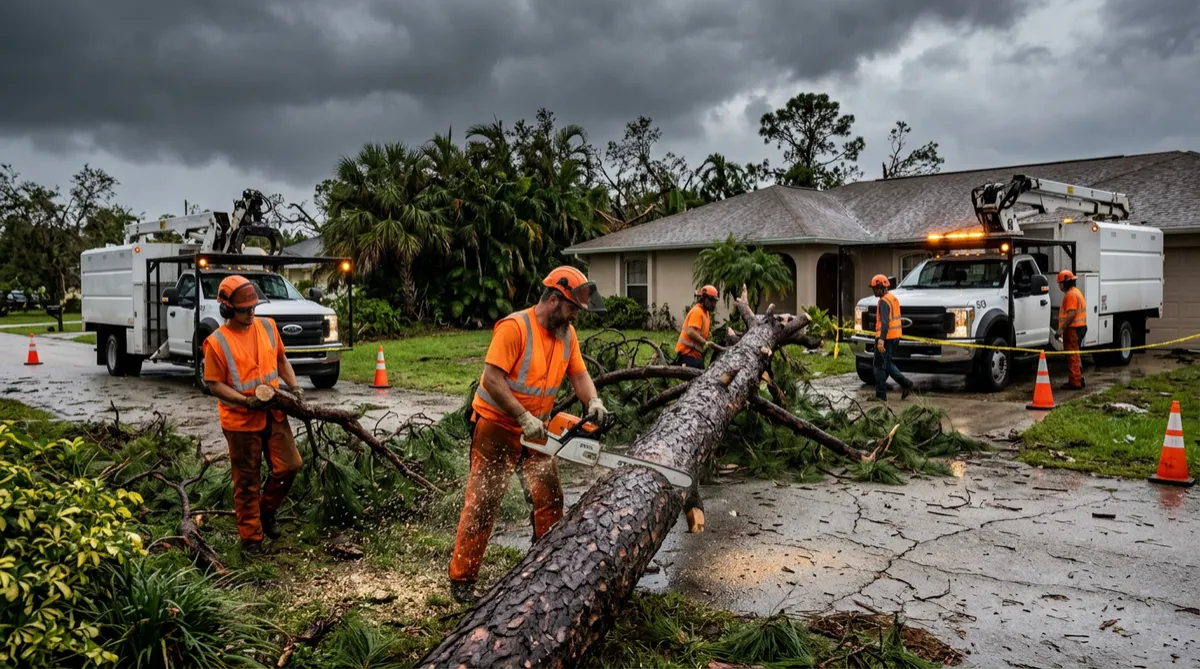
A responsible crew should assess the tree, target area and nearby hazards. They may ask when damage occurred, whether the tree touches wires, and whether anyone is in danger. The crew should establish a safe work area and explain its approach, including what can be addressed immediately and what may require another provider. If a utility hazard is present, the utility must handle its equipment and determine when work nearby is safe.
Depending on access and the tree’s condition, professionals may use ropes and rigging to lower pieces in controlled sections. A crane may be appropriate when a large or unstable tree cannot be safely dismantled from the ground, or lifting sections away from a structure reduces risk. Equipment needs vary; a crane is not needed for every emergency. The crew should consider wires, limited access, soft ground, buildings and safe equipment placement.

If a roof or structure has been exposed, ask how the crew will coordinate with a roofer or restoration professional. Tree crews may clear tree material and coordinate temporary roof protection or tarping, depending on the damage and each provider’s scope. A tarp is temporary weather protection, not a structural repair. Keep away from damaged roofing and ceilings, and have the appropriate building professional assess them.
Once hazardous material is secured or removed, debris clearing may include hauling branches, trunk sections and smaller material from the work area. Confirm what cleanup is included before work proceeds. If a tree affects a boundary, road, neighbor’s property or utility, discuss coordination rather than assuming responsibility is settled by the trunk’s location.
Choose Help Carefully and Avoid Storm-Chaser Scams
After a major storm, unfamiliar crews may move quickly through neighborhoods offering immediate work. Take time to verify who you are hiring. Ask for the company’s full business name, written scope and price, and proof of current liability insurance and workers’ compensation coverage where applicable. Contact the insurer directly to confirm the policy is active and appropriate for the work. Ask who will perform the work and who is responsible for subcontractors.
Be cautious of high-pressure demands to sign immediately, vague paperwork, requests for the entire job price in cash up front, or promises to waive your insurance deductible. Do not sign an assignment of insurance benefits or other authorization you do not understand. Compare the proposed work with visible damage, keep a copy of any agreement, and consult your insurer before authorizing work that may be part of a claim. A professional should explain the plan without promising a claim outcome.
Hurricane-Season Preparedness Checklist
Preparation before a forecast can make decisions easier when conditions deteriorate. Use this checklist well ahead of storm warnings:
- Arrange routine assessment for mature trees, visible defects or branches over roofs, driveways and frequently used areas.
- Schedule pruning of dead, damaged or poorly attached limbs through a qualified tree-care company; avoid excessive or improper cutting.
- Know where overhead and underground utilities are located, and keep planting and maintenance clear of utility equipment.
- Move vehicles, patio furniture, grills and play equipment away from trees when severe weather is expected.
- Keep a flashlight, charged phone, first-aid supplies and essential medications accessible; plan where household members and pets will shelter.
- Save your insurer’s claim contact information and photograph the property before a storm, without climbing or taking unnecessary risks.
- Know how to report electrical hazards and when to call 911; do not wait for a tree contractor to address a life-threatening emergency.
Preparation is useful in Palatka, near Crescent Lake, in Welaka or around the spring park in Green Cove Springs. Farther south, trees near Ponce de Leon Inlet Lighthouse in Volusia County may face different exposure than those near the Flagler Beach pier; properties near Castillo de San Marcos are in St. Johns County. These landmarks help orient the region, but they do not determine whether an individual tree is safe.
Post-Storm Hazard Signs to Watch For
Once the storm has passed and it is safe to look from a distance, watch for a newly tilted trunk, soil lifted or cracked around the roots, a fresh split, large branches caught high in the canopy, or limbs resting on a roof or utility line. Also notice sudden changes such as a tree leaning toward a building, a broken top or a branch hanging at an unusual angle. A tree may be hazardous even if it has not fallen.
Do not stand beneath the canopy to inspect it, touch a split or pull a suspended branch. Keep others away and contact a qualified professional to evaluate the risk. If wires are involved, stay back and call the utility; call 911 when there is immediate danger. After a severe storm, prioritize clear threats to people, occupied buildings and access while waiting for professional guidance.
When a Tree Can Wait for Scheduled Service
A scheduled appointment may be appropriate when there is no immediate danger, no contact with wires, no unstable or suspended material over a target, and the issue is routine pruning, a small branch in a safe open area, or a concern that is not changing rapidly. Even then, do not assume a tree is healthy because it has leaves or survived previous storms. Cracks, dead branches, root disturbance and poor attachments deserve a professional look.
If conditions worsen, a limb shifts, the trunk begins to lean, or the tree threatens a structure or people, keep clear and treat the situation as more urgent. Describe what you can see from a safe place when you contact Arborman Tree Services. For life-threatening danger or downed lines, call 911 or the utility first, not a tree service.
Frequently Asked Questions
Should I call a tree service or the power company first?
If a tree or branch is on or near a power line, stay well away and contact the electric utility. Call 911 if there is immediate danger to life or public safety. A tree crew should not begin work near energized equipment until the utility has addressed the hazard and confirmed safe conditions.
Can I remove a branch that has fallen on my roof?
Do not climb onto the roof or pull a branch away if it is large, under tension or connected to a damaged tree. Keep people out of the affected area and contact a qualified tree professional to assess removal. Have a roofer or restoration professional evaluate roof damage and advise on temporary protection.
Will emergency tree work be covered by my homeowners insurance?
Coverage depends on your policy, the cause of damage and the circumstances, so no contractor can guarantee an insurer’s decision. Photograph damage from a safe location, keep relevant receipts and contact your insurer for instructions. Ask before authorizing non-emergency work if you are unsure how it may affect a claim.
What information should I provide when I request help?
Share the general location, what happened, what the tree or limb is touching, whether anyone is at risk, and whether wires or blocked access are involved. Do not enter a hazardous area to gather details. If the situation is life-threatening or involves a downed line, contact emergency services or the utility before requesting tree work.
Can storm-damaged trees be assessed after the immediate danger is handled?
Yes. Once urgent hazards are addressed, a professional can inspect remaining trees and discuss whether pruning, monitoring or removal may be appropriate. An assessment can help identify hanging limbs, new cracks or root movement that were not obvious from the ground, but cannot guarantee a tree will never fail.
Website built by astreetgarage.com
