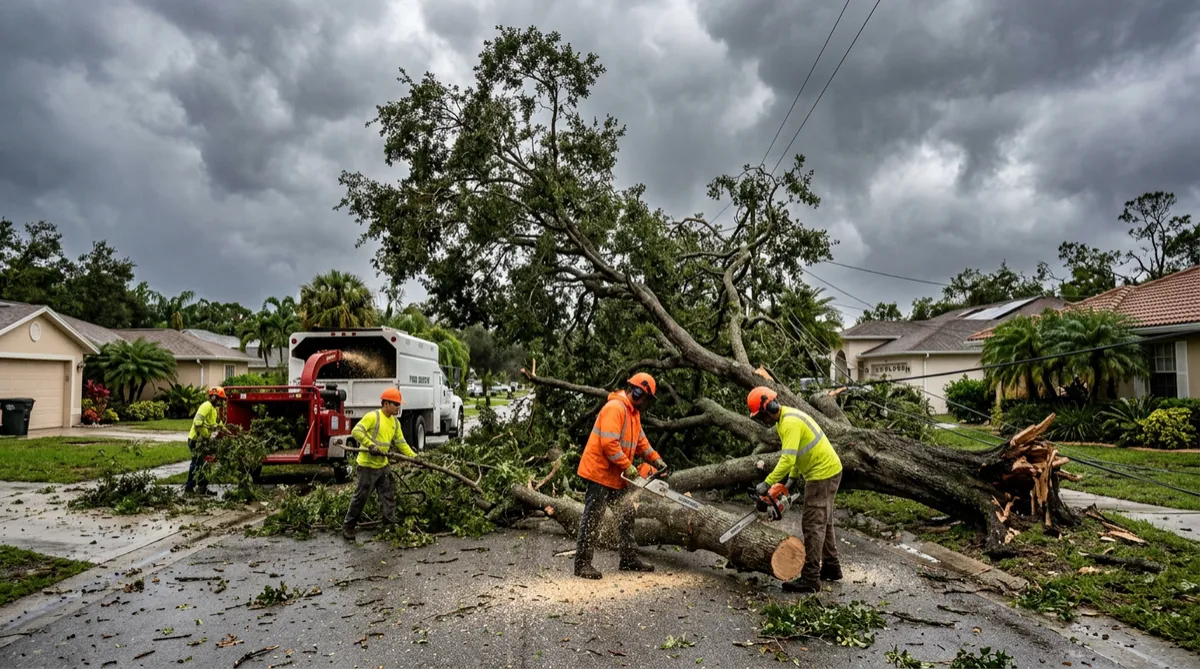
Emergency Tree Service in Volusia & Flagler County: Storm Safety
When a storm leaves a tree leaning over a home, blocking a neighborhood street, or hanging in broken limbs, it is natural to want the danger gone immediately. In Volusia and Flagler counties, strong coastal winds, saturated ground, and fast-moving thunderstorms can turn a familiar tree into a serious hazard. The safest first move is not to pick up a saw: it is to keep people clear, identify any immediate danger, and bring in qualified help to assess the scene.

What Counts as a Tree Emergency?
A tree emergency is any situation in which a tree or limb presents an immediate risk to people, a building, a vehicle, or safe access. A trunk across a road, a large limb resting on a roof, or a tree that has split and is suspended in another tree all deserve prompt attention. A tree that has fallen onto a car can also be dangerous, even if nobody appears to be inside, because branches may be under tension or the vehicle may be unstable.
Not every storm-damaged tree needs the same response. A small branch on the lawn may be manageable later, while a partially uprooted tree leaning toward a home requires a careful assessment. Watch for fresh soil lifting around the roots, a newly exposed root plate, deep trunk cracks, hanging branches, or a sudden change in the tree’s angle. Do not stand beneath a damaged canopy to inspect it. From a safe place, describe what you can see when you call for help.
Local conditions vary from inland neighborhoods around DeLand to coastal communities near Daytona Beach, Ormond Beach, Palm Coast, Flagler Beach, and Bunnell. A tree over a quiet residential driveway is still an emergency if it threatens people or a structure; proximity to a major road or public place only increases the importance of keeping the area clear.
Immediate Safety Steps After a Tree Falls
Start by moving everyone away from the tree and the area where limbs could fall. Keep children and pets indoors or at a substantial distance, and do not let anyone walk beneath a suspended branch or climb onto a damaged roof. A fallen tree can shift without warning, and storm debris can conceal sharp material, unstable ground, or energized electrical equipment.
- Stay well clear of downed power lines. Treat every wire as energized, even if it looks harmless or the power is out. Keep people, vehicles, tools, and branches away from the wire and anything it touches.
- Never cut or move a tree tangled in power lines. Do not use a ladder, chainsaw, pole saw, or vehicle to approach it. Call the electric utility to report the hazard; call emergency services if there is an immediate threat to life, fire, or public safety.
- Keep the area around the tree empty. Stay out of the fall zone, including the likely path of a leaning trunk and the reach of broken limbs. Do not try to pull a branch off a house or car.
- Call the appropriate utility when equipment is involved. Report downed electrical lines to the electric utility. If a tree has damaged another utility line, such as a communications or service connection, contact the relevant provider and keep clear until it is assessed.
- Document damage only when it is safe. From a protected location, take photos of the tree, affected property, and surrounding area. Avoid walking under damaged limbs or entering a structure that may be unsafe. Keep notes about when the damage happened and whom you contacted.
If a tree blocks a public roadway, do not try to direct traffic from a hazardous spot. Contact local emergency or public works authorities as appropriate, and remain out of the roadway. On coastal routes such as A1A, visibility, traffic, and wind exposure can make roadside work especially risky. If a tree has struck a house, avoid damaged rooms and watch for sagging ceilings, broken glass, or new movement. If anyone may be trapped or injured, contact emergency services first.
Florida Storm Season: Prepare Before the Wind Rises
Atlantic hurricane season runs from June 1 through November 30. With today’s date in early November, the season is at its tail end, but late-season storms and ordinary strong thunderstorms can still create hazardous tree damage. Preparation is worthwhile throughout the season, not only when a named storm is approaching. Forecasts and local conditions can change, so follow official weather and emergency-management information for your area.
Before a storm, look over the trees on your property from the ground and note visible concerns: dead or broken branches, cavities, cracks, root disturbance, branches touching a roof, or limbs close to service lines. A ground-level look cannot establish that a tree is safe, but it can help you decide what to ask an arborist. Arrange an assessment in advance when a tree has concerning signs, rather than waiting until wind and rain make access difficult.
Keep gutters and nearby drains clear when safe, secure loose outdoor items, and decide how people will stay away from vulnerable trees during a storm. Never attempt last-minute cutting in high wind or lightning. Along the Intracoastal Waterway and other coastal neighborhoods, saturated soil and gusts can compound tree stress; preparation reduces exposure but cannot eliminate risk.
Local trees frame places residents know, from Bulow Creek State Park’s Fairchild Oak and Washington Oaks Gardens State Park to the Daytona International Speedway, Daytona Beach Boardwalk and pier, Ponce de Leon Inlet Lighthouse, and Flagler Beach Pier. Storm work near public destinations still starts with protecting people, keeping clear of hazards, and following safety directions.
How Professional Crews Assess and Stabilize Damage
A qualified crew evaluates the trunk, canopy, roots, likely limb movement, nearby structures, utilities, and access before choosing a method. If power lines are involved, work must wait until the utility has made the area safe. The work zone must remain clear, and the plan should account for where each section could shift as weight is removed.
Depending on the tree and site, professionals may remove sections from the ground, use rigging to control limb movement, or use a bucket truck or crane where access and conditions permit. Temporary stabilization may include covering an exposed area when appropriate, followed by controlled sectioning and cleanup. Tarping does not repair structural damage; never climb onto a compromised roof or handle suspended or loaded limbs yourself.

Whether a job is near Blue Spring State Park or Hontoon Island, in a tight coastal lot, or along the Flagler coast, ask what work is included, what must happen before cutting starts, and whether another provider is needed for additional hazards.
Working With an Insurance Adjuster
Once everyone is safe, contact your insurer and ask what documentation or approvals are needed. Policies differ; coverage depends on policy language, the cause, and what was affected. A tree service can describe damage and work performed, but the insurer determines coverage. Do not assume every removal, cleanup, or preventive service is covered.
When safe, photograph damage before debris is removed and keep estimates, receipts, the written scope, and communications. If urgent work is needed to reduce danger or prevent further damage, tell the insurer and ask how to document it. Coordinate inspection access when practical, without delaying necessary life-safety steps.
Choose a Reputable Crew, Not a Storm-Chaser
After severe weather, door-to-door sellers may pressure residents to sign quickly. Verify the business, ask for a written scope and proof of applicable credentials and insurance, and read the terms before committing. Ask for references when practical and confirm the signer has authority.
Be wary of absolute promises, unclear demands to sign over insurance benefits, or pressure for large upfront payments before you verify the scope. A reputable professional should explain proposed work and exclusions and answer questions. Pause if you feel pressured, and never let anyone persuade you to approach wires, climb onto a damaged roof, or approve unsafe work.
Follow Up on Tree Health After the Storm
Once immediate hazards are addressed, a damaged tree may still need monitoring or a separate assessment. A remaining trunk can have cracks or hidden structural damage; a tree that lost large limbs may be unbalanced; and disturbed roots can affect stability even when the canopy still looks green. Do not assume that a tree is safe because it survived the first storm or because leaves remain on the branches.
Ask a qualified arborist to assess a tree when you notice new leaning, soil lifting, fresh cracks, hanging or broken limbs, or significant canopy loss. Keep people clear of the area until you receive guidance. Any pruning should be based on the tree’s condition and performed with suitable methods; excessive or poorly placed cuts can create further problems. A written assessment can help you understand whether monitoring, pruning, or removal is recommended, while the appropriate decision depends on the specific tree and site.
Preventive Pruning and Risk Assessment
Preventive work is best planned before a forecast turns urgent. Periodic assessment can identify deadwood, crossing or weakly attached branches, structural defects, and conflicts with buildings or access routes. Pruning may reduce certain hazards when done appropriately, but no pruning plan can make a tree storm-proof. Avoid topping trees or making major cuts yourself; improper work can weaken a tree and create new safety concerns.
For homeowners and property managers in Volusia and Flagler counties, a planned inspection can be especially useful before the busiest part of storm season. The same is true in nearby Putnam and St. Johns counties, where weather, tree species, and site conditions vary from property to property. A professional can explain the observed risks, recommend priorities, and distinguish routine care from urgent work. Early planning gives you more time to ask questions and make informed decisions.
Frequently Asked Questions
Should I move a fallen tree away from a power line?
No. Stay well away and treat the line as energized, including any tree or object touching it. Call the electric utility to report the hazard, and contact emergency services if someone is in immediate danger.
What should I do if a tree is on my roof or car?
Keep people away from the tree and the affected structure or vehicle, and do not climb on the roof or pull branches off. If anyone is injured or trapped, contact emergency services. Photograph the damage only from a safe place and contact your insurer and a qualified tree professional.
Does homeowners insurance pay for tree removal?
Coverage depends on the policy, the cause of the damage, and what the tree affected. Contact your insurer for guidance before assuming that removal or cleanup is covered, and keep safe photos, estimates, and receipts.
Can I cut up a storm-damaged tree myself?
Do not cut a tree that is under tension, suspended, leaning, or tangled with utility lines. Even smaller-looking limbs can spring or roll when cut. Keep clear and ask a qualified professional to assess the situation.
When should I schedule a tree risk assessment?
Arrange one when you see cracks, a new lean, root disturbance, dead branches, or damage after a storm, and consider preventive assessment before storm season. A ground-level visual check is not a substitute for an on-site professional evaluation.
Get Help With an Urgent Tree Situation
If a damaged tree threatens people, a home, a vehicle, or safe access, keep everyone at a distance and make the appropriate safety calls first. For help discussing an urgent tree situation in Volusia or Flagler County, reach out to Arborman Tree Services to discuss urgent tree situations.
Website built by astreetgarage.com

