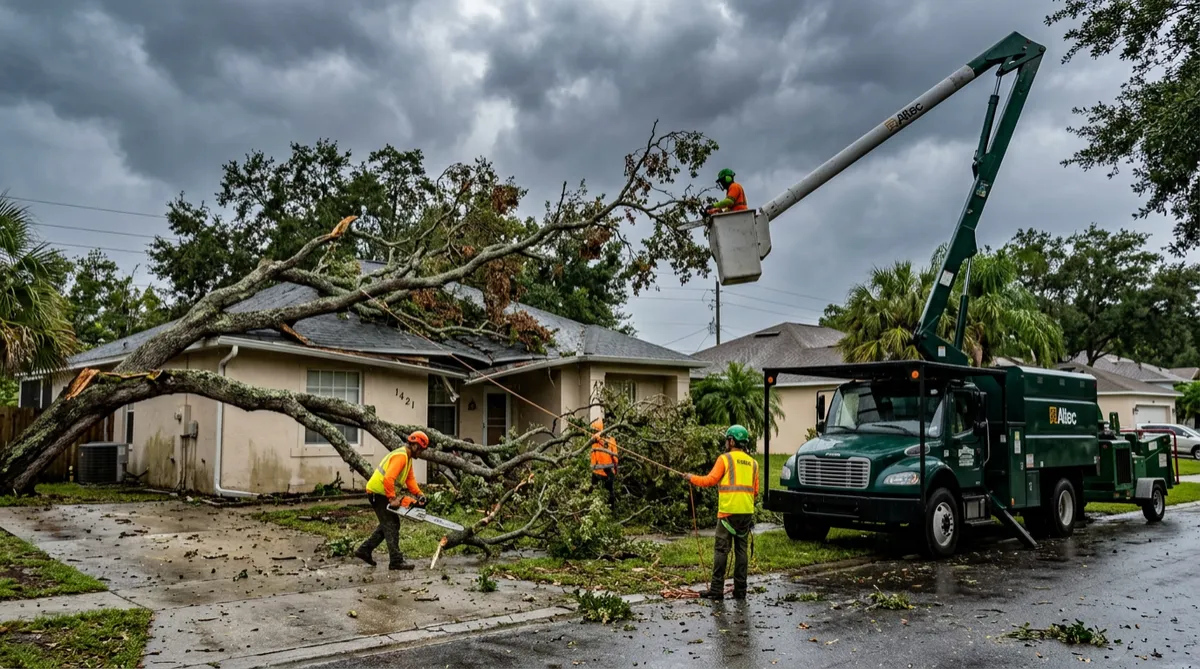
Emergency Tree Services in Northeast Florida
When a tree falls across a driveway, a limb punches through a roof, or a cracked trunk begins leaning toward a home, it can be hard to know what to do first. In Putnam County and Green Cove Springs, fast-changing weather, saturated ground, and strong gusts can turn a familiar tree into an immediate concern. Take a breath, keep people away from danger, and let qualified professionals assess unstable trees. Arborman Tree Services provides emergency tree service guidance and response for Northeast Florida property owners, with safety, clear communication, and careful cleanup at the center of the work.
What Counts as a Tree Emergency?
A tree emergency is a situation in which a tree or limb presents an immediate or worsening risk to people, buildings, vehicles, access, or essential services. Examples include a tree resting on a home, a large branch hanging over an occupied area, a trunk that has split or shifted, or a fallen tree blocking the only safe route out of a property. A tree tangled in or close to electrical wires also calls for urgent attention—but it is not a do-it-yourself cutting job.
Not every fallen tree requires the same response. A small branch on an empty lawn may be manageable as routine cleanup; a large oak resting on a roof needs a coordinated assessment. Urgency depends on the tree’s position, stability, surrounding hazards, weather, and whether anyone is in danger. If you are unsure, stay back and describe what you can safely see when requesting help.
Immediate Safety Steps After Tree Damage
Stay well clear of power lines
Assume any downed wire is energized. Keep people, pets, vehicles, and tools far away from the line and anything touching it, including branches, fences, standing water, and the ground nearby. Do not move a limb, approach a vehicle caught in wires, or attempt to clear a path. Contact the electric utility or emergency services as appropriate, and wait for authorized crews to declare the area safe. A tree professional should not work in an active electrical hazard zone.
Move people out of danger
If a tree is pressing on a structure, shifting, or threatening an occupied space, get everyone out by a safe route and keep clear of the damaged area. Do not go back inside to retrieve belongings if the structure or tree may move. If anyone is injured, trapped, or facing an immediate threat, call emergency services. Choose a gathering place well away from the tree and overhead hazards, and account for everyone in your household.
Document only from a safe place
Once people are safe, take photos or video from a distance if conditions permit. Capture the overall scene, the tree’s position, visible damage to the building or other property, and any items affected. Note when the damage occurred and preserve relevant receipts or communications. Do not climb onto a roof, enter an unstable room, walk beneath hanging limbs, or move debris to improve a picture. Safety comes before documentation.

Storm Season Along the St. Johns River
Hurricane and tropical storm season brings the possibility of damaging winds, heavy rain, and saturated soils across Northeast Florida. Along the St. Johns River region, prolonged rainfall can soften the ground around roots, while gusts load broad canopies and exposed limbs. Trees that seemed stable during dry weather may shift as soil conditions change. Storm impacts can extend well beyond the immediate coastline, reaching communities in Putnam County, Green Cove Springs, St. Johns County, and Volusia County.
Local conditions matter. Properties near Crescent Lake or Lake George may face different exposure and access conditions than neighborhoods closer to town. In Palatka, landmarks such as Ravine Gardens State Park and the Palatka Memorial Bridge area help orient residents to a landscape shaped by waterways, mature trees, and variable terrain. In Green Cove Springs, Spring Park and the riverfront are familiar reference points. These places are not predictions of damage; they are reminders that each property has its own trees, soil, drainage, and access routes.
How a Professional Emergency Response Works
A careful response starts with an assessment, not an immediate cut. The crew evaluates the tree, the building or property involved, overhead utilities, access, weather, and the possibility that limbs or the trunk may shift under load. The objective is to identify hazards and determine what can safely be stabilized or removed. If a utility issue is present, work must wait until the responsible utility personnel address it.
Triage, protection, and coordination
In an emergency, triage means prioritizing the most serious hazards first: threats to people, occupied structures, critical access, or further property damage. The crew explains what needs attention now and what can wait for a later visit. If a roof or opening needs temporary protection, the tree team may coordinate with the property owner or an appropriate roofing or restoration professional about tarping. Tree crews remove or stabilize tree hazards; temporary weatherproofing of a building may involve another qualified trade.
Controlled rigging and careful cleanup
Large storm-damaged trees are often unstable and under tension. Professionals may use ropes, rigging, lifts, or other specialized equipment to control how sections are supported and lowered. The method depends on the tree, nearby structures, site access, and safety conditions; it is not a one-size-fits-all process. Once the immediate hazard is addressed, the crew can discuss debris handling and cleanup. Keep the work zone clear, follow directions, and avoid moving equipment or debris until the crew says the area is safe.

Insurance Claim Documentation Tips
Policies and claim requirements differ, so contact your insurer or claims representative for instructions specific to your situation. This is general information, not legal or insurance advice. Keep a simple record of the date and approximate time you noticed the damage, the affected areas, and the steps taken to protect people and property. Photograph the scene before cleanup when it is safe, and save estimates, invoices, receipts, and relevant messages.
Warning Signs a Tree May Fail
Some hazards develop before a storm. Watch for a new or widening crack in a trunk or major limb, a tree that suddenly leans, fresh mounds or cracks in the soil near the base, exposed or broken roots, and limbs hanging unusually low after a split. Dead branches in the canopy, large cavities, decay, or fungal growth near the trunk can also be reasons to seek an evaluation. One sign by itself does not always establish that a tree will fail, and a visual check from the ground cannot replace a qualified assessment.
After heavy rain or high winds, look from a safe distance for changes: a fresh tilt, lifted soil, a hanging limb, or contact with a structure or utility line. Do not test a tree by pushing it, pulling on a limb, or cutting into a damaged area. If the tree is close to people, a home, or a route that must remain open, create distance and get professional advice promptly.
Avoiding Storm-Chaser Scams
Storms can attract temporary operators who pressure homeowners to make an immediate decision, demand full payment upfront, or promise to handle every insurance detail. Be cautious of high-pressure tactics, vague paperwork, unusually broad authorizations, and anyone unwilling to explain the scope of work. Ask for the business name, a written description of the work and costs, and information about applicable insurance and qualifications. Verify details independently and take time to understand what you are agreeing to, unless emergency responders direct an immediate safety action.
Do not let a stranger on the property climb a damaged tree or start cutting before you understand the plan. A responsible provider should be willing to discuss the hazard, explain the proposed approach in plain language, identify what is included in cleanup, and distinguish tree work from roof or utility repairs. Never pay someone who claims they can make an insurer approve a claim or guarantees a specific coverage decision.
Prepare Before the Next Storm
Preparation begins well before a forecast appears. Have mature trees inspected when you notice concerning changes, and address recommended maintenance under safe conditions rather than during a storm. Keep gutters and drainage paths clear, identify a safe indoor location, and make sure household members know how to avoid downed wires. Save the contact information for your utility, insurer, emergency services, and a tree-care provider where you can find it quickly.
Walk your property on a calm day and note trees near roofs, driveways, fences, and overhead lines. Identify more than one way to leave if a fallen tree blocks a route. Keep a charged phone and basic supplies ready, and decide how you will communicate if family members are separated. If you live near the river, lakes, or a heavily wooded area, include local flood and access considerations in your household plan. Avoid scheduling hazardous tree work while severe weather is imminent; planning ahead gives you more options and safer conditions.
Frequently Asked Questions
Should I remove a tree that has fallen in my yard?
First determine whether it is near power lines, a building, a vehicle, or a place people need to use. Keep away from unstable trunks and branches, and do not operate a chainsaw around a tree under tension. If it blocks essential access or may create more damage, arrange a professional assessment. A small tree in a safe, open area may be less urgent, but avoid handling it if you are uncertain about its stability.
What should I do if a tree is touching a power line?
Stay well away from the tree, wire, and anything in contact with them. Do not touch, move, or cut any part of the tree, and do not drive over a downed line. Contact the utility or emergency services as appropriate and wait for the area to be declared safe before tree work begins.
Can a damaged tree wait until the storm passes?
If active wind, lightning, flooding, or other hazardous conditions are present, stay indoors and do not inspect or approach the tree. For an immediate threat to life, call emergency services. Once conditions are safe, keep clear and request an assessment. A tree that looks stable may still shift, especially when ground is saturated or a limb is suspended.
Will my homeowners insurance cover emergency tree removal?
Coverage depends on the policy, cause of damage, and circumstances, so only your insurer can explain what applies to your claim. Photograph damage safely, keep records and receipts, and ask what information is needed before non-urgent work. Address immediate safety hazards promptly, and retain documentation of the tree services performed.
Can a tree service tarp my roof after a limb falls?
Some emergency situations require temporary protection, but roof tarping may be handled by a roofing or restoration professional rather than the tree crew. Ask who is responsible for each part of the work and how the damaged tree will be safely separated from the structure. Do not climb onto a roof or enter a damaged area yourself.
If a storm-damaged tree has you concerned in Putnam County, Green Cove Springs, or nearby Northeast Florida communities, contact Arborman Tree Services to discuss what you are seeing and arrange an assessment. Keep a safe distance from the hazard while you wait, and share any urgent concerns about people, structures, access, or utility lines when you call.
Website built by astreetgarage.com
