Emergency Tree Services: What to Do After a Storm in Northeast Florida
Emergency Tree Services: What to Do After a Storm in Northeast Florida
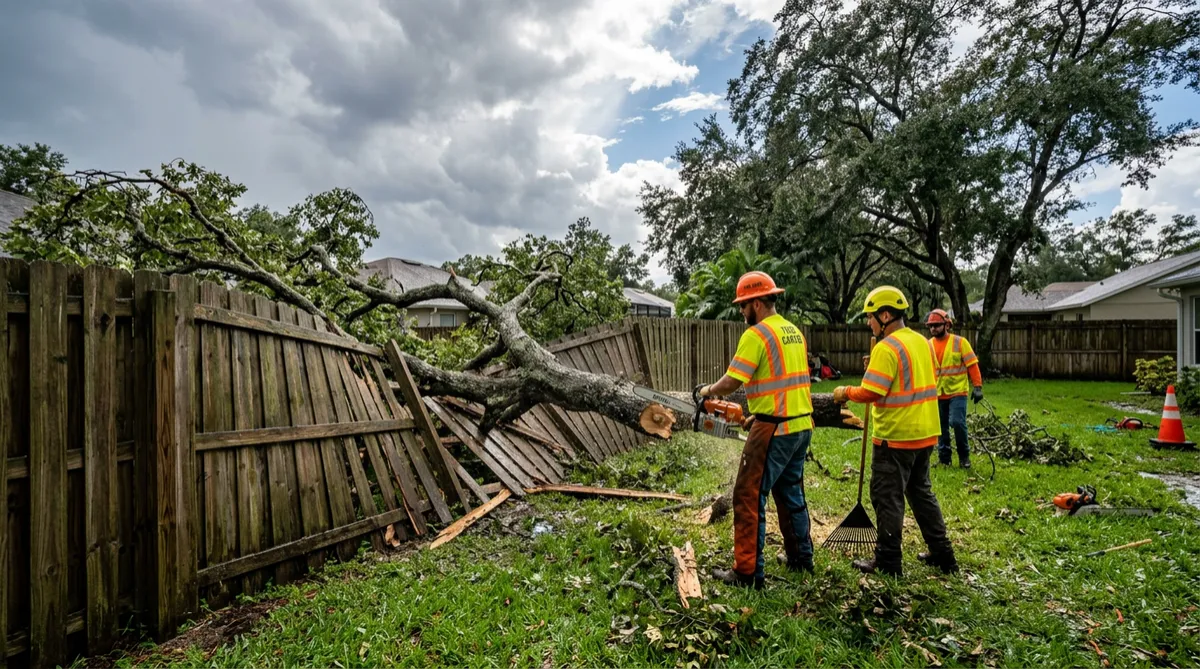
When a hurricane or severe storm sends a tree crashing down, the first instinct may be to rush outside. Pause. A fallen tree can conceal live electrical wires, unstable limbs, structural damage, or other hazards. Protect people first, keep away from danger, contact emergency responders when needed, and document damage only from a safe place.
For homeowners across Northeast Florida, knowing what to do before and after a storm can make a frightening situation more manageable. Here is a practical guide to the first minutes, emergency tree service, insurance records, contractor choices, and preparation for the next storm season.

The First Minutes: Put Safety Ahead of Cleanup
Look at the scene from indoors or another protected location. Is anyone injured or trapped? Is there smoke, fire, a gas odor, sparking, a blocked exit, or immediate danger? Call 911 for an urgent threat or medical emergency. Do not enter a home or vehicle if the tree may have made it unstable. Follow emergency responders’ instructions.
Keep children, pets, neighbors, and passersby well away. An upright tree may have a split trunk, lifted roots, or a hanging branch ready to fall. A fallen trunk or limb may be under tension and can shift suddenly. Stay clear of suspended limbs, leaning trees, and areas where a tree could roll. Do not climb onto a roof or ladder to inspect.
Storm cleanup carries hidden electrical, structural, and equipment hazards. Leave chainsaw work, climbing, rigging, and large limb removal to trained professionals. Even wood that looks settled can spring, roll, or drop without warning. A quiet scene is not necessarily a safe one.
Downed Power Lines: Stay Far Away
Treat every downed or sagging power line as energized. Never touch a wire, tree, vehicle, fence, standing water, or other object that may be in contact with a line. Electricity can travel through objects that seem harmless, and a line can become energized without warning. Do not drive over wires or try to free a tree from them.
Call 911 if the line poses immediate danger, and report it to the electric utility. Wait for utility personnel to make the area safe. Tree crews must not approach conductors until the electrical hazard has been addressed. If a vehicle is touching a line, stay inside if you are already there and it is safe to do so; call for help rather than stepping onto potentially energized ground.
When a Tree Hits a Home, Car, or Access Route
A tree on a house may have damaged framing, utilities, or interior supports as well as the visible roof or siding. Move people away using a safe exit that avoids unstable tree material. If you smell gas, see fire, hear electrical arcing, or suspect structural danger, leave if safe and call emergency responders or the appropriate utility. Do not inspect from the roof.
If a tree has struck a car, do not pull branches away, crawl underneath, or try to drive the vehicle out. Check for injuries from a safe distance and call 911 when needed. For a blocked driveway or road, report dangerous obstructions to the proper local authority. Keep people clear while waiting for help.
Once the scene is stable, photograph damage from a protected location if you can do so without approaching the hazard. Do not risk a close-up. Safety comes first; a qualified crew can assess details later.

What Emergency Tree Service Involves
Emergency tree work is meant to reduce danger, not promise that every tree can be removed immediately or that a specific arrival time is possible. After a major storm, many households may need help at once. Flooding, road closures, power hazards, and continuing weather can affect access and safe work. A responsible response starts with assessing risk and prioritizing life-safety concerns.
When contacting Arborman Tree Services, describe what you can see from a safe place: whether a tree is on a structure or vehicle, whether anyone is injured or trapped, whether wires are involved, and whether access is blocked. Share the property location and a callback method. Do not approach the tree for details. If a line is involved, contact emergency services and the utility first.
An assessment may identify urgent hazards, explain which work can safely proceed, and distinguish immediate stabilization from cleanup that can wait. Depending on conditions, professionals may secure the site, remove or reduce tree sections with appropriate equipment, and clear debris. Work around a roof, car, building, or utility requires planning where each section is supported and where it can move.
A 24/7-style emergency response describes readiness, not a guaranteed clock. Conditions can make travel or operation unsafe, and urgent jobs may need triage. Ask what current conditions allow, what work is proposed, when you can expect an update, and whether temporary hazard reduction is separate from full cleanup. Clear explanations are more useful than unsupported promises.
Document Damage and Coordinate With Your Insurer
Once people are safe and immediate hazards are controlled, make a record. Photograph damage from safe positions, note the date and visible conditions, and capture affected rooms, roof areas, vehicles, fences, or landscaping when practical. Save estimates, invoices, receipts, and messages related to emergency work or protective materials. Keep backups of the photos.
Notify your insurer promptly and ask what documentation or approvals it needs. Policies vary, so confirm coverage, deductibles, and tree-removal costs directly rather than assuming. Ask how to handle urgent work needed to prevent further damage, and keep any written guidance. If stabilization cannot wait, photograph first only if safe, retain work records, and tell the insurer what was done and why.
Before authorizing non-emergency work, read the written scope, price, payment terms, and any paperwork that assigns insurance benefits or authorizes someone to communicate for you. Ask questions about unclear language. An estimate should specify what is included, such as tree removal, debris handling, or stump work. Tree service does not automatically include roof or electrical repairs.
Choose Carefully and Avoid Storm-Chaser Pressure
Storms attract traveling crews and opportunistic sellers as well as legitimate businesses. Be cautious of unsolicited door-to-door offers, demands for an immediate signature, vague promises to “handle everything,” or large payments before the work is explained. A storm-weary homeowner should not have to decide under pressure.
Ask who will perform the work, what safety controls are planned, what the estimate includes, and how changes will be approved. Request proof of applicable insurance and verify credentials that apply locally. Get business and contact details in writing. Be wary of pressure to misstate damage, assign claim rights without understanding the effect, or pay for an unclear scope. For an immediate hazard, keep people away and seek a clear, documented response.
Prepare Before the Next Storm Season
Preparation can reduce surprises, although no checklist makes trees stormproof. Before storm season, observe trees from the ground and note dead or broken limbs, visible cracks, cavities, leaning stems, or lifting roots. Do not climb or use a saw to investigate. Arrange a qualified tree-care assessment for concerns near a home, driveway, play area, or utility line.
Ask about appropriate maintenance well before a forecast storm. Avoid severe topping or rushed cutting; a professional can explain suitable work for a particular tree. Identify where vehicles can be parked away from large limbs, keep insurance details accessible, store emergency contacts in more than one place, and review evacuation routes and local alerts.
Plan for outages and blocked roads. Keep flashlights and charged backup power accessible, but never use a generator indoors, in a garage, or where exhaust could enter the home. Do not use power equipment while tired, in poor light, or in wet conditions. A household plan should make waiting safely for qualified help easier than attempting dangerous cleanup alone.
Local Focus: Northeast Florida Communities
Tree emergencies can occur in St. Augustine, Green Cove Springs, Interlachen, and communities throughout St. Johns, Clay, Putnam, Flagler, and Volusia counties. Coastal and inland properties have different access and drainage conditions, and storm effects can vary from street to street. A recognizable landmark may orient local readers, but each property needs its own assessment.
In St. Augustine, familiar landmarks include the Castillo de San Marcos, the St. Augustine Lighthouse, and Anastasia State Park. Spring Park is a local reference point in Green Cove Springs. Farther south, Daytona Beach and the Ponce Inlet Lighthouse mark the Volusia County coast, while Flagler Beach Pier is a familiar Flagler County landmark. In Putnam County, Palatka sits beside the St. Johns River; the Lake Interlachen area and surrounding rural communities include homes shaded by trees and connected by local roads.
Arborman Tree Services serves homeowners in these communities and surrounding counties, where storm damage may mean a fallen tree, broken canopy, blocked access, or a hazard that cannot be judged from the street. Whether you are near St. Augustine’s historic district, Spring Park, the Volusia coast, Flagler Beach, Palatka, or the lakes around Interlachen, use the same priorities: protect people, stay away from electrical hazards, call emergency services when needed, and arrange a professional assessment once it is safe.
Frequently Asked Questions
What should I do first if a tree falls on my house?
Move people and pets away without passing beneath unstable branches. Call 911 for injuries, trapped people, fire, suspected gas leaks, or immediate structural danger. Treat nearby wires as energized and do not climb onto the roof or move the tree. When safe, photograph the damage from a protected location and contact your insurer.
Can I cut a fallen tree myself?
Do not cut a tree that is suspended, under tension, on a structure, near a power line, or too large to handle safely. Storm-damaged wood can shift suddenly, and chainsaw work carries serious risks. Keep clear and ask a qualified tree professional to assess it; leave electrical hazards to the utility and emergency responders.
How do I know if a downed line is live?
You cannot tell by looking. Assume every downed or sagging line is energized, stay far away, and do not touch the wire or anything contacting it. Report the hazard to the electric utility and call 911 if people or property face immediate danger. Wait for the utility to make the area safe.
Should I contact my insurance company before tree cleanup?
Contact your insurer as soon as practical and ask what documentation and approvals are required. For urgent work needed to protect people or prevent additional damage, take photos first only if safe, keep written estimates and receipts, and explain what was done. Coverage and claim procedures vary, so confirm details with your insurer.
How can I avoid storm-chaser contractors?
Be wary of unsolicited offers, pressure to sign immediately, unclear scopes, and large upfront payment demands. Ask for a written estimate, verify applicable credentials and insurance, and understand every document before signing—especially paperwork about insurance benefits or claim communication. If there is an urgent hazard, secure the area and choose a clear, accountable response.
When You Need Help, Start With a Safe Call
A storm-damaged tree can make a home feel exposed, but deliberate steps reduce risk. Keep clear, report downed lines, involve emergency responders when needed, document damage from a safe place, and ask questions before authorizing work. For storm-damaged tree assessment in St. Augustine, Green Cove Springs, Interlachen, or the surrounding Northeast Florida counties, contact Arborman Tree Services and describe the situation from a safe location.
Website built by astreetgarage.com

