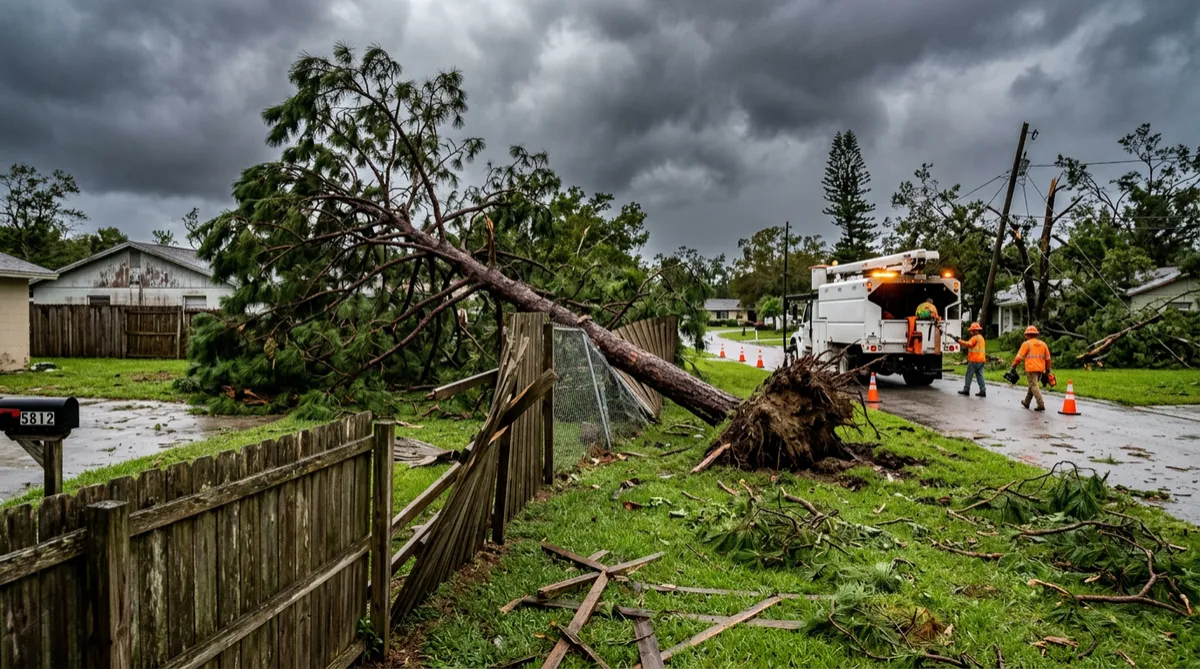
A fallen tree, a cracked trunk, or a heavy limb hanging over your home can turn a storm into a frightening situation. In Northeast Florida, hurricanes and tropical storms can bring saturated ground and strong gusts, while ordinary thunderstorms may split limbs or send trees across fences, driveways, and roofs. Knowing what to do first helps protect people and property while you arrange appropriate help.
Arborman Tree Services serves homeowners across Northeast Florida, including St. Augustine, Green Cove Springs, Interlachen, and communities in Volusia, Flagler, St. Johns, and Putnam counties. This guide explains how to recognize a tree emergency, keep your household safe, and make practical decisions before and after storm damage.

What counts as a tree emergency?
A tree problem is an emergency when it threatens people, a home, a vehicle, or safe access. Examples include a tree on a roof, a partly uprooted trunk, a heavy limb suspended over an occupied area, or a blocked exit. Visible damage may not reveal how much tension remains in the wood.
Safety first: stay clear of power lines
Assume downed wires are energized. Keep people and pets away; never touch a wire or anything in contact with it. Call 911 for immediate danger, fire, or a life-threatening scene, and notify the electric utility about downed lines. If a struck home appears unstable or you hear movement, leave if safe, move away, and do not re-enter until assessed. Keep clear of hanging limbs.
What to do after a tree comes down
When the immediate threat has passed, take these steps only if conditions are safe:
- Move people and pets away. Avoid damaged structures, leaning trunks, and overhead limbs.
- Call for help. Use 911 for immediate threats; report downed power lines to the utility and stay back.
- Observe from a distance. Note what was struck, but do not climb, cut, or pull branches free.
- Document safely. Photograph visible damage before cleanup if possible; never enter an unstable building or approach a hazard for a picture.
- Contact your insurer. Ask what information is useful; coverage depends on the policy and circumstances.
- Arrange an assessment. Once safe, describe the damage, access, and nearby structures or lines to a qualified tree service.
If weather or access remains unsafe, wait. A safe-distance description or photograph can help explain the situation.
Emergency, urgent, or routine?
An emergency is an immediate hazard: for example, a tree on an occupied structure, a severely unstable tree, a blocked safe exit, or a tree touching a power line. Call emergency services for life-threatening danger; stay back and notify the utility about lines.
An urgent concern may be a large attached broken limb, a new trunk crack, a shifted or leaning tree, or damage above a roof without immediate danger. Keep people away and seek an assessment soon. Routine care, such as planned pruning or a pre-season check without current damage, can usually be scheduled. If unsure, describe what you see rather than inspecting it yourself.
Why storm cleanup is not a do-it-yourself job
Storm-damaged wood can be under pressure in unexpected directions. A limb trapped beneath another branch may spring free when cut; a bent or suspended limb can shift suddenly; and a partially uprooted tree can move as its weight changes. These hazards are difficult to judge from the ground and may become more dangerous during cutting or pulling.
Chainsaws add risks including kickback, loss of control, and severe injury, especially when used from a ladder, on a roof, or around unstable material. “Widowmakers”—broken limbs caught high in a tree—can fall without warning. Avoid climbing, cutting, towing, or operating equipment around a damaged tree unless you are trained and equipped for that specific work. Keep others away and leave complex or overhead hazards to qualified professionals.
What an emergency tree crew may do
A crew may assess visible hazards, tree position, nearby structures, and safe access, then explain an appropriate plan. Work can include securing the area and carefully reducing or removing hazardous material. The safest method depends on the tree and site; photos cannot replace an on-site assessment.
If a building is damaged, coordinate separately with your insurer and appropriate building or restoration professionals. Temporary protection, such as tarping, may require coordination. Ask what the tree work includes, which areas must stay clear, and whether follow-up is recommended.

Storm readiness across Putnam County and the First Coast
Storms can affect neighborhoods across Northeast Florida. In Putnam County, including Palatka, the Lake Region around Crescent Lake, and communities along the St. Johns River shoreline, consider a seasonal tree check. Interlachen homeowners can watch for obvious concerns over homes, driveways, and outdoor spaces. Nearby places such as Ravine Gardens State Park and Spring Park are useful geographic references, not indicators of risk to any particular property.
In Green Cove Springs, Spring Park and the St. Johns River are familiar local reference points. Across St. Augustine, landmarks include Castillo de San Marcos and the Bridge of Lions; along the coast, Flagler Beach Pier and Ponce Inlet Lighthouse help orient the wider service area. Local conditions vary, so homeowners in St. Johns, Flagler, Putnam, and Volusia counties should follow weather alerts and prepare for conditions at their own property.
Prepare before hurricane and thunderstorm season
A little planning before a storm can make decisions easier when weather is approaching. Walk your property in calm conditions and look for obvious concerns from the ground. Arrange a professional inspection if a tree has a visible defect, has recently shifted, or has large branches over an occupied area. Preventive work should be planned in advance rather than attempted during high winds or after a warning has been issued.
- Ask a qualified tree professional about pruning that may help address dead, damaged, or poorly positioned branches.
- Discuss trees that appear unstable or have recurring damage, and ask what options are appropriate for the site.
- Keep emergency contacts, insurance information, and household communication plans accessible.
- Know where household members can shelter and how they can leave without walking beneath vulnerable limbs.
- Follow official weather and emergency guidance; do not work outdoors during dangerous conditions.
Preparation does not make a property stormproof, and a healthy-looking tree can still be damaged by severe weather. The goal is to identify concerns early, reduce avoidable hazards, and know how to respond safely if a tree fails.
After cleanup: check tree health and plan next steps
Once immediate hazards have been addressed, ask whether remaining parts of the tree need further evaluation. A tree may have hidden root, trunk, or canopy damage even when the most obvious broken limb is gone. Watch for new cracks, movement, leaning, or hanging branches, and keep people away from any area that appears unsafe until it has been assessed.
After removal, the stump and the surrounding area may need separate attention. Ask about options for stump management and whether the site is suitable for replanting. If you choose a replacement tree, consider mature size, available space, overhead and underground features, and the conditions of the planting location. A thoughtful plan can help the landscape recover without placing a new tree too close to a building or access route.
Choosing help and avoiding storm-chaser pressure
After a major storm, unfamiliar crews may approach homeowners while many properties need help. Take time to verify who you are hiring. Ask whether the company carries appropriate insurance, request references, and get the proposed scope and estimate in writing before work begins when circumstances permit. Confirm who is responsible for the work and what is included, including debris handling and any follow-up.
Be cautious about pressure to sign immediately, vague promises, or claims that a particular result or insurance payment is guaranteed. Do not let anyone persuade you to ignore utility hazards or enter an unsafe property. If immediate danger requires action, protect people first and return to the hiring decision when it is safe to do so.
Frequently Asked Questions
When should I call for emergency tree service?
Call when a tree or limb creates an immediate danger to people, a home, a vehicle, or safe access. If there is a life-threatening situation, fire, or unstable structure, contact emergency services first. Stay clear of any tree or object touching a power line and notify the utility.
Can I cut a fallen tree myself?
It is safest to avoid cutting storm-damaged trees unless you are trained and properly equipped for the specific conditions. Wood may be under tension, limbs can shift, and overhead broken branches can fall without warning. Keep people away and arrange a professional assessment.
What should I document for my insurer?
If it is safe, photograph the damage from several angles before cleanup and make a note of when you noticed it. Contact your insurer to ask what documentation is helpful and what steps to take. Coverage depends on your policy and the circumstances.
Does a damaged tree always need to be removed?
No; the appropriate response depends on the tree’s condition, location, and remaining hazards. A qualified professional can assess what can safely remain and what work may be needed. Do not assume a tree is safe just because it is still standing.
How can I prepare my trees for storm season?
Arrange a professional inspection if you notice damage, concerning changes, or branches over frequently used areas, and discuss preventive pruning or other appropriate care. Keep household emergency plans and contacts accessible, and follow official weather guidance. Avoid pruning or other hazardous work during severe weather.
Website built by astreetgarage.com
