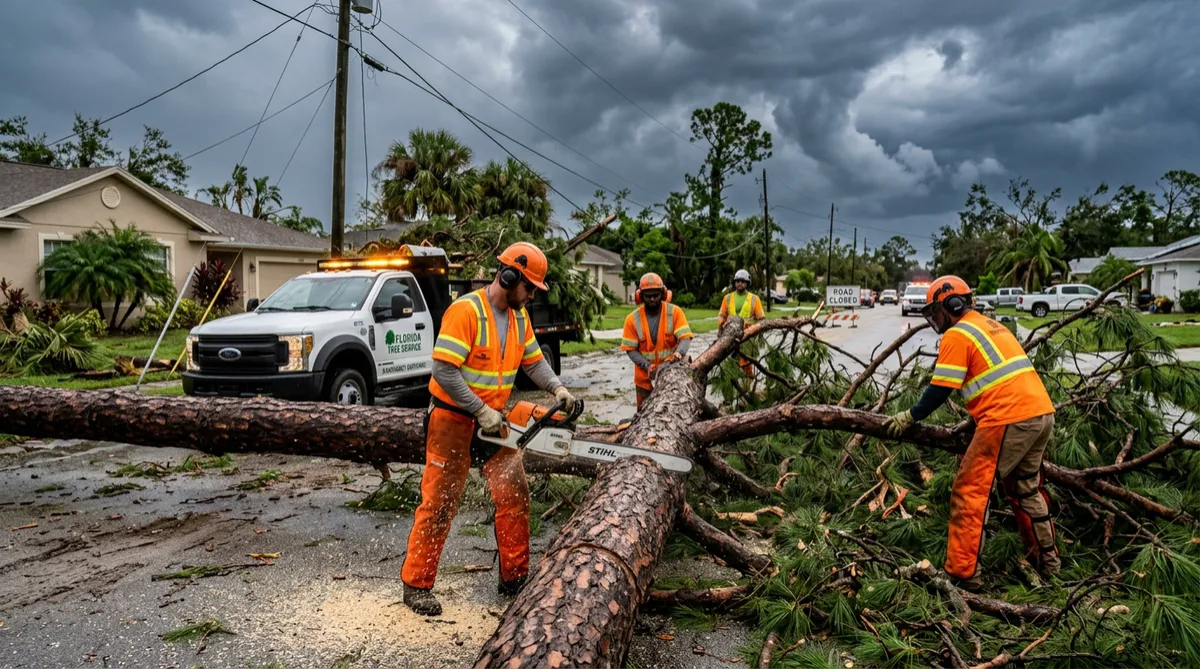
Emergency Tree Services in Volusia & Flagler County
When a tree comes down across a driveway, a heavy limb hangs over a roof, or a storm leaves a trunk split and unstable, it can be hard to know what to do first. Protect people before property: keep everyone clear of the tree and surrounding area, watch for electrical hazards, and call the appropriate emergency services when there is immediate danger. Once the scene is safe, contact Arborman Tree Services to discuss emergency availability and the next steps for assessing and managing the damage.

What counts as a tree emergency?
A tree problem is an emergency when it presents an immediate or developing threat to people, buildings, vehicles, roads, or essential access. A tree or large limb that has fallen onto a home, is blocking a public roadway, or is resting on a vehicle needs prompt attention. A partially uprooted tree, a newly split trunk, a large limb caught in another tree, or a branch suspended above a doorway may also be unstable even if it has not yet fallen.
Some damage is less urgent but still deserves a professional inspection. A small branch on the lawn, for example, may be safe to leave until conditions improve. However, after a storm, a tree can have hidden cracks, torn roots, or limbs lodged high in the canopy. If you are unsure whether it is stable, stay back and get qualified advice rather than approaching it to investigate. Keep children and pets out of the area.
First steps: protect people and keep clear
- Move away from the tree. Keep a generous distance from leaning trunks, hanging limbs, lifted roots, and the area where branches could fall. Do not stand beneath a damaged canopy or walk around a fallen tree to inspect it.
- Treat every downed wire as live. Never touch a wire, a tree touching a wire, a fence or vehicle in contact with a wire, or anything nearby that may be energized. Move away without touching objects around you. Call 911 if there is an immediate threat, fire, injury, or a wire down in a dangerous location, and contact the electric utility to report the hazard. Do not try to identify whether a line is power, cable, or telephone.
- Do not cut or pull on damaged limbs. A branch under tension can spring, roll, or shift when cut. A trunk can be supporting another section, and changing one part may destabilize the rest. Leave cutting, lifting, and rigging to trained professionals with suitable equipment.
- Use a safer route. If a tree blocks an exit or driveway, do not squeeze beneath it or move it yourself. If safe to do so, use another exit and keep others away. For a blocked public road, notify emergency services or the appropriate local authority.
- Protect the interior only when it is safe. If a roof opening or broken window lets in rain, move people and valuables away from the affected room. A temporary tarp may help limit water intrusion, but do not climb onto a damaged roof or work near unstable branches or electrical hazards. A qualified contractor can advise on safe temporary protection.
Document damage without putting yourself at risk
Once people are safe and there is no electrical or structural danger to you, take photographs from a protected location. Capture the overall scene and closer views of damage to the tree, home, fence, vehicle, or other property. Note the approximate time you noticed the damage and any steps taken to prevent further loss. Avoid moving debris or beginning cleanup before documenting it when doing so is safe and practical.
Contact your insurer promptly and follow its instructions about inspection, temporary repairs, and claim documentation. Keep receipts for reasonable emergency measures, such as materials used to reduce additional water damage, and make a record of conversations. Coverage and claim requirements vary by policy and circumstance, so do not assume that every tree-removal or repair cost will be covered. Ask your insurer what documentation it needs and whether it wants to inspect the damage before permanent work begins. For urgent hazards, safety comes first; do not delay emergency action to take pictures.
What a professional emergency tree crew may do
Emergency tree work is not simply ordinary pruning done quickly. A crew first evaluates the scene, identifies hazards, and considers how the damaged tree may move as work proceeds. That can include checking for power lines, unstable ground, compromised trunks, nearby structures, blocked access, and weather conditions. The safest approach depends on the tree, the site, and what equipment can reach the work area.
When appropriate, trained workers may use ropes and rigging to control the direction and movement of limbs or trunk sections. A bucket truck can provide access where the site and overhead conditions allow. A crane may be considered for large or difficult sections when there is suitable room and a safe setup. These methods are not interchangeable or suitable for every situation; a qualified crew determines the approach after assessing the hazards.
After hazardous sections are secured and removed, cleanup may include cutting and moving debris, clearing access, and discussing how remaining tree material should be handled. If a tree has damaged a building, a tree crew may coordinate its work around the need for a roofer, restoration professional, utility crew, or other specialist. Ask what the proposed work includes, what will remain on site, and whether any additional property repairs are outside the tree-service scope.

Storm preparation for Florida homeowners
Florida's hurricane season and frequent thunderstorms bring wind, heavy rain, and saturated ground. Wet soil and strong winds can make damaged trees more vulnerable, so preparation helps identify concerns before severe weather arrives.
Schedule an inspection before severe weather
Ask a qualified tree-care professional to assess mature trees near your home and frequently used spaces. They can identify deadwood, damaged attachments, or structural concerns that may need attention. Arrange routine work before a storm approaches, when conditions are safer and crews may be more available.
Know the warning signs
Watch for a new or worsening lean, trunk or limb cracks, lifted or cracked soil near roots, and large hanging or broken branches. Cavities, decay, dead sections, and branches rubbing structures also merit attention. These signs do not prove a tree will fail; ask a professional to assess the tree and site.
Make a simple storm plan
Plan shelter and exits that do not pass under vulnerable trees. Keep utility contacts handy, secure loose outdoor items before strong winds arrive, and avoid parking under visibly damaged trees when possible. Do not prune, climb, or work on a roof during a storm or unsafe conditions.
Choosing help and avoiding storm-chaser scams
After severe weather, unfamiliar crews may approach residents offering fast cleanup. Urgency can make it tempting to accept an immediate offer, but take a moment to verify who will perform the work. Ask for the business name and written scope, confirm that the contractor has the credentials required for the work in your area, and request proof of insurance appropriate to the job. Verify information independently rather than relying only on a logo, a vehicle sign, or a verbal assurance.
Be cautious of pressure to pay the full amount upfront, sign an agreement you have not read, or let a contractor negotiate directly with your insurer in a way you do not understand. Ask what is included, what could change the price, who is responsible for permits or traffic control if needed, and how additional work will be approved. Keep a copy of the agreement and payment records. Avoid signing over insurance benefits without fully understanding the terms, and ask your insurer or a trusted adviser if you have questions.
Tree work can involve substantial hazards to workers and property. A low quote is not the only consideration: check experience with storm-damaged trees, equipment and safety practices, insurance documentation, and a clear plan for the specific site. Arborman Tree Services can discuss the situation and the services that may be appropriate; ask directly about emergency availability, the assessment process, and the work proposed for your property.
Emergency tree care in Volusia and Flagler counties
Storm damage can affect homes, roads, and properties throughout Volusia County and Flagler County. In Volusia County, residents may be familiar with Daytona Beach, the boardwalk and pier, the Ponce de Leon Inlet Lighthouse, and Daytona International Speedway. In Flagler County, landmarks and communities include Flagler Beach Pier, Washington Oaks Gardens State Park, Bulow Creek State Park and the Bulow Plantation Ruins, and Palm Coast. These places help orient a broad service area; they are not a promise that a specific site or landmark has received service.
When reporting a property emergency, describe the nearest community or cross street, what the tree is touching or blocking, and whether anyone is injured or power lines are involved. Share photos only when you can take them safely. If the problem is on public property or blocks a public road, contact the responsible local authority as well as emergency services when there is immediate danger.
Where we work
Arborman Tree Services serves North and Northeast Florida, including St Augustine, Green Cove Springs, and Interlachen, as well as St Johns County, Putnam County, Volusia County, and Flagler County. Ask about the service options for your location and the availability for your particular situation.
Frequently Asked Questions
Should I call 911 or a tree service first?
Call 911 when someone is injured, there is a fire, a downed line creates immediate danger, or the scene presents another urgent threat. Report electrical hazards to the utility as well. Once immediate dangers are addressed and the area is safe, contact a tree-care professional to discuss assessment and removal options.
Can I cut a branch that is resting on my roof?
Do not cut it yourself. The branch may be under tension, and cutting can make it shift or fall unpredictably. Stay away from the area below it and do not climb onto the roof. Have a qualified professional assess the limb and the structure before work begins.
What should I photograph for an insurance claim?
When it is safe, photograph the overall scene and visible damage to the tree and affected property from more than one angle. Keep receipts for temporary protective measures and record when you reported the damage. Follow your insurer's instructions about inspections, repairs, and supporting documents; policy terms differ.
How can I tell whether a leaning tree is an emergency?
A lean that is new or worsening, especially with root heave, soil cracking, trunk splits, or hanging limbs, deserves prompt professional attention. Do not approach the tree to inspect it. If it threatens people, a building, or a roadway, keep clear and contact the appropriate emergency service or tree professional.
Does Arborman Tree Services provide 24-hour emergency service?
Emergency availability can depend on conditions and the situation. Contact Arborman Tree Services to discuss current availability, the hazards at your property, and what next steps may be appropriate. Do not assume a specific response time or service is available until it has been confirmed.
Contact Arborman Tree Services
If a damaged tree is threatening people, a home, or access to your property, keep clear and address immediate hazards first. Then contact Arborman Tree Services to discuss emergency availability and arrange an assessment. For active electrical hazards, injuries, fire, or another immediate threat, call the appropriate emergency service and your utility.
Website built by astreetgarage.com
