Emergency Tree Services in Volusia & Flagler County
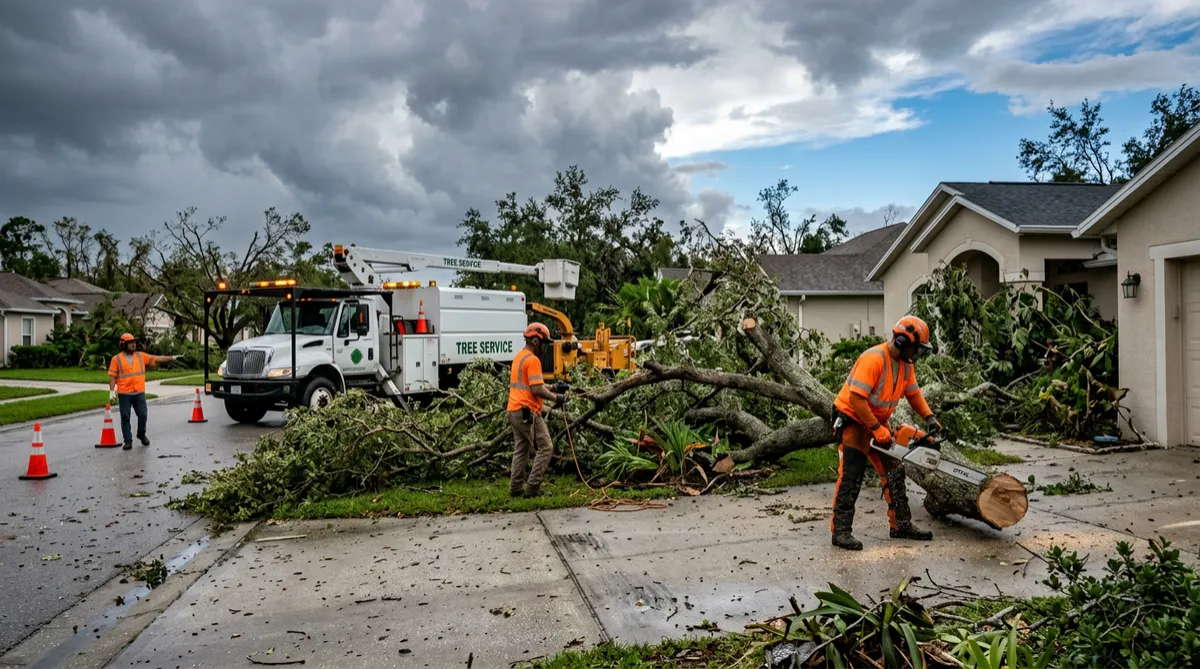
A tree emergency can turn an ordinary day into a stressful one in seconds. A storm may bring down a tree across a driveway, split a trunk, or leave a heavy limb suspended above a roof. In North and Northeast Florida, high winds and saturated ground can make an already damaged tree more dangerous. The priority is not to move debris quickly. It is to protect people, keep clear of hazards, and get the right help.
For homeowners and property managers in Volusia County, around Daytona Beach and Ponce Inlet, and in Flagler County, a calm first response can reduce risk while a qualified tree professional assesses what can safely be done. Here is how to recognize an urgent situation, what to do in the first hour, and how to prepare before the next storm.
What counts as a tree emergency?
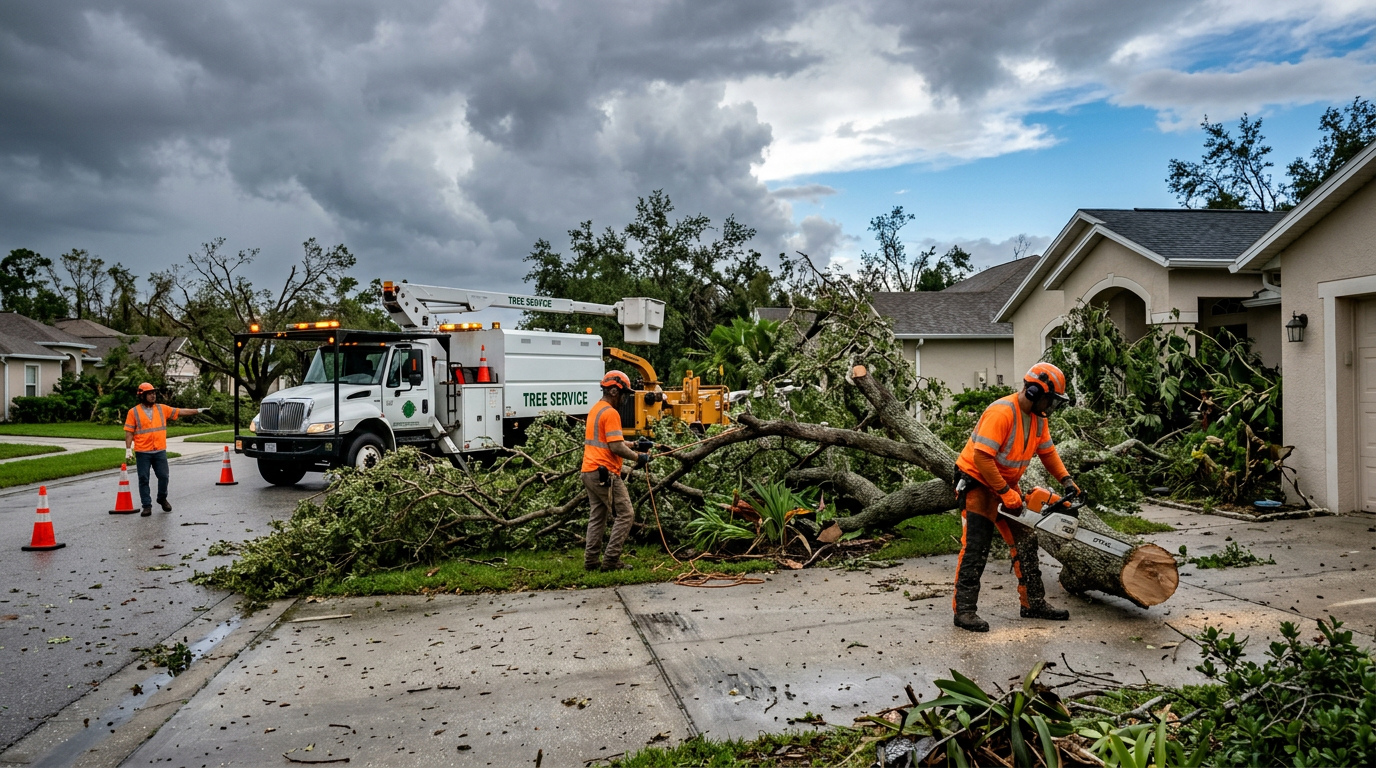
A tree problem is urgent when it creates an immediate threat to people, a building, a vehicle, or access to a property. A tree lying across a house or car is an obvious emergency, but less dramatic signs can also call for prompt professional attention. Wind, rain, or a recent impact may have changed how the tree is holding together, and it may move without warning.
- A tree or large limb has fallen on a home, vehicle, fence, or the only driveway access.
- The trunk is split, cracked, uprooted, or newly leaning toward a building or area people use.
- A heavy branch is broken but still caught in the canopy, or a limb is hanging above a roof, walkway, or parking area.
- Roots have lifted from the soil, or the ground around the base has heaved after heavy rain.
- A tree or branch is touching or close to an overhead power line.
A tree that has been leaning for years may not be an emergency simply because of its shape. A sudden change after a storm is different: keep people away and arrange an assessment. If the situation threatens life or the structure is actively failing, call emergency services. Never stand beneath a damaged canopy to take a closer look.
Electrical hazards need special caution. Treat any fallen or low wire as energized, even if it appears quiet or the lights are out. Do not touch the tree, branches, fence, vehicle, or water near a wire. Move well away, keep others back, and call 911 when there is immediate danger; also contact the electric utility to report the line. Tree crews should not be asked to work on energized electrical equipment.
What to do in the first hour
You do not need to solve the tree problem yourself. Use the first hour to make the area safer, alert the right people, and preserve useful information if it is safe to do so.
- Get people clear. Move occupants, visitors, and pets away from the tree and the likely fall zone. If a tree has struck a building, leave the affected area. Do not go inside to retrieve belongings if the structure appears damaged or unsafe.
- Check for immediate hazards from a distance. Look for downed wires, smoke, sparks, gas odor, damaged water lines, or a blocked public road. For an immediate threat or injury, call 911. If you smell gas, do not operate switches or use flames; leave the area and call the gas utility or emergency services from a safe location. Report electrical lines to the utility.
- Keep the site undisturbed. Do not climb, pull on a branch, move a vehicle trapped beneath a limb, or start cutting. A tree under load can shift suddenly. Stay out of the drop zone and do not attempt chainsaw work on a hung-up, split, or tensioned tree.
- Call a tree-care professional. Explain what fell, what it is resting on, whether wires or structures are involved, and whether anyone is injured. Share the property location and safe access details. Ask what immediate steps they recommend while help is arranged.
- Document what you can safely see. From a secure spot, take a few wide and close photographs before debris is moved. Note when the damage occurred and any visible impact. Contact your insurer to ask about reporting and documentation requirements; coverage depends on the policy and circumstances.
- Protect the property without creating another risk. If water is entering, move people and valuables away from the affected area. Only use a temporary covering if it can be placed safely from stable ground and away from wires or unstable debris. A tree professional may coordinate temporary protection after assessing the site.
Do not enter a damaged structure if you see a sagging roof, fresh cracking, shifted walls, or hear continuing movement. Leave and seek emergency help. Keep children and neighbors outside barriers, and do not let curiosity draw people toward a precarious limb.
How professional emergency tree work is handled
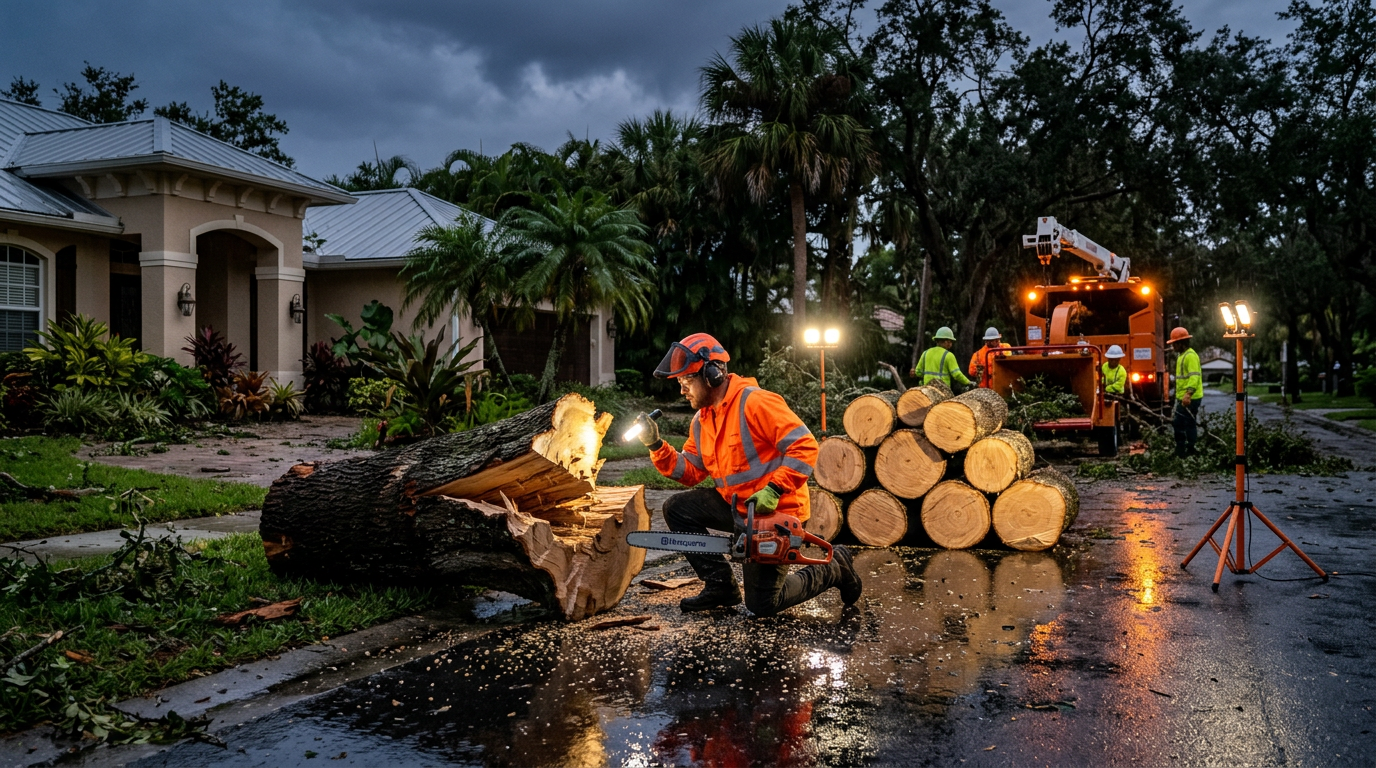
An emergency response begins with an assessment, not a saw. The crew looks at the tree's condition, what is supporting or loading it, the direction it could move, nearby structures, access, and overhead hazards. A safe plan may require a controlled work zone and coordination with the property owner, utility, or other responders.
Depending on the site, removal may involve cutting the tree into manageable sections, using ropes and rigging to control pieces, or bringing in a crane when access and conditions allow. A crew may first remove material that is pressing on a roof or blocking a needed route, then continue with debris handling and cleanup. If a tree has damaged a roof, the owner may need a roofer or mitigation contractor as well; tree removal and building repairs are separate work.
Before work begins, ask the contractor to explain the proposed scope, what areas will be protected, what debris will be removed, and whether additional equipment or follow-up work may be needed. Do not assume a tree can be safely or completely removed in every weather condition. A responsible professional will explain limitations and keep people clear when a hazard cannot yet be addressed.
Prepare for Florida's storm season
The Atlantic hurricane season officially runs from June 1 through November 30. Preparation is useful before the first forecast becomes urgent. Walk the property after calm weather and note trees with dead or broken limbs, fresh cracks, visible root disturbance, or branches rubbing against the roof. These signs do not prove that a tree will fail, but they are good reasons to request a qualified assessment.
Before tropical weather approaches, follow local emergency guidance and monitor trusted weather updates. Secure outdoor items that can become airborne, clear roof drains and accessible gutters, and make a household plan for people, pets, medications, and power outages. Do not climb trees or use a ladder in wind or lightning. When a storm is close, leave cutting and major pruning to trained professionals; yard work during hazardous weather can create serious injuries.
Routine care can reduce some avoidable hazards, though no pruning program can make a tree storm-proof. A tree-care professional can inspect structure and health, identify deadwood, and recommend pruning that fits the species and site. Avoid severe topping or indiscriminate cutting: removing too much live canopy can harm a tree and may leave weak regrowth. Plan work well ahead of storm season when possible, rather than waiting until a forecast makes every crew busy.
Choosing help and avoiding storm-chaser pressure
After a major storm, homeowners may receive unsolicited offers from people moving quickly from neighborhood to neighborhood. Urgency is real, but pressure to sign immediately is not a reason to skip basic checks. Take time, when safety allows, to verify who will do the work and what they are agreeing to do.
- Ask for the business name, local contact details, and a written estimate describing the work and cleanup.
- Ask who will perform the work, what equipment may be used, and how the crew will protect people and property.
- Ask the contractor what licensing or insurance applies to the specific work and verify any relevant credentials directly with the issuing authority or insurer.
- Be cautious about large upfront cash demands, blank paperwork, unexplained assignment of insurance benefits, or promises that a carrier will pay.
- Contact your insurer yourself and keep copies of estimates, messages, photographs, and receipts.
Rules and requirements can vary by location and job. Do not rely on a contractor's statement alone about what permits, credentials, or insurance are required; check with the appropriate local authority and your insurer. A clear scope and an understandable price help you compare proposals without making a rushed decision.
Where we work
Arborman Tree Services serves communities across North and Northeast Florida, including St. Augustine, Green Cove Springs, Interlachen, Volusia County, Flagler County, St. Johns County, and Putnam County. This article focuses on Volusia County, including the Daytona Beach and Ponce Inlet area, and Flagler County, with St. Johns County also among the service areas.
Local landmarks help orient a broad service region: Daytona International Speedway and the Daytona Beach Main Street Pier are familiar Daytona Beach references; the Ponce de Leon Inlet Lighthouse marks the Ponce Inlet area; and Washington Oaks Gardens State Park is a notable place in Flagler County. DeLeon Springs State Park is another recognizable landmark in the wider North Florida service area. Severe weather can affect properties far from the coast, so the same basic rule applies throughout: stay clear of damaged trees and get an on-site assessment before anyone begins cutting.
Frequently Asked Questions
Is a fallen tree always an emergency?
Not always, but treat it as urgent if it blocks safe access, is on a building or vehicle, involves wires, or leaves unstable sections overhead. Keep people away and have the site assessed. If someone is hurt or there is immediate danger, call 911.
Can I cut a branch that is hanging over my driveway?
Do not cut a heavy, cracked, or suspended limb yourself. Its weight and tension may be hard to judge, and it can swing or fall as soon as it is cut. Keep the area clear and ask a tree professional to evaluate it.
What should I tell the tree company when I call?
Give the property location, describe what fell or changed, say whether anyone is in danger, and mention any wires, buildings, vehicles, gas odor, or blocked access. From a safe place, photos can help explain the situation, but do not approach an unstable tree to take them.
Will homeowners insurance pay for emergency tree removal?
It depends on your policy, the cause of damage, and what was affected. Photograph damage if safe, save estimates and receipts, and contact your insurer for instructions. Do not assume a particular service or repair will be covered until your insurer reviews the circumstances.
How can I lower the chance of storm damage?
Arrange periodic tree-health and structural checks, address dead or broken branches, and follow sound pruning advice before severe weather is forecast. Keep up with general property preparation, too. Even healthy trees can be damaged by severe conditions, so prevention reduces some risks but cannot eliminate them.
If a tree has fallen, split, or left a dangerous limb after a storm, contact Arborman Tree Services through the website for urgent help or a free estimate. For a non-emergency concern, an advance assessment can help you understand the next steps before the next storm arrives.
Website built by astreetgarage.com
