Emergency Tree Services in Volusia & Flagler Counties, FL | Arborman Tree Services
When a tree comes down, starts leaning, or loses a large limb, it can be hard to tell what is dangerous and what can wait. In Volusia and Flagler counties, wind, saturated ground, and coastal storms can leave trees and properties in uncertain condition. Take a breath, keep people away from the hazard, and contact Arborman Tree Services promptly for professional guidance. If anyone is injured or in immediate danger, call 911 first.

What counts as a tree emergency?
A tree emergency is any condition where a tree, limb, or root failure presents an immediate threat to people, a home, a vehicle, a road, or utility equipment. Some damage is obvious, such as a trunk resting on a roof. Other warning signs are less dramatic but still deserve prompt attention, especially after strong winds or heavy rain.
Recognize the warning signs
- A tree or major limb has fallen onto a house, car, fence, or access route.
- A tree is leaning noticeably more than before, particularly when soil is lifted or cracked around its base.
- A trunk has split, a major fork has opened, or a large limb is broken and hanging overhead.
- Branches have fallen onto or near electrical wires, a transformer, or other utility equipment.
- A tree is blocking a driveway or roadway, or appears likely to fall into an occupied area.
Not every fallen branch is an emergency. A small limb lying safely on the ground may be ordinary cleanup. But when the tree’s stability is uncertain, a structure is involved, or a suspended limb could fall without warning, do not try to judge the risk from underneath it. Keep a safe distance and arrange a professional assessment.
What to do right away
Your first priority is people, not property. Move everyone, including pets, away from the tree and the area where limbs could fall. Do not stand beneath a damaged canopy, climb onto a roof to inspect it, or approach a leaning tree to see how firmly it is rooted. Wind gusts or shifting weight can cause a second failure even after the storm has passed.
If power lines may be involved
Never approach or touch a downed wire, a branch resting on a wire, or anything in contact with it. Assume the line is energized. Keep others well back, avoid driving over wires, and call 911 or the electric utility first so the hazard can be handled by the appropriate responders. Contact Arborman Tree Services only after the utility hazard has been addressed and the area is safe to assess.
Protect the scene and record damage safely
If there is no immediate danger, take photographs from a safe location before cleanup begins. Capture the tree, affected property, and the general scene, but do not enter a damaged building or walk beneath unstable limbs to get a better angle. Note when the damage occurred and keep receipts for reasonable emergency expenses. Contact your insurance company to ask what documentation it needs; coverage and claim requirements depend on the policy and circumstances.
How a professional emergency tree crew works
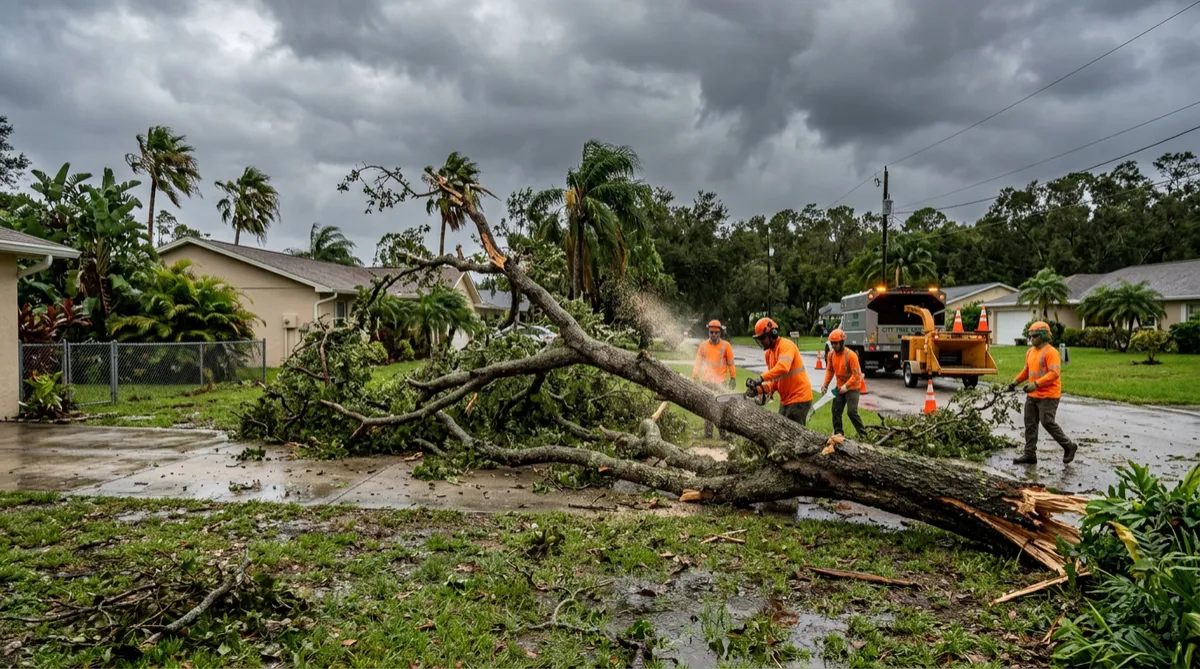
Emergency tree work is not simply a matter of cutting the trunk into pieces. A damaged tree may be under tension, supported by a roof or another tree, or carrying heavy limbs that can shift as material is removed. A qualified crew begins by assessing the site, identifying hazards, and planning a controlled sequence of work that protects people and limits additional damage.
Assessment, rigging, and controlled removal
The crew considers the tree’s lean, cracks, root plate, overhead obstructions, access, and what the tree is resting on. Depending on the site, workers may use ropes and rigging to lower pieces in a controlled way. Where the size and access conditions call for it, crane-assisted removal can help lift sections away from a structure rather than allowing them to fall or swing. The right method depends on the particular tree and property, so no single approach suits every emergency.
Crews also establish a work area and use appropriate protective equipment. Homeowners should follow the crew’s directions and stay outside that area. If a building is exposed to rain, ask the crew about safe next steps and coordinate any temporary tarping or other property protection with the appropriate contractor or insurer. Tree workers can focus on the tree hazard; repairs to a roof, electrical system, or other building components may require separate professionals.

Storm risks around Volusia and Flagler counties
Florida’s Atlantic coast faces a changing mix of weather. Hurricane season runs from June 1 through November 30, and tropical systems can bring heavy rain and strong winds. Coastal nor’easters can also bring rough weather and prolonged wind. Saturated soil can reduce root support, while gusts place extra force on crowns and branches. A tree that looked stable before a storm may show new movement, cracks, or hanging limbs afterward.
Local conditions vary from block to block. In Daytona Beach, a fallen tree can affect access around busy destinations such as Daytona International Speedway; near Ponce de Leon Inlet Lighthouse, coastal exposure and storm conditions make caution especially important. In Flagler Beach, damage may affect streets or properties near the pier. Palm Coast neighborhoods, DeLand properties near Blue Spring State Park, and communities in Ormond Beach around Tomoka State Park and the Halifax River all have their own combinations of trees, drainage, and access.
Washington Oaks Gardens State Park and Bulow Plantation Ruins Historic State Park are reminders of the region’s distinctive coastal and historic landscapes, but emergency response must be based on the actual property and hazard—not assumptions about a place. Arborman Tree Services’ primary local focus includes Volusia and Flagler counties, with St. Johns and Putnam counties also noted as service areas. When you call, describe the address, what has happened, whether anyone is at risk, and whether wires or a structure are involved.
Insurance questions and choosing help carefully
When a tree damages a home or vehicle, contact your insurer promptly and follow its instructions. Ask what photographs, estimates, invoices, or other records are needed. Policies differ, so avoid assuming that every tree-removal cost is covered or that a particular cause of loss is included. If the tree has fallen without damaging covered property, the applicable coverage may be different. Your insurer can explain the terms of your own policy.
After a major storm, crews may arrive from outside the area offering quick cleanup. Take time to verify who you are hiring. Ask for identification, proof of insurance, and a written estimate describing the work. Make sure you understand what is included, how debris will be handled, and what could require an additional charge. Avoid paying the full amount upfront, and do not sign documents you have not had a chance to read. A careful, clear conversation is a better foundation than pressure to decide immediately.
Arborman Tree Services can discuss the condition and proposed tree work with you. If a tree has affected a structure, keep your insurer informed and coordinate tree removal with any needed building repairs. Clear communication among the homeowner, tree service, insurer, and repair professionals can help reduce confusion while the property is being made safe.
After removal: check the remaining trees and prepare ahead
Once the urgent hazard is removed, look over the rest of the property from a safe distance. Storm stress may leave cracks, broken branch unions, exposed roots, or limbs caught in the canopy. A tree does not need to fall to need attention. If you notice changes or are unsure whether a tree is stable, arrange an inspection rather than waiting for the next storm to reveal a problem.
Preparation before storm season can reduce avoidable risks. Consider having trees inspected, especially those near homes, driveways, and frequently used outdoor areas. Ask about pruning that addresses dead, damaged, or poorly attached branches while preserving the tree’s structure. Avoid topping or severe cuts that can harm a tree. Keep an eye on trees after heavy rain and wind, and learn where household members can shelter safely if conditions worsen.
It also helps to know how to reach your utility and local emergency services, keep phones charged during severe weather, and store insurance information where it is easy to find. Do not wait for a storm warning to address an obvious dead limb or a tree that has begun to lean. Planning is simpler when the weather is calm and the property can be assessed carefully.
Frequently Asked Questions
Should I move a tree limb that is resting on a power line?
No. Never touch or approach the limb or the line, and keep other people away. Call 911 or the electric utility first and wait until the utility hazard has been made safe before arranging tree work.
Can a leaning tree wait until after the storm?
A new or worsening lean, lifted soil, or cracking around the base can signal instability. Keep clear of the tree and contact a professional promptly; if people are in immediate danger, call 911.
Will homeowners insurance pay for emergency tree removal?
Coverage depends on the policy, what was damaged, and how the loss occurred. Contact your insurer, document the scene safely, and ask what approvals and records it requires before non-urgent work proceeds.
Can I cut a hanging branch myself?
It is safer not to. A suspended limb can shift suddenly, and cutting it may release stored tension or bring down other branches. Keep people away and have a professional assess the situation.
How can I prepare my trees before hurricane season?
Arrange an inspection and ask about appropriate pruning of dead, damaged, or weakly attached limbs. Also identify trees close to structures and address visible concerns before severe weather arrives.
Get help with an emergency tree hazard
A fallen tree or unstable limb can be stressful, but a calm, safety-first response matters. Keep people away from the hazard, involve 911 or the utility whenever power lines or immediate danger are present, and document damage only from a safe place. For tree hazards in Volusia, Flagler, St. Johns, or Putnam counties, contact Arborman Tree Services promptly to discuss the situation. If you are planning ahead, contact us today to arrange a tree assessment before the next storm.
Website built by astreetgarage.com
