Land Clearing in St. Augustine: A Northeast Florida Guide
Clearing land in Northeast Florida is more than removing brush. The right approach makes room for a home, driveway, pasture, fence line or safer access while respecting the trees, drainage patterns and habitat that make each property different. Whether you own a small building lot or rural acreage, a clear plan helps avoid unnecessary disturbance and gives the next phase of work a better starting point.

What land clearing includes
Land clearing prepares a site by removing or managing vegetation, brush, small trees, stumps and other obstacles according to an agreed scope. It can be selective, with chosen trees and landscape features kept, or more extensive where a planned use requires a broadly open area. Clearing may also include rough grading, but it is not automatically the same as finish grading, drainage construction, excavation or utility installation. Confirm exactly which tasks are included before work begins.
Start by defining the purpose: a home or outbuilding pad, pasture, garden, driveway, access lane, fence line, fire break or general maintenance. Mark the approximate work area and note features you want protected, such as mature shade trees, a view, a well, a septic area, boundary markers or a natural buffer. A site walk can help turn those priorities into a practical scope and identify questions to settle before equipment arrives.
Choose a clearing method for the site
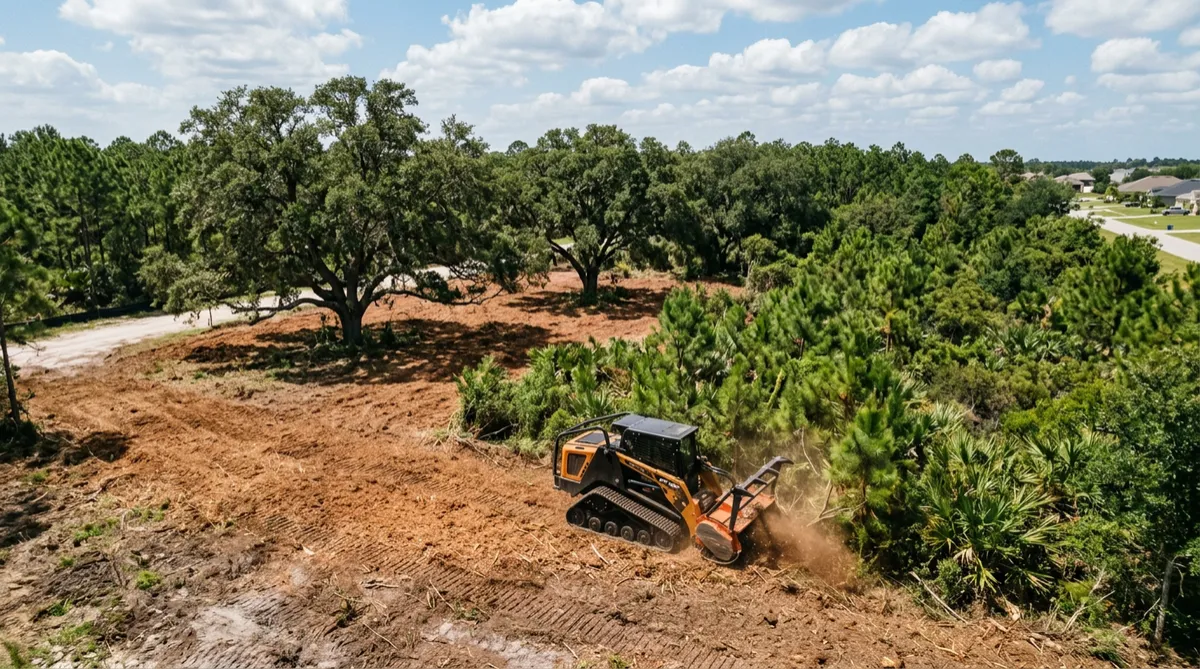
Forestry mulching uses specialized equipment to cut and process brush and smaller vegetation into mulch that is distributed on the ground. It can be useful for palmetto scrub, brush and certain young growth when leaving organic material in place suits the project. Mulch can help cover bare soil and reduce the amount of material hauled away, but the result is not a finished lawn or a guarantee against erosion. Material size, soil conditions, vegetation and the desired finish all matter.
Traditional clearing and hauling may be a better fit when a project calls for removal of larger trees, stumps, roots or debris, or a cleaner building area. Depending on the scope, the work may use cutting, pushing, digging, loading and hauling. It can expose soil more extensively, so the plan should account for how disturbed ground will be stabilized and how water will move after vegetation is removed.
Some properties need a combination: mulch brush in one area, remove selected trees elsewhere, and keep a vegetated buffer along a drainage feature. No method is right for every parcel. Ask what equipment is appropriate for the ground, what material will remain, what will be removed, and how the completed area should look. A clear explanation is more useful than a one-size-fits-all promise.
Plan the work area and protect what stays
Walk the property before clearing and identify the actual limits of work. Flag trees, shrubs, landscape elements and access routes to preserve. Discuss the clearance around the planned building envelope, driveway or fence with whoever is responsible for the design. If the project relies on a specimen tree or a wooded edge for shade, screening or character, make that protection part of the written scope rather than an informal hope.
Equipment can compact soil or damage roots when it travels close to trees that are meant to remain. Establish travel paths and staging locations where practical, and communicate any sensitive areas to the operator. Do not assume a tree is safe simply because its trunk is outside the work area; roots and canopy can extend beyond it. Where tree protection or preservation rules may apply, check with the relevant local office before work is scheduled.
Before digging, confirm utility locations through 811 and follow the applicable locate process. Private lines and site features may require separate identification, so clarify who is responsible for locating items such as irrigation, septic components or privately installed utilities. Confirm property boundaries and access rights as well: a clearing line should not be based on a guess about where one parcel ends and another begins.
Drainage, wetlands and responsible site preparation
Vegetation helps slow rainfall and hold soil in place. Removing it can change runoff, especially on sloped ground, compacted soils or low-lying areas. Before clearing, consider where water currently collects and where it flows during heavy rain. Keep natural drainage paths and buffers in mind, and avoid directing water toward neighboring land, roads, structures or a water body. If grading, fill or drainage changes are part of the project, confirm that the design and approvals are appropriate before the ground is altered.
Wetlands and floodplains require particular care. A parcel can include regulated areas or drainage features that are not obvious from a casual look. Check available property information and consult the appropriate city, county or state agency when a wetland, ditch, stream, floodplain or other protected feature may be affected. Rules and review requirements vary by location and project; do not assume that owning the land means every part can be cleared.
Florida's conditions also affect timing. Wet-season rain can make access difficult, soften soils and increase rutting or sediment movement. Dry-season work may provide firmer access, but dry vegetation can raise fire concerns. Weather, site conditions, equipment availability and permitting can all affect a schedule. Build flexibility into the plan and ask how exposed soil, access and remaining vegetation will be managed if conditions change.

Wildlife, debris and what happens next
Before work, look for signs of wildlife and habitats that may need special attention. Gopher tortoises are a protected species in Florida, and burrows should not be disturbed or handled casually. If a tortoise or burrow may be present, stop and contact the appropriate wildlife authority or qualified professional for guidance before proceeding. Other protected species or nesting activity may also affect when or how work can take place. Requirements vary, so verify locally rather than relying on assumptions.
Decide how vegetation and debris will be managed. Mulch left in place can provide ground cover and return organic material to the site, though it may not suit every planting or construction plan. Haul-off can leave an area more open, but it requires an agreed plan for loading, transport and disposal. Burning is not an automatic disposal option: fire restrictions, burn permits and conditions may apply through the Florida Forest Service or other authorities. Verify current requirements and safe conditions before any burning is considered.
After clearing, the next steps may include finish grading, drainage work, seeding, planting, construction or maintaining a mulched area. Coordinate clearing with those phases so the site is not disturbed twice or left bare longer than necessary. If the goal is pasture or a yard, ask what soil preparation and establishment work remains. If the goal is a building pad, confirm that the clearing contractor's scope does not substitute for engineering or construction work that another professional must handle.
Permits, neighbors and choosing a contractor
Requirements vary by city, county, state agency and project. Tree protection and preservation ordinances, wetlands review, stormwater controls, fire rules and development approvals may apply. Agricultural or silvicultural activity may qualify for an exemption in some circumstances, but do not assume an exemption covers site development. Check with the relevant agency about the specific parcel and work. Review HOA rules, covenants and easements too; notify neighbors when access, noise or hauling could affect them.
Choose a contractor who provides a written scope naming the work area, trees to preserve, debris handling, access, cleanup and any grading included. Ask about equipment suitability and similar-project references, and confirm liability and workers' compensation coverage. Clarify who handles utility locates and unexpected site conditions. A good estimate states its assumptions and exclusions rather than promising what the site or approvals cannot support.
What affects the cost of land clearing?
Cost depends on acreage, vegetation and tree size, stumps, access, terrain, soil, wet areas, equipment, hauling and the desired finish. Selective preservation, disposal, grading, drainage and seeding can affect the scope. Share the intended use, marked work limits and known constraints, then compare written estimates with matching inclusions and exclusions. Confirm whether permits, utility locating, haul-off and finish grading are included or separate; a headline figure may describe different work.
Land clearing across Northeast Florida
St. Augustine and St. Johns County combine growth and building lots with historic and coastal settings, from the Castillo de San Marcos, Bridge of Lions and Lightner Museum to Anastasia State Park and the St. Augustine Lighthouse. Plan access and identify mature trees to preserve, while checking parcel-specific requirements.
Green Cove Springs properties near Spring Park and the St. Johns River may need careful drainage planning. Rural acreage around Putnam County's Lake Interlachen and Ravine Gardens State Park can include pine flatwoods, palmetto scrub, uneven access and wet ground; rural Clay-area communities can have similar access and boundary considerations. Coastal Flagler County lots near Washington Oaks Gardens State Park and Flagler Beach Pier and Volusia County properties near Blue Spring State Park and Daytona International Speedway also vary by site. Wetlands and floodplains near the St. Johns River need special care wherever found.
Arborman Tree Services serves St. Augustine, Green Cove Springs, Interlachen, Volusia County, Flagler County, St. Johns County and Putnam County. Rules vary by jurisdiction and project, so verify requirements with the relevant city, county or state agency before work.
Frequently Asked Questions
Is forestry mulching the same as full land clearing?
No. Forestry mulching processes suitable vegetation into mulch on site, while full clearing may involve removing trees, stumps, roots and debris. The right scope depends on the property's intended use and the finish you need.
Do I need a permit to clear my property?
Requirements depend on location, vegetation, project purpose and site conditions. Tree ordinances, wetlands, stormwater, fire rules and development approvals may apply, so check with the relevant city, county or state agency before starting.
Can I keep mature trees while clearing around them?
Often, selective clearing can preserve chosen trees, but their roots and canopy may extend beyond the trunk. Mark the trees, discuss equipment routes and work limits, and confirm whether local tree-protection rules apply.
When is the best time of year to clear land in Florida?
There is no universally best season. Wet-season rain can soften soil and complicate access, while dry conditions can increase fire concerns; weather and site conditions should guide the timing. Confirm any seasonal restrictions or fire requirements locally.
What should I do after the land is cleared?
Plan the next phase, which may include grading, drainage, seeding, planting or construction. Keep exposed ground stable and coordinate follow-up work so the cleared area is not left vulnerable to runoff or unnecessary disturbance.
A practical first step
Good land clearing begins with a defined use, clear work limits and a realistic understanding of what the property can support. Identify what should stay, check rules and utilities, and compare written scopes that explain debris handling and what work remains afterward. To discuss a project in Northeast Florida, contact Arborman Tree Services at (904) 830-5399 or via arbormantreeco.com to request an estimate.
Website built by astreetgarage.com

