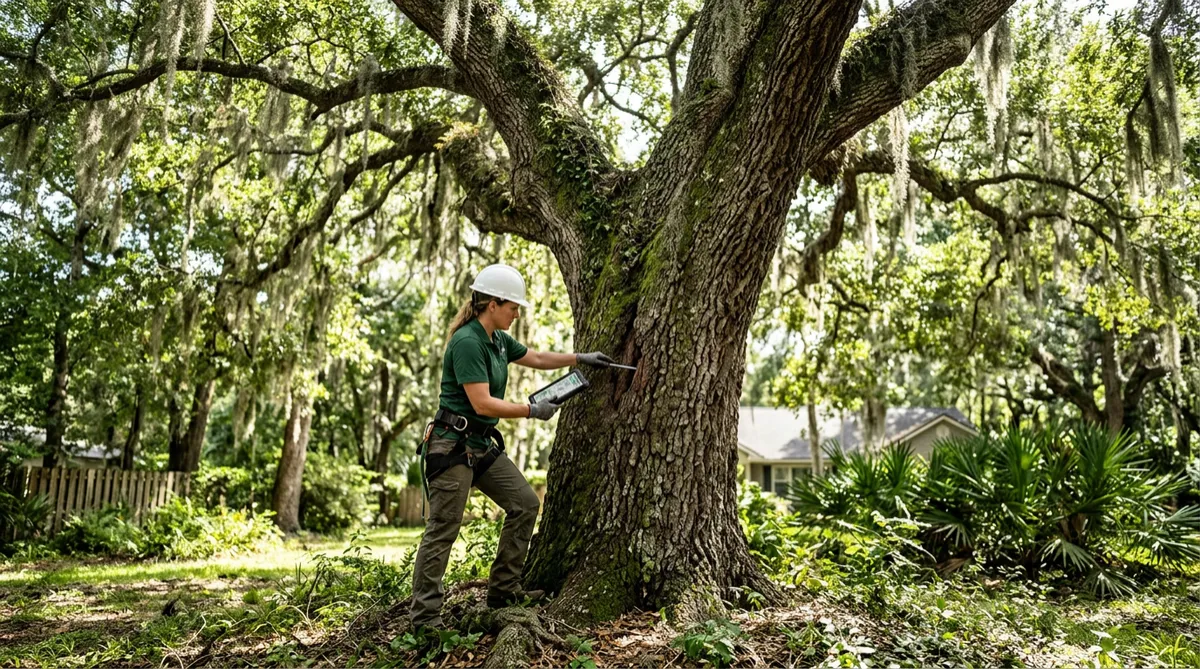
Why North Florida Trees Decline: Disease, Roots, and Seasonal Stress
A tree can look healthy from the street while its roots, trunk, or upper canopy are already under strain. In North Florida, heavy rain, dry spells, storms, compacted soil, and pests can all affect tree health. Learning what to watch for helps you decide when to monitor, when to ask for an assessment, and when a hazard needs prompt attention. This guide explains common warning signs and practical next steps for homeowners across the region.

Read the whole tree, not one symptom
A few yellow leaves or a small dead twig do not automatically mean a tree is diseased. Trees naturally shed leaves and small branches, and symptoms can have several causes. Look for changes over time and consider where they appear: one branch, one side of the crown, the trunk base, or the entire tree. Compare the tree with its own past appearance rather than expecting every tree of the same species to look identical.
Signs worth noticing include canopy thinning, branches dying back from their tips, leaves that are unusually small or discolored, premature leaf drop, peeling or cracked bark, sap or other oozing, cavities, and mushrooms or hard fungal shelves on the trunk or near the roots. A new lean, soil lifting around the root plate, or a crack where a major limb joins the trunk deserves particular attention, especially after wind or saturated ground.
Spanish moss, lichens, and some surface growths are not by themselves proof that a tree is sick. Likewise, a cavity or fungus does not reveal the tree’s full strength without context. The location, size, and progression of a symptom matter, as do the species, recent weather, and condition of the root zone.
Why North Florida trees become stressed
Warm, humid weather can favor fungal activity, while sandy soils and variable rainfall can make moisture management difficult. A tree may face drought stress during a long dry stretch, then suffer from waterlogged soil after persistent rain. Flooding can limit oxygen available to roots; drought can reduce water uptake and leave foliage sparse or scorched. Either kind of stress may make an existing problem more noticeable.
Storms can break branches, split unions, expose roots, and create wounds. In neighborhoods from DeLand and the Daytona Beach area to Green Cove Springs and Clay County, trees may also contend with construction, driveway work, trenching, lawn equipment, and vehicles compacting soil. The same concerns apply around Interlachen and Palatka in Putnam County. Even familiar landscapes near Blue Spring State Park, Daytona International Speedway, or Stetson University reflect a broader regional reality: local conditions vary from site to site, and an individual tree needs an individual assessment.
Common disease and pest concerns
Root decay and bracket fungi
Some wood-decay fungi form shelf-like or rounded structures called conks. Ganoderma species can cause decay at the lower trunk or roots of some trees, including palms and broadleaf trees. A conk may be a clue to internal decay, but it does not tell a homeowner exactly how much sound wood remains. Avoid cutting or removing a conk as a way to treat the underlying problem; have the tree evaluated, especially if it stands over a home, walkway, parking area, or play space.
Root problems can also follow poor drainage, chronic saturation, deep planting, or injury. A tree with root decline may thin, die back, or become less stable. Fungal growth around the base is one possible sign, not a stand-alone diagnosis.

Laurel wilt and palm diseases
Laurel wilt is a serious disease affecting redbay and other plants in the laurel family. It is associated with a non-native ambrosia beetle and a fungus; affected redbay may show wilting, discolored foliage, and rapid decline. Because symptoms can resemble other stresses, a qualified professional should assess a suspected case rather than relying on a photograph alone.
Palms have their own disease concerns. Lethal bronzing is a serious, often fatal disease that can affect several palm species. Other palm disorders and nutrient problems may look similar at first. Browning fronds or a declining crown call for careful identification before treatment. Do not assume that a general-purpose fertilizer or pesticide will solve the issue.
Pines, scale, and sooty mold
Annosus root disease can affect pines and may spread through roots or stumps under favorable conditions. Southern pine beetles can attack pines, particularly when trees are stressed, though beetle activity and symptoms require proper identification. Browning needles, resin flow, boring dust, or fading crowns can have multiple causes and should be evaluated promptly when several pines decline together.
Scale insects may appear as small bumps on twigs or leaves. Their honeydew can support black sooty mold, which coats leaf surfaces. Crape myrtle bark scale can be found on crape myrtle stems and branches and may be accompanied by sooty mold. Correct identification matters: treatment timing and methods depend on the pest, plant, and season.
Look for causes in the root zone and around the trunk
A mulch volcano against the trunk hides the root flare and traps moisture against bark. Spread mulch shallowly and broadly, keep it off the trunk, and leave the flare visible. Compaction from parking, foot traffic, or heavy equipment restricts roots; construction, trenching, paving, grade changes, and soil piled over roots can cause delayed decline. Call 811 before digging to have public utilities marked; private lines and safe root locations need separate consideration.
Water slowly across the root area, adjusting for rainfall and drainage. New plantings or drought-stressed trees may need supplemental water, while saturated soil can deprive roots of oxygen. Avoid a fixed schedule that ignores current conditions.
When is a tree hazardous, and when might it recover?
Some trees recover when drought, root disturbance, or another stress is corrected. If the main structure and roots remain sound, options may include monitoring, selective pruning, or soil care. Concern rises when defects could affect a home, road, vehicle, or regularly used area. A new lean, lifted root plate, fresh split, or hanging limb calls for caution: keep people away, do not climb or cut suspended limbs, and stay clear of trees touching wires while contacting the utility or emergency services as appropriate.
Conks, cavities, cracks, and dead tops need context; risk depends on failure likelihood and what could be struck. Removal is not automatic, and an assessment can identify whether mitigation is reasonable.
What a qualified-arborist assessment may include
A qualified arborist may visually inspect the crown, branches, trunk, visible roots, root flare, soil, drainage, nearby targets, and signs of site changes. They may ask about symptom timing, watering, construction, flooding, drought, or storms. If needed, closer examination, laboratory testing, or plant-disease consultation can help identify a cause. Testing does not by itself measure structural safety; ask what is known, uncertain, and recommended.
Care and treatment: start with the right diagnosis
Selective pruning can remove dead or broken wood and improve structure; topping and excessive cutting can add stress. Soil care may include better irrigation, less compaction, root-zone protection, and proper mulch. Fertilize only when a diagnosed need supports it. Injections suit only certain pests or diseases and should be chosen and administered by a licensed professional when appropriate. Some advanced diseases cannot be reversed; a plan may instead protect nearby trees, reduce stress, monitor, or remove affected material. Check local guidance before moving firewood or suspected infected material.
Fall and winter tree care in North Florida
After summer storms, inspect for deadwood, cracks, lean changes, exposed roots, and fungal growth. Keep mulch off trunks and vehicles or equipment off root zones. Water new trees according to rainfall and avoid dry root balls or persistently saturated soil. Pruning timing depends on species, purpose, and disease risk; ask before pruning oaks. Arrange professional help for structural warning signs.
When removal may be the safest choice
Severe decay, root failure, a major split, extensive storm damage, or advanced disease may make a tree unacceptably unsafe. The decision should weigh the defect, its progression, targets, and realistic mitigation; pruning or restricting access may sometimes manage risk, while delay may not. Ask for the findings and options. Trees near utilities, public rights-of-way, or protected areas may require coordination or permission. Never attempt hazardous removal near structures or power lines yourself.
Get a local tree-health assessment
If you notice thinning, dieback, fungal shelves, peeling bark, oozing, a cavity, a new lean, or storm damage, an experienced local tree professional can help determine what is happening and what to do next. Arborman Tree Services serves homeowners in the North Florida area, including communities around Putnam County, Volusia County, and Green Cove Springs in Clay County. Call (904) 830-5399 or visit arbormantreeco.com to discuss an assessment.
Frequently Asked Questions
Can a tree have fungus and still be safe?
Sometimes, but the type and location of fungus matter. A conk on a trunk or near roots can indicate decay, while other surface growths may not harm the tree. Have concerning growth evaluated in context, particularly if the tree could strike a home or busy area.
Does a leaning tree always need to be removed?
No. Some trees develop a gradual lean without recent root movement. A new or worsening lean, especially with cracked soil or a lifted root plate, is more urgent. Keep clear and arrange a prompt professional assessment.
Should I fertilize a tree with yellow leaves?
Not before identifying the cause. Yellowing may result from water stress, root damage, pests, disease, or a nutrient issue. Applying fertilizer without a diagnosis may not help and can worsen stress.
Can pruning cure tree disease?
Pruning can remove dead or infected branches in some cases and improve structure, but it cannot cure every disease or reverse extensive root or trunk decay. The right approach depends on the diagnosis, species, and extent of damage.
When should I call someone about a damaged tree?
Call promptly for a fresh split, sudden lean, lifted roots, hanging limb, or tree contacting wires. Keep people away from the area and do not try to cut or climb the tree yourself. For less urgent symptoms, arrange an assessment before the decline progresses.
Website built by astreetgarage.com
