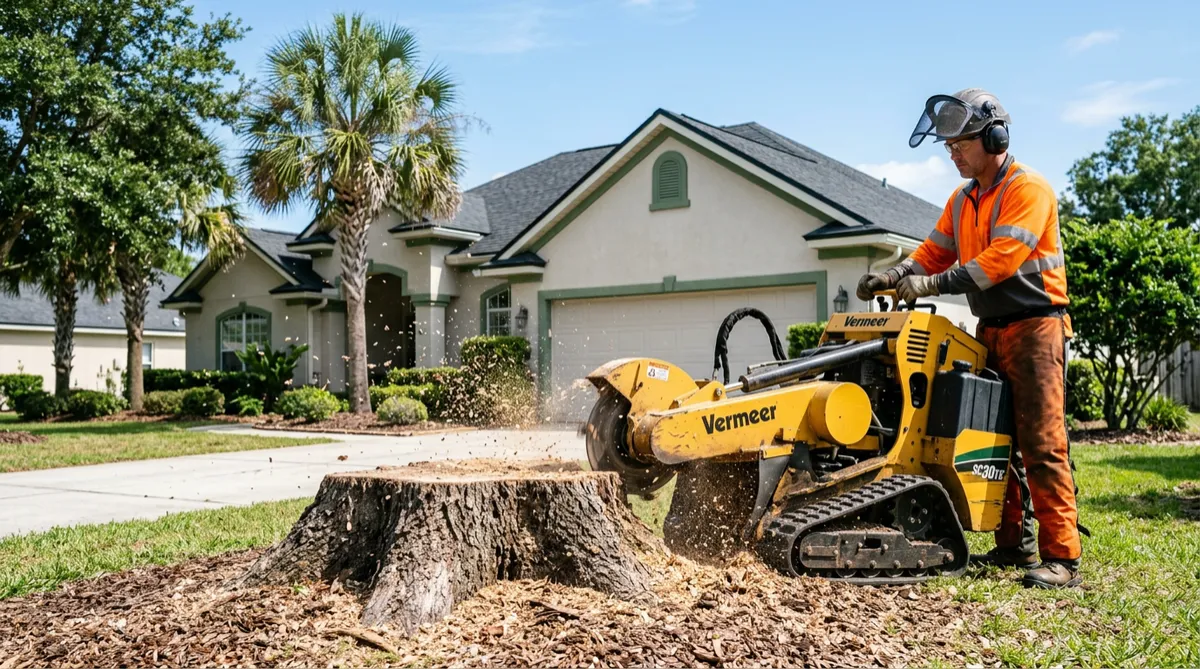
Stump Grinding in St. Augustine & Northeast Florida
A tree may be gone, but its stump can still get in the way. It can interrupt mowing, create a trip hazard, send up shoots, and limit plans for a path, lawn, or new planting. In Northeast Florida, the right solution depends on the stump, the yard, nearby features, and what you want to do with the space afterward. Stump grinding is often a practical way to clear the visible obstruction without excavating the whole root system.
For homeowners in St. Augustine, St. Johns County, Flagler County, and neighboring communities, knowing what the work involves makes it easier to choose an approach and request a useful estimate. Here is a straightforward guide to grinding, removal, Florida yard considerations, and preparing for a safe finish.

Why take care of a stump?
Decaying or damp wood can attract insects, including termites and carpenter ants. A stump does not automatically mean pests will enter a house, but leaving rotting wood close to structures can be an avoidable concern. Some trees also send up shoots from the stump or nearby roots, creating recurring trimming and an untidy patch in a cared-for landscape.
Stumps can catch mower blades, obstruct a walkway, or become hard to see when grass grows around them. They may restrict where you can plant, install a fence, or create a play area. Removing that obstacle can make routine yard work easier and give you more choices for the space. A cleaner, more usable yard may help a property look cared for when it is being prepared for sale, though no particular resale result is guaranteed.
Grinding or full removal?
With stump grinding, a machine chips the stump down below ground level. The stump is reduced, but roots generally remain underground and decay over time. The depth depends on the tree, access, nearby features, and the future use of the area. Grinding is often selected when the aim is to clear the visible stump and restore lawn or landscape space without digging out a broad root mass.
Full stump removal involves excavating the stump and a substantial portion of its roots. It can suit some construction or planting plans, but disturbs more soil and may affect a wider area. Roots can extend well beyond the visible trunk, so removing every root is not always practical or necessary. Ask the tree company what its service includes; “removal” does not necessarily mean every root will be extracted.
Consider access for equipment, proximity to buildings and hardscape, and what will occupy the space next. Neither method is right for every yard. Ask the company to explain what will remain underground and what condition the site should be in when the work is complete.
What happens during stump grinding?
Good work starts with a review of the area. The crew checks access, nearby structures and plants, and any buried or concealed features. Florida’s 811 service can help arrange marking of eligible underground utilities before digging or grinding; request a locate with adequate lead time and follow its instructions. Public marking may not include private lines, so point out irrigation, landscape lighting, septic components, and anything else you know is below ground.
- Plan access: Confirm the stump, the equipment route, gates, fences, and the area to be protected. Tell the crew about sprinklers, drains, cables, or tight clearances.
- Set up safely: The operator positions the grinder and keeps people and pets outside the work area. Ask how nearby turf, pavement, and plantings will be protected.
- Grind to the agreed depth: The cutting wheel works across the stump in controlled passes. The depth should suit the next use of the area; grinding deeper is not automatically better when utilities or roots are close.
- Decide on chips: Grinding produces wood chips mixed with soil. Confirm whether the crew will leave them, spread them, or haul some or all away, and whether that service is included.
- Backfill and restore: The depression may be filled with grindings or suitable soil, depending on the agreed service. Buried wood breaks down and the surface can settle, so a later top-up may be needed. Seed or sod can finish the area when conditions allow.
Before work begins, agree on the depth, debris handling, cleanup, and finish. If you hope to build, install a patio, or plant nearby, mention it during the estimate. The company can then explain whether grinding fits the plan or whether excavation or a different planting spot deserves consideration.

Florida-specific considerations
Northeast Florida yards vary, and sandy soil can shift or settle when disturbed ground is filled. The restored patch may need attention after the initial cleanup. Rain, drainage, shade, season, and the type of grass or planting all affect how well it recovers, so ask what preparation and follow-up are included.
Live oak, laurel oak, pine, and cabbage palm stumps differ in shape, wood, and root patterns. A live oak’s root system can extend beyond the trunk area; what is visible at the surface is not the whole picture. Palm material may behave differently from dense hardwood. A crew should assess the actual stump rather than promise one depth for every tree.
Irrigation lines and heads can cross established lawns, so mark known locations, share a sketch if useful, and ask how the machine will be positioned. After hurricanes or strong storms, stump grinding may be one part of cleanup, but damaged wood, hidden debris, or unstable conditions can make a site hazardous. Have the area assessed and cleared safely instead of handling questionable material yourself.
What affects the estimate?
There is no one price that fits every stump. Companies may consider diameter, wood type and condition, root flare, the number of stumps, desired depth, equipment access, and proximity to fences, buildings, pavement, and planting beds. Cleanup choices matter: leaving chips in a chosen spot is different from hauling them away and restoring the lawn.
A narrow gate, soft or sloped ground, nearby utilities, irrigation precautions, or storm debris may affect the setup. Explain the full scope when requesting an estimate. Ask for a written description of what is included, what is excluded, and the expected site condition afterward. That lets you compare the proposed work without relying on an assumed price per stump.
Questions to ask a tree company
- Will you grind the stump or excavate it, and what will remain underground?
- What depth do you recommend for my intended use of the space?
- What should I do about 811 marking and private irrigation or lighting lines?
- Will chips stay, be spread, or be hauled away? Is that included?
- Does the estimate include backfill, soil, seed, or sod?
- How will you protect nearby turf, pavement, fences, and plants?
- What access do you need, and what should I clear before the crew arrives?
Choose a company that inspects the site, explains limitations, and answers in plain language. Confirm who is responsible for locating private lines, how the work zone will be kept clear, and what “cleanup” means in the estimate. A shared plan helps avoid confusion about the finished surface and your next landscaping step.
Safety before and after the job
Stump grinders use powerful cutting equipment and can throw chips and debris. Keep children, visitors, and pets well away from the work zone, follow the operator’s directions, and do not approach the machine or try to clear wood while it is running. Leave operation to trained personnel using appropriate protective equipment.
Before the appointment, move loose items from the equipment route and point out hidden or fragile features. Afterward, watch for loose chips, uneven ground, and shallow roots that remain. If the area is planned for construction or replanting, ask what settling or future root decay could mean for that use. Do not burn a stump or use chemicals without understanding local requirements and possible effects on people, pets, soil, and plants.
St. Augustine and Northeast Florida service areas
Stump work in St. Augustine and St. Johns County may be part of refreshing a coastal yard or preparing a landscape near the historic district. The Castillo de San Marcos, Bridge of Lions, St. Augustine Lighthouse, Flagler College, and Lightner Museum are familiar landmarks; each property still needs its own review of access and site conditions.
Arborman Tree Services also serves Green Cove Springs, near the historic spring and Spring Park, and Interlachen in Putnam County’s lakes area. In Putnam County, Palatka, Ravine Gardens State Park, and the St. Johns River are familiar regional reference points. Service extends into Volusia County, including Daytona Beach, the Ponce Inlet lighthouse area, and communities around Blue Spring State Park.
In Flagler County, Palm Coast homeowners and residents near Washington Oaks Gardens State Park or Marineland may need space cleared for lawn or landscaping. St. Johns County includes areas near Anastasia State Park, Fort Mose, and Ponte Vedra. These landmarks help identify the broader service region; every stump, yard layout, and equipment route is different and should be assessed on site.
Frequently Asked Questions
Will stump grinding remove all the roots?
No. Grinding reduces the stump below grade, while most roots remain underground and gradually decay. If your project needs more complete excavation, explain the plan so the company can discuss whether full removal makes sense.
Can I plant grass where a stump was ground?
Often, the space can be restored with soil and seed or sod. The result depends on the amount of grindings, drainage, shade, and season. Confirm what restoration is included and check for settling afterward.
Should I protect my sprinkler system?
Tell the crew where irrigation lines and heads are and mark known locations. Public utility marking may not identify private irrigation or landscape wiring. Confirm equipment access and precautions before grinding starts.
Is stump grinding suitable after a hurricane?
It can be one part of storm cleanup after the site is assessed. Damaged trees, unstable wood, hidden debris, or blocked access can be hazardous, so keep away from unsafe conditions and have qualified tree care personnel evaluate the work.
How deep should a stump be ground?
There is no universal depth. It depends on the stump, nearby utilities and roots, and plans for grass, planting, or another use. Describe your goal and agree on the depth before work begins.
Reclaim your yard with a clear plan
Taking care of a stump can make mowing easier, reduce an obstacle, and open space for the next use of your yard. Start with a site-specific estimate and agree on utility precautions, grinding depth, chip handling, cleanup, and restoration.
For stump grinding and removal in St. Augustine, St. Johns County, Flagler County, or nearby Northeast Florida communities, contact Arborman Tree Services through our website to request a free estimate. Tell us what you would like to do with the space, and we can discuss options for your property.
Website built by astreetgarage.com
