Tree Health & Disease in Volusia and Flagler Counties: Spotting Problems Early
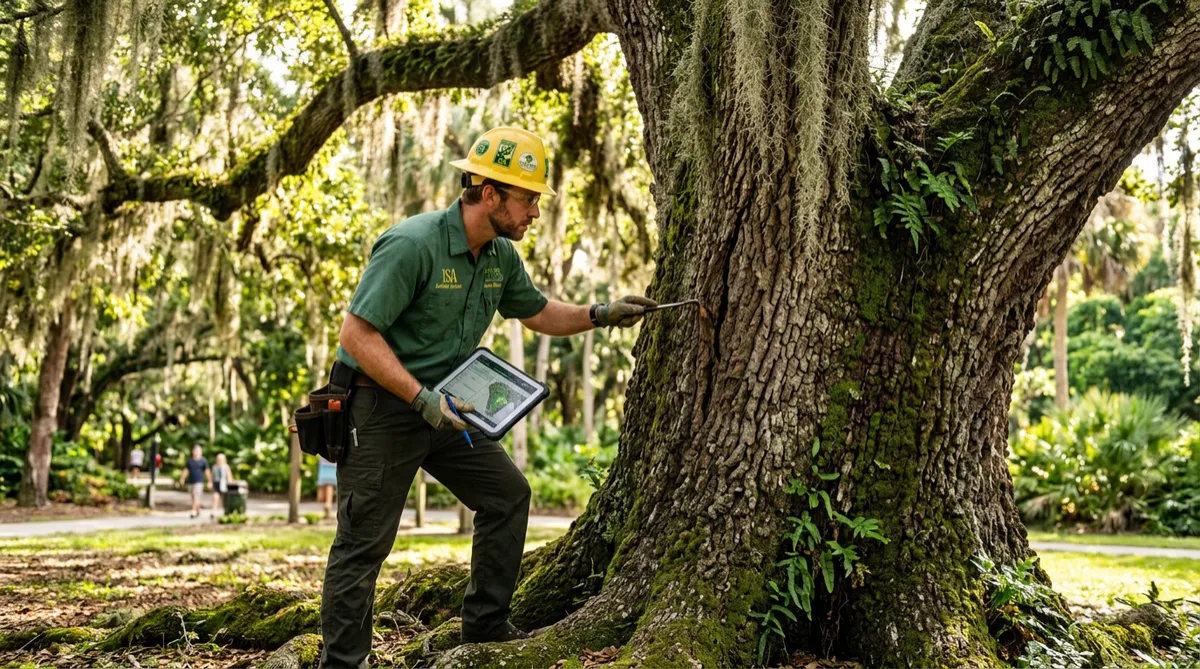
In Northeast Florida, a tree can look healthy from the street while stress is building in its roots, trunk, or upper canopy. A few yellow leaves after a storm may be ordinary; a pattern of thinning branches, fresh cracks, or soil lifting beside the trunk deserves closer attention. Early observation helps homeowners make informed choices about care and safety—without assuming every symptom means disease or that every damaged tree must be removed.
Across Volusia and Flagler counties, coastal exposure, sandy or compacted soils, wet periods, dry spells, heat, and strong storms can all affect trees. From neighborhoods near Daytona International Speedway and the Ponce de Leon Inlet Lighthouse to Flagler Beach and Bunnell, local conditions vary from property to property. The same care principles also apply in nearby St. Johns and Putnam counties, though a tree’s species, site, and history should guide any diagnosis.

Warning signs worth noticing
Look for changes over time rather than reacting to one leaf or one dead twig. Take a photograph from the same spot every few weeks during the growing season, and note storms, irrigation changes, construction, or grade changes. Patterns can help an arborist distinguish a seasonal response from a developing concern.
- Branch dieback or a thinning canopy: A few dead tips may follow drought or ordinary aging. Widespread thinning, dead branches across several parts of the crown, or a decline that progresses year after year calls for evaluation. Compare the tree with its own past appearance rather than assuming every species should be equally dense.
- Fungal conks or mushrooms: Shelf-like growths on a trunk or at the base can be associated with decay in wood or roots. Their presence does not, by itself, reveal how extensive the decay is or how likely a tree is to fail. Keep people away from a suspicious tree if it could strike a home, walkway, or play area, and seek an on-site risk assessment.
- Cavities, cracks, and loose bark: A hollow opening, a crack that is widening, or bark separating from the trunk may signal injury, decay, or other stress. Do not fill cavities or cover them with cement; that does not restore structural strength and can make assessment harder. Avoid climbing or cutting into a damaged tree yourself.
- Leaf spots, discoloration, or premature leaf drop: Spots may arise from fungi, bacteria, insects, weather, or other causes. A photo of affected leaves, including both sides, and a note about when symptoms began can be useful. Many leaf blemishes are cosmetic, but repeated defoliation or decline across the whole canopy merits a closer look.
- Leaning or root-plate movement: A long-standing lean is not automatically an emergency. A new lean after wind, freshly lifted soil, broken roots, or a gap opening beside the root plate is different. Keep clear of the tree and contact a qualified tree professional promptly, especially if it could reach people or structures.
Florida concerns: symptoms need context
Oaks, roots, and changing moisture
Oaks may decline under a combination of stressors: root disturbance, compacted soil, drought, flooding, injury, pests, or disease. “Oak decline” describes a pattern, not a single diagnosis, so a treatment should not be selected from a label alone. In poorly drained areas, prolonged saturation can reduce oxygen available to roots and may contribute to root problems. Sandy soil can drain quickly, yet compacted or altered sites may hold water differently than expected. Check how long water remains after rain and whether a downspout, irrigation leak, or recent grading is changing conditions.
Blue Spring State Park and De Leon Springs State Park are familiar points on the Volusia landscape; their natural settings are a reminder that water and soil conditions differ across even a relatively small region. A residential tree’s needs still depend on its exact site. Avoid adding soil over roots, trenching near the trunk, or parking heavy equipment beneath the canopy without professional advice.
Laurel wilt and susceptible hosts
Laurel wilt is a serious disease affecting members of the laurel family, including redbay and avocado. Symptoms can include wilting and browning foliage, but similar signs have other possible causes. Do not diagnose by appearance alone, move suspect firewood, or assume an affected tree can be cured with a product. If a redbay or avocado appears to decline rapidly, ask a qualified arborist or the appropriate state or county extension service about identification and current recommendations. Avoid transporting potentially infested wood from a site.
Storm injury, palms, and coastal stress
Lightning and hurricanes can split limbs, strip foliage, expose roots, or create hidden trunk damage. After a storm, stay well away from hanging branches, split leaders, and trees touching power lines; contact the utility for energized lines. Do not use a chainsaw on a suspended limb or climb a storm-damaged tree. A tree that has lost some foliage may recover, but major structural breaks or root movement require an in-person safety assessment.
Palms have different growth patterns from broadleaf trees. Yellowing or poor growth may be related to nutrient imbalance, soil conditions, water stress, pests, or disease. Palm fronds should not be stripped while they are still green merely for appearance: retained green fronds support the palm. Because symptoms can overlap, identify the palm and get a site-specific diagnosis before applying fertilizer or other treatment.
Near the coast, salt spray, salty irrigation water, wind, and sandy soils can stress sensitive plants. Salt injury may resemble drought or nutrient trouble. Notice whether symptoms are strongest on the exposed side, whether nearby plants are similarly affected, and whether irrigation water or drainage has changed. Coastal salt stress and inland flooding are different problems, but both can compound other damage.

Good care starts below the canopy
Water deeply enough to moisten the root area, then allow the soil and weather to guide the next watering. Newly planted trees generally need more frequent attention while establishing than established trees, but schedules vary with rainfall, soil, species, and season. Check the soil rather than following a rigid calendar, and avoid keeping roots constantly saturated. During a dry spell, a slow soak around the root zone is usually more useful than brief sprinkling of the trunk or leaves.
Mulch can help moderate soil temperature and conserve moisture when used correctly. Spread a modest, even layer over the root zone, keeping it several inches away from the trunk and visible root flare. Do not pile mulch against the trunk in a “volcano.” Deep piles keep bark damp, conceal defects, and can encourage roots to grow where they should not. Pull mulch back if it touches the trunk, and do not bury the root flare with additional soil or landscape material.
Protect roots from repeated vehicle traffic, trenching, and changes in grade. A tree’s root system extends well beyond the trunk, and cutting major roots can reduce stability or water uptake. When planning a driveway, patio, drainage project, or new planting bed, get advice before work begins. In wet locations, correcting drainage may require careful design; simply redirecting water can create problems for neighboring properties or other trees.
Pruning and when to call an arborist
Prune with a clear purpose: remove dead, broken, or hazardous branches; maintain suitable clearance; or support good structure in a young tree. Make proper cuts just outside the branch collar, and never top a tree by cutting back its crown indiscriminately. Topping can create weak regrowth and large wounds. Avoid pruning near power lines yourself. For large limbs, high work, storm damage, or any uncertainty about safe cuts, hire a qualified tree-care professional.
Pruning timing depends on species, purpose, local conditions, and whether a pest or disease concern is present. There is no one date that suits every tree in Florida. Ask why a particular timing is recommended, what branches will be removed, and how the work will preserve the tree’s natural structure. If a tree may host an insect or disease, confirm current local guidance before moving branches or firewood.
Request a risk assessment when a tree has a new lean, root heave, significant cracks, major deadwood, a large cavity, conks on the trunk or root collar, repeated branch failure, or damage near a target such as a house, road, or play space. An arborist can examine the tree and site, explain uncertainty, and discuss options such as monitoring, pruning, reducing exposure to targets, or removal. Ask any tree-care company about the credentials of the person assessing the tree, proof of insurance, the proposed scope, and how debris and nearby property will be protected.
Removal may be the safer option when a tree has severe structural damage, substantial root-plate failure, extensive decay combined with a high likelihood of striking a target, or a condition that cannot be managed acceptably on the site. A photo or quick glance cannot settle that decision. A sound assessment should explain the observed defects, likely consequences, and alternatives. If the tree is near a utility line or is actively shifting, keep people away and seek appropriate professional help without delay.
Notice the setting as well as the tree
Local landmarks help orient a regional discussion, but they do not predict a tree’s health. Tomoka State Park, Washington Oaks Gardens State Park, Bulow Plantation Ruins Historic State Park, and the Flagler Beach Pier sit within a varied coastal and inland region where wind, salt exposure, drainage, and soils can differ. Around Bunnell and other communities, a yard may have been graded, irrigated, or compacted in ways that change the conditions a tree experiences. Record what has changed around the tree, not just what has changed on it.
Frequently Asked Questions
1. Do mushrooms at the base of a tree mean it must be removed?
No. Mushrooms or conks can be associated with decay, but they do not show the extent of decay or prove the tree is unsafe. Have the tree and its surroundings assessed, especially if people or structures are within reach.
2. Can I save a tree that is losing leaves?
Possibly, but leaf loss has many causes, and recovery depends on the species, timing, severity, roots, and ongoing stress. Photograph symptoms, note recent weather or site changes, and get a diagnosis before choosing a treatment.
3. How often should I water a mature tree?
There is no single schedule for every yard. Consider recent rainfall, soil moisture, drainage, species, and season. Water the root area during prolonged dry weather, but avoid frequent watering that leaves poorly drained soil saturated.
4. When should I prune trees in Florida?
Timing depends on species and purpose, and storm-damaged or disease-affected trees may need specific guidance. Avoid excessive pruning and topping; ask a qualified professional to explain the timing and scope before major work.
5. When is removal the safest choice?
Removal may be appropriate when major structural or root damage creates an unacceptable risk that cannot be managed another way. A site-specific risk assessment should explain the evidence and any reasonable alternatives before you decide.
Need help evaluating a tree?
If you have concerns about a tree on your property, contact Arborman Tree Services in East Palatka, Florida, at +1 904-830-5399 or visit arbormantreeco.com. Share what you have noticed and ask about an on-site evaluation appropriate to the tree and its surroundings.
Website built by astreetgarage.com
