Tree Removal in Northeast Florida: When It’s Necessary and What to Expect
Tree Removal in Northeast Florida: When It’s Necessary and What to Expect
Trees bring shade, beauty, and character to Northeast Florida homes, but a damaged or declining tree can become a serious concern when it threatens people, buildings, utilities, or access. Deciding whether to remove one is rarely as simple as spotting a leaning trunk. The right choice depends on the tree’s condition, the likelihood and consequences of failure, the site around it, and any local rules that apply. This guide explains warning signs, safer alternatives, planning, cost factors, and what to ask before hiring a tree care company.

When Is Tree Removal Necessary?
Removal is worth considering when a tree is dead, irreversibly declining, structurally unstable, or positioned so that a likely failure could cause unacceptable harm. A tree may also need to come down when its roots or trunk are causing significant damage, when construction cannot reasonably avoid it, or when disease or pests create a risk to nearby plants. Each case is different: a tree that looks imperfect may still be stable, while a tree with a full crown can have hidden root or trunk defects.
Removal is not automatically the answer to every problem. A qualified tree professional can assess the tree, the target area, and the site conditions, then explain whether pruning, monitoring, or another intervention could reduce risk. The goal is an informed decision—not removal simply because a tree is inconvenient, nor delay when a credible hazard needs prompt attention.
Warning Signs to Take Seriously
Arrange a professional assessment if you notice major changes or defects, especially when they are new, worsening, or close to a home, driveway, play area, or overhead line. Possible warning signs include:
- A large dead or broken limb, hanging branch, or significant dead section in the crown.
- A fresh lean, soil lifting or cracking near the base, or roots that appear to be pulling out of the ground.
- Deep cracks, a split trunk, cavities, or decay that appears to compromise the trunk or major limbs.
- Fungal growth near the base, extensive dieback, unusual leaf loss, or signs of an insect attack.
- Repeated limb failure, severe storm damage, or branches contacting a roof, structure, or utility line.
These observations are not a diagnosis. Some cavities or mushrooms can be present without proving that a tree will fail, and a tree can have internal decay that is not obvious from the ground. Do not climb the tree, cut large limbs, or approach a tree touching a power line. Keep people away from an immediate danger area and contact the appropriate utility or emergency service if there is an urgent threat.
Could Pruning or Another Option Work?
Pruning can sometimes address dead, damaged, or poorly placed branches while retaining a healthy tree. A professional may also recommend monitoring, correcting a limited conflict, or modifying nearby use of the space. The right option should account for the tree’s structure and long-term health. Heavy topping, indiscriminate cutting, or removing large limbs without a plan can create new problems rather than solve the original one.
Ask the assessor to explain what they observed, what risk the proposed work addresses, and why removal is preferable to a less extensive treatment. If the concern is not urgent and the recommendation is unclear, a second opinion can help you make a confident choice. A responsible assessment should distinguish what is visible from what remains uncertain and should not promise that any tree can be made completely risk-free.
Permits, HOAs, and Local Rules
Before scheduling work, check the requirements that apply to your specific property. Rules may differ among a city, county, neighborhood, and homeowners association; some locations may require a permit, notice, or review before certain trees are removed. Protected trees, historic districts, conservation areas, easements, and development conditions can bring additional considerations. Do not assume that a tree on private property is automatically exempt—or that one jurisdiction’s rules apply across the whole region.
Contact the relevant local planning, permitting, or code office and your HOA, if applicable. Ask whether the species, size, location, condition, or reason for removal affects the process, what documentation is needed, and whether approval must come before work begins. A tree company can help identify questions to ask, but the property owner should confirm the current requirements with the authority or association responsible for the property. Also check property lines and any shared-tree concerns before authorizing work.

How a Professional Removal Is Planned
A careful job starts with a site visit and a clear scope. The tree professional should look at the tree and its surroundings, including nearby structures, fences, landscaping, access routes, overhead lines, and the space available for equipment. Ask what will happen to the trunk, limbs, brush, and wood, and whether stump grinding or cleanup is included. A written estimate helps everyone understand the planned work and avoid assumptions about what “removal” covers.
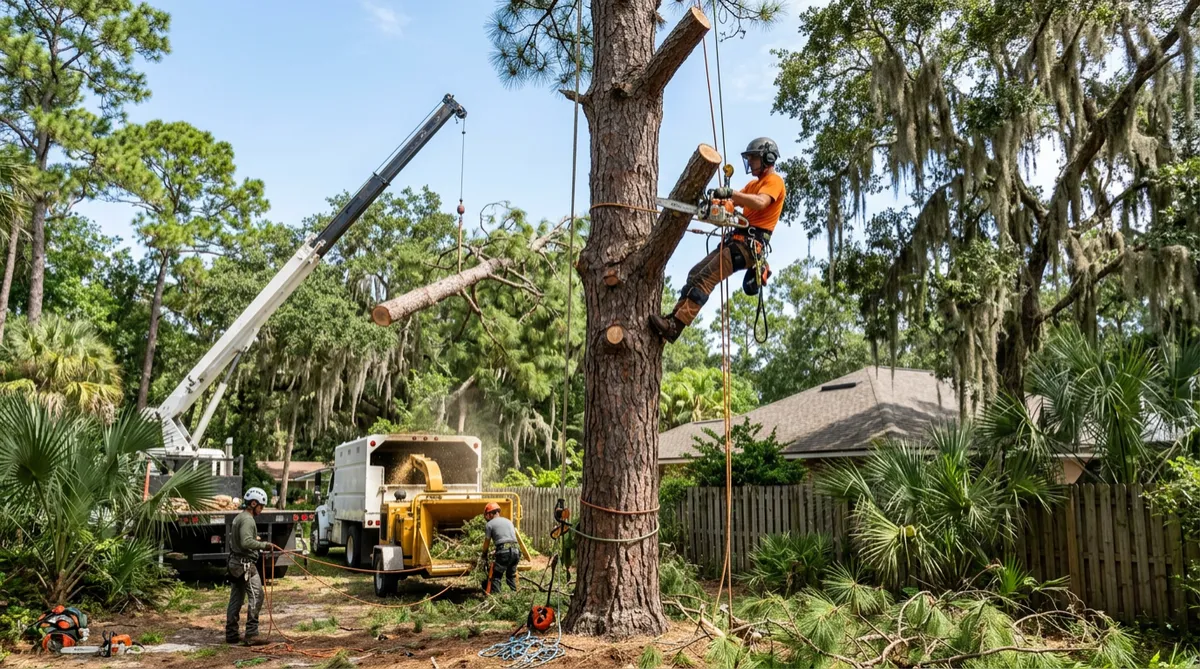
Depending on the tree and the site, a crew may dismantle it in sections, lower branches with ropes, or use equipment to control the direction of pieces. The work area should be managed so residents, visitors, pets, and vehicles stay clear. If overhead electrical lines are involved, stop and coordinate with the utility; line-clearance work requires the appropriate utility-side handling. Never try to solve a dangerous tree problem with a ladder, chainsaw, or improvised rigging.
Before work begins, confirm the schedule, access needs, protection for nearby features, cleanup expectations, and how changes will be approved. Keep children and pets indoors or well away from the work zone. Afterward, check the agreed cleanup and stump plan, and ask whether the company identified any nearby trees that may need a separate assessment.
What Affects the Cost?
There is no reliable one-size-fits-all price for tree removal. An estimate reflects the specific tree and the difficulty of carrying out the work safely. Common factors include the tree’s height, trunk size, species and condition; the likelihood of limbs or wood failing unpredictably; and how close it stands to a house, fence, pool, driveway, or other obstacle. Limited access, steep or soft ground, and the need to protect landscaping can also affect the work plan.
Other considerations may include whether specialized climbing or lifting equipment is needed, whether the tree is entangled with other trees, how much material must be hauled away, whether the stump will be ground, and any permit or site requirements. Storm-damaged trees can require a different level of urgency and care. Compare written scopes rather than choosing solely by the lowest figure: one estimate may include hauling and stump work while another may not. Ask what is included, what is excluded, and how unexpected conditions will be handled. A professional should explain the reasons for the estimate without pressuring you into immediate, unnecessary work.
Choosing a Qualified, Insured Tree Company
Tree removal combines heavy equipment, elevated work, and unpredictable material, so choosing a qualified and properly insured company matters. Ask who will perform and supervise the work, what relevant training or credentials the crew has, and whether the company carries current liability insurance and workers’ compensation coverage appropriate to the job. Request proof directly, verify that the named business matches the company you hire, and make sure the proposed work is described in writing.
Look for a clear assessment and a safety-focused plan, not a rushed promise. Ask how the crew will protect people and property, manage the drop zone, handle overhead-line concerns, and address cleanup. Be cautious of high-pressure sales tactics, vague verbal agreements, unusually low estimates with no defined scope, or requests for a large payment before the work and terms are clear. You can ask for references, but evaluate the written plan and insurance documentation as well. Do not assume a credential or insurance status—confirm it for the company and project you are considering.
Local Tree Care Across Northeast Florida
Homes across Northeast Florida range from older, close-set neighborhoods to larger wooded lots, and access, nearby structures, and local rules can vary from one property to the next. In St. Augustine, a homeowner may be familiar with landmarks such as Castillo de San Marcos, the St. Augustine Lighthouse, the Bridge of Lions, and Anastasia State Park. Those names evoke a distinctive coastal community, but a tree decision still needs to be based on the actual property, not a general regional assumption.
In Green Cove Springs, Spring Park sits along the St. Johns River; in Palatka, Ravine Gardens State Park is another recognizable local reference. Flagler County residents may know Washington Oaks Gardens, while Volusia County homeowners may recognize the Ponce Inlet Lighthouse. In Putnam County, including the Interlachen area and nearby lakes, lot size and access can differ widely. Across St. Johns County and the surrounding communities, confirm the applicable city or county process for the precise address and check any HOA requirements before work is scheduled. These local references help orient the service area; they do not imply that a public landmark’s rules apply to a private property.
Frequently Asked Questions
How do I know whether a tree is dangerous?
Look for significant changes such as a new lean, soil movement near the base, major cracks, large dead limbs, or rapid decline, especially when the tree could reach a home or frequently used area. These signs do not confirm that a tree will fail. Keep your distance if there is an immediate concern and arrange an on-site assessment by a qualified tree professional.
Do I need a permit to remove a tree?
It depends on the property’s exact location and circumstances. City, county, HOA, historic-district, conservation, and development rules may differ. Contact the responsible local office and your association, if applicable, to confirm whether approval, notice, or documentation is required before work starts.
Can a tree be saved instead of removed?
Sometimes. Pruning, monitoring, or another limited intervention may address the concern while retaining the tree, but the right option depends on its condition and setting. Ask the assessor to explain the observed defects, the risk they create, and why the recommended work is appropriate.
What should a tree removal estimate include?
It should clearly describe which tree and work are covered, how debris and wood will be handled, whether stump grinding and cleanup are included, and any access or protection assumptions. Ask how additional work or unexpected conditions will be approved and priced before the crew proceeds.
Should I remove a tree myself?
Large-tree work can involve falling limbs, heavy sections, equipment, and overhead hazards. Do not climb, use a chainsaw from a ladder, or work near electrical lines. Keep people clear and hire a qualified, insured tree company for hazardous or complex work.
Get a Clear Estimate Before You Decide
If a tree on your property is declining, storm-damaged, or too close to a structure, contact Arborman Tree Services for a free estimate. Share what you have noticed and ask for a clear explanation of the options, scope, and next steps before authorizing work.
Website built by astreetgarage.com

