Tree Removal in St. Augustine, FL | Arborman Tree Services
A tree can be a source of shade, privacy, and character for a home or commercial property. It can also become a safety concern when it is dead, badly damaged, unstable, or in the way of necessary work. Deciding whether removal is appropriate is not always obvious from the ground, especially after a storm or when roots and branches are close to buildings and utilities. A careful assessment can help you understand the risk, consider practical alternatives, and plan any work responsibly.
For homeowners and property managers in St. Augustine, St. Johns County, and Green Cove Springs, local conditions matter. Mature trees, tight lots, coastal weather, and older structures can all affect the work. This guide explains common reasons to remove a tree, what a planned removal involves, how to think about rules and costs, and what to discuss with a tree care company.
When tree removal may be the right decision
Removal is usually considered when a tree presents a risk that cannot be managed adequately through pruning or other care, or when a site must change. A tree care professional can look at the whole tree and its surroundings rather than relying on one symptom. A leaning trunk, for example, is not automatically proof that a tree will fail; its history, root plate, soil, crown, and recent changes all matter.
Conditions that deserve a closer look include:
- A dead tree, or a tree with extensive dead branches and declining vigor.
- Major cracks, cavities, decay, or a split where the trunk divides.
- A fresh or increasing lean, lifted soil, exposed roots, or movement at the base.
- Storm damage such as broken limbs, a damaged trunk, or a partly uprooted tree.
- Branches or a trunk that could reach a home, parking area, walkway, neighboring property, or other target if they fail.
- Root or structural problems affecting a building, access, or planned construction.
Some problems can be addressed by selective pruning, cabling, or changes to the surrounding landscape. Others make removal the more sensible option. If a tree has fallen onto a structure, is touching a power line, or appears unstable near people, keep clear and contact the appropriate utility or emergency service before anyone approaches it. Do not climb or cut a damaged tree yourself. Tension in broken limbs and leaning trunks can make even a small cut unpredictable.
How a safe, planned removal works
A reliable plan starts with an on-site assessment. The tree company should understand what is being removed, what must be protected, how equipment can reach the work area, and where branches and wood can be lowered or moved. Expect a discussion of the tree's condition, the work sequence, site access, cleanup, and any permit questions that need to be resolved before work begins.
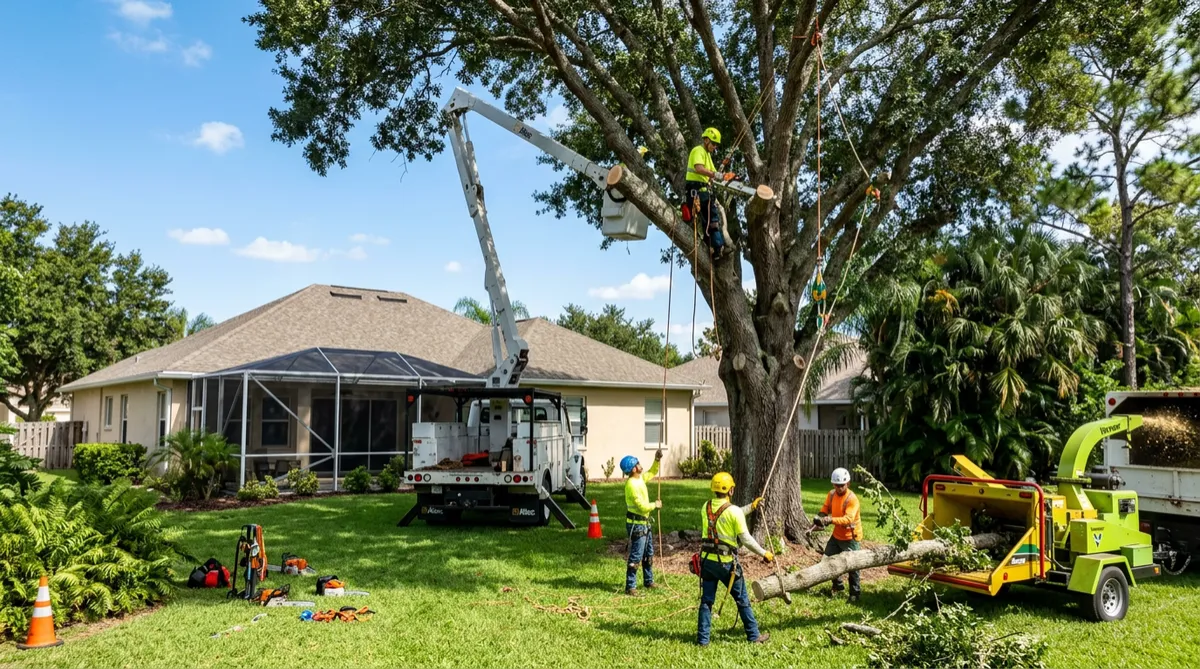
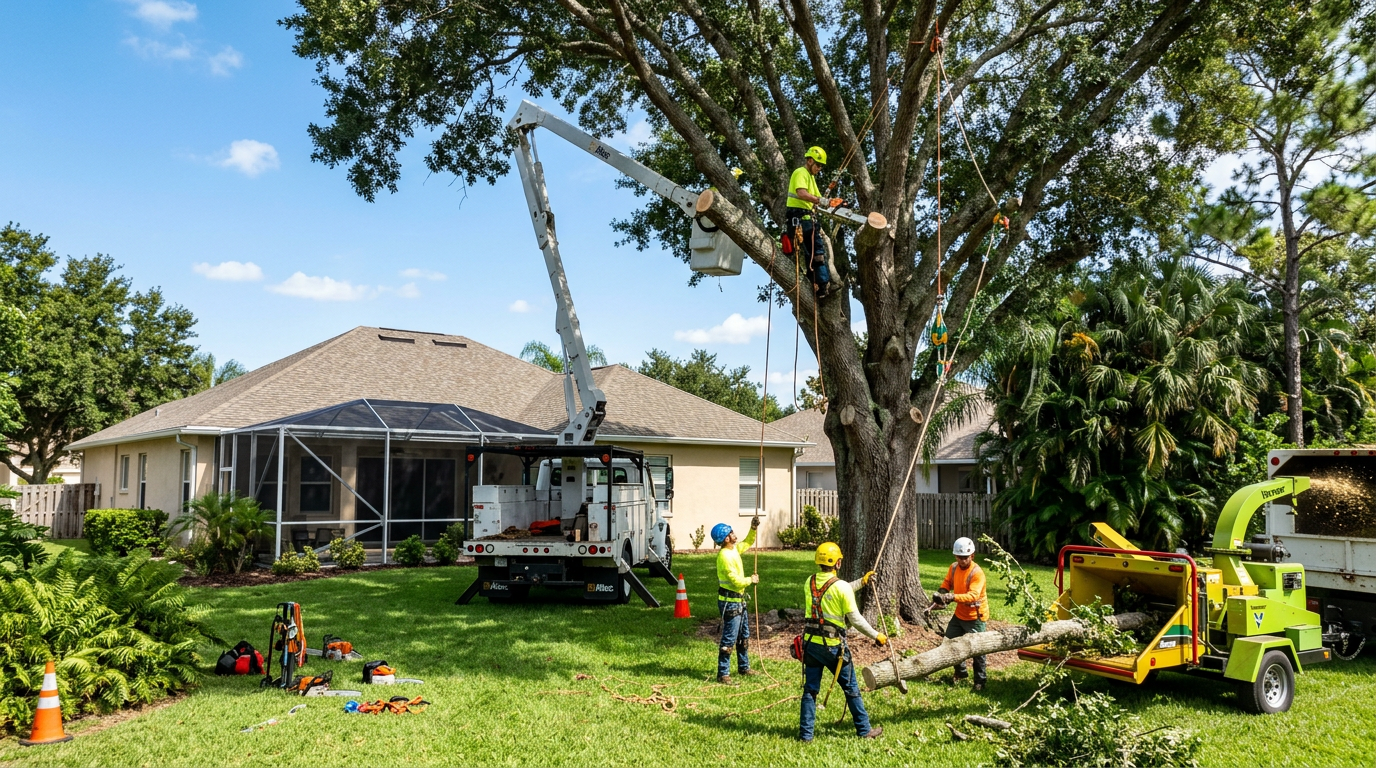
Depending on the tree and the available space, a crew may remove it in sections from the ground, use a climber and rigging to lower limbs in a controlled way, or use a crane where access and conditions make that appropriate. There is no single method for every property. A narrow side yard, nearby roof, fence, pool, landscaping, or overhead line may change the approach. The company should explain why its proposed method fits the site.
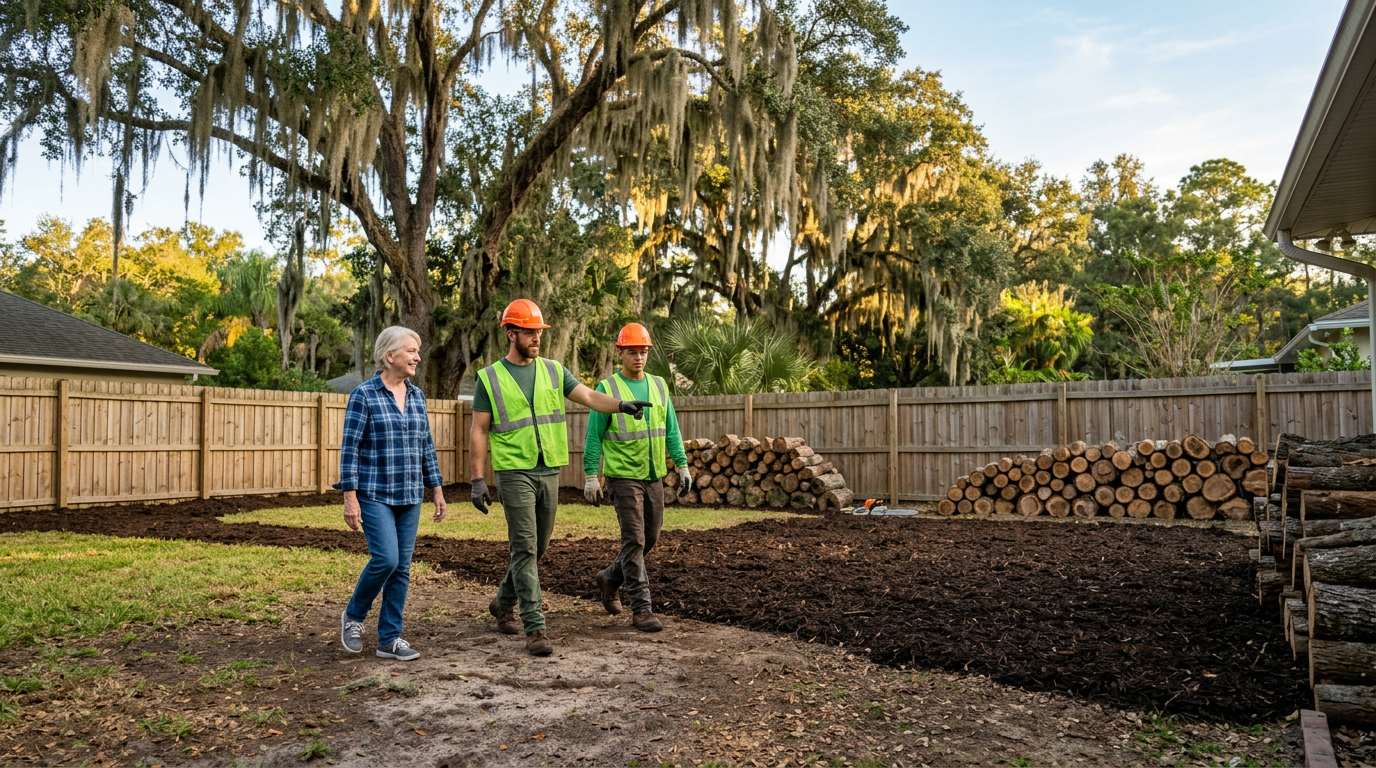
Before work starts, agree on what needs protection and how the crew will manage it. Useful topics include:
- Access routes for workers and equipment, and protection for lawn, irrigation, paving, and garden beds.
- How the crew will keep limbs and trunk sections away from roofs, fences, vehicles, and neighboring property.
- Whether nearby utilities or other site features need special precautions.
- Where wood and brush will be placed, what will be hauled away, and whether usable wood can be left at the property.
- Whether stump grinding is included, optional, or handled separately, and how deep the stump will be ground.
Ask who is responsible for permits and how the crew will confirm any required approvals before the scheduled work. Do not assume that a removal can proceed simply because a tree is damaged or because a contractor has recommended it. The job should not begin until the scope and site protections are clear.
Florida weather, local rules, and timing
In Northeast Florida, strong storms can leave broken limbs, damaged crowns, saturated ground, or trees that have shifted. The Atlantic hurricane season officially runs from June 1 through November 30. That calendar is a useful reminder to assess obvious hazards and think ahead, but it does not predict conditions at a particular property. A healthy tree does not need to be removed just because hurricane season is approaching. Focus instead on visible defects, prior damage, and professional advice about risks to people and property.
After a storm, take photographs from a safe distance and look for changes such as a newly exposed root plate, a split trunk, or hanging limbs. Keep people away from the hazard area. Do not work beneath suspended branches or near power lines, and do not try to straighten or pull a leaning tree. When the situation is not an immediate emergency, arrange for a qualified tree professional to assess it and explain the options.
Tree protection and removal rules vary between cities and counties, and may also depend on the tree, property, and type of work. Before scheduling removal, check with the local jurisdiction that governs the address. Ask whether a permit, review, or other approval is needed, and clarify who will obtain it. This is especially important when a property is inside city limits, in a protected or historic area, or subject to a development review. Requirements can change, so confirm them for the specific site rather than relying on a neighbor's past project or a general online summary.
Tree types, alternatives, and cleanup choices
Properties in the area may include live oak, laurel oak, pine, sweetgum, palm, or cypress. Each tree has its own growth pattern, structure, and response to damage. Species alone do not determine whether removal is necessary. A professional assessment should consider the tree's condition, its location, and what can reasonably be managed through pruning or other care.
If the concern is limited to dead or conflicting branches, ask whether pruning could address it while preserving the tree. If construction is planned, discuss the site layout early; changes to access, grading, or the work area may affect roots and stability. When removal is the best option, ask whether the company can handle the stump and what cleanup includes. Common choices include hauling away all brush and wood, leaving selected logs or chips, and grinding the stump. Grinding leaves wood chips and does not remove every root; discuss the finish you want and how the area will be left.
Cost depends on the tree's size and condition, the location, access, nearby hazards, equipment needs, disposal, and whether stump work is included. A tree that can be reached easily in an open yard is different from one that must be dismantled over a roof or worked around limited access. Request a written estimate that describes the work, cleanup, stump option, and any exclusions. Comparing estimates is most useful when each one covers the same scope.
Questions to ask before hiring
- What did you find during the assessment, and why do you recommend removal rather than pruning?
- What method will you use, and how will you protect structures, landscaping, and people?
- Who will check local rules and confirm any approvals before work begins?
- What exactly is included in cleanup, wood removal, and stump work?
- Can you provide a written estimate and explain how the work area will be left?
- What insurance coverage applies to this work, and can you provide documentation?
Asking these questions helps set clear expectations. A trustworthy company should be willing to explain its assessment in plain language, describe the proposed work, and identify issues that still need confirmation. If the answers are vague, or the plan does not address nearby property and site access, take time to get clarification before agreeing to the work.
Where we work
Arborman Tree Services serves property owners across North and Northeast Florida, including St. Augustine, Green Cove Springs, Interlachen, Volusia County, Flagler County, St. Johns County, and Putnam County. In and around St. Augustine, the Castillo de San Marcos, the Bridge of Lions, the Lightner Museum, Anastasia State Park, and the St. Augustine Lighthouse are familiar local reference points. Green Cove Springs sits along the St. Johns River, another defining feature of the region. These varied communities include historic neighborhoods, residential streets, and larger properties, so the right plan depends on the tree and the site—not a one-size-fits-all approach.
Whether you manage a home or a commercial property, start with the specific concern: a damaged limb, a declining tree, a clearance issue, or a change to the property. Sharing clear photos and describing access can help begin a useful conversation, but an on-site assessment is important for a sound recommendation.
Frequently Asked Questions
Does a leaning tree always need to be removed?
No. Some trees naturally grow at an angle, while a recent lean or soil lifting at the base can signal a change that needs prompt attention. Have a tree professional assess the trunk, roots, soil, and surroundings before deciding. Keep people clear if the tree appears unstable.
Can I remove a storm-damaged tree right away?
First make sure people stay away from the hazard. If the tree or limbs are near a power line, contact the utility and do not approach. For other damage, get an assessment and check local approval requirements before work. A damaged tree can contain hidden tension and should not be cut casually.
Do I need a permit to remove a tree in St. Augustine or St. Johns County?
Rules differ by jurisdiction and can depend on the property and tree. Contact the city or county responsible for the address and ask what approvals apply. Confirm the requirements before scheduling removal; do not rely on a rule that applied to a different property.
What happens to the stump after removal?
Stump grinding is often available as a separate or included option, but the scope varies. Ask whether grinding is included, how deep it will go, and what happens to the resulting chips. If you do not choose grinding, clarify how the remaining stump and wood will be handled.
What affects the cost of removing a tree?
Size, condition, access, nearby buildings or utilities, the removal method, disposal, and stump work can all affect an estimate. Ask for a written scope that lists cleanup and exclusions, then compare proposals that describe the same work rather than looking at a price alone.
If you are concerned about a tree at your home or property, contact Arborman Tree Services to request a free estimate. Share what you have noticed, and ask for an assessment and a clear explanation of the recommended work.
Website built by astreetgarage.com
