Professional Tree Removal in St. Augustine, FL | Arborman Tree Services
Removing a tree is a serious decision, especially in a place where mature live oaks shade historic streets and coastal pines shape the landscape. In St. Augustine and across St. Johns County, a tree may need to come down because it is unsafe, declining, storm-damaged, or poorly suited to its location. The right approach starts with a careful assessment—not an automatic recommendation to remove it. Arborman Tree Services helps property owners understand their options, plan safe work, and leave the site orderly. Whether your home is near the Castillo de San Marcos, along the corridor toward the St. Augustine Lighthouse, or in a growing neighborhood elsewhere in the county, local conditions and nearby structures matter. Here is what to know before arranging tree removal, including warning signs, planning, local considerations, and questions to ask a tree service.

When Tree Removal May Be the Right Choice
A tree can often be preserved with appropriate care, so removal is generally considered when its condition or position presents a meaningful safety concern or when other practical options are not suitable. A qualified tree professional can inspect the trunk, canopy, roots, surrounding ground, and targets such as homes, driveways, fences, and utility lines. The assessment should explain the observed concern and whether pruning, monitoring, or another measure could address it.
Common reasons to consider removal
- Severe structural damage: A split trunk, major crack, failed limb attachment, or extensive storm damage may make a tree unstable.
- Advanced decline: A tree with substantial dieback, decay, or root failure may no longer be able to withstand wind and rain reliably.
- Dangerous location: A compromised tree over a house, frequently used walkway, parking area, or play space may warrant prompt attention.
- Unavoidable conflicts: A tree may be interfering with essential construction, access, or infrastructure when redesign or root-protective alternatives are not feasible.
Warning Signs to Watch For
Regularly look at trees after strong storms and during routine yard care. From a safe distance, note changes in the canopy and trunk, and check whether the soil around the base has lifted or cracked. Do not climb a damaged tree, approach hanging limbs, or work beneath a suspended branch. Those conditions can change without warning.
Changes that deserve attention
- Large dead branches, broken tops, or a sudden increase in deadwood.
- Fresh cracks in the trunk or at the point where large limbs join it.
- Fungal growth or cavities accompanied by visible decline or structural change.
- Roots that appear damaged, exposed, severed, or lifted with the surrounding soil.
- A tree that has recently begun leaning, especially after saturated ground or high winds.
- Branches touching a roof, obstructing sight lines, or close to service lines.
These are reasons to arrange an evaluation, not a diagnosis by themselves. Some defects are superficial; others are difficult to see from the ground. In Northeast Florida, heavy rain, wet soils, wind exposure, and salt-influenced coastal conditions can all affect how a tree behaves. A professional can distinguish a manageable maintenance issue from a condition that calls for removal or urgent precautions.
How Professional Tree Removal Works
A well-planned removal begins before equipment arrives. The crew reviews the tree and the work area, identifies structures and other targets, establishes a safe drop or rigging plan, and discusses access, cleanup, and any stump work. The method depends on tree size and condition, available space, surrounding obstacles, and the safest way to control each section.
Planning, dismantling, and cleanup
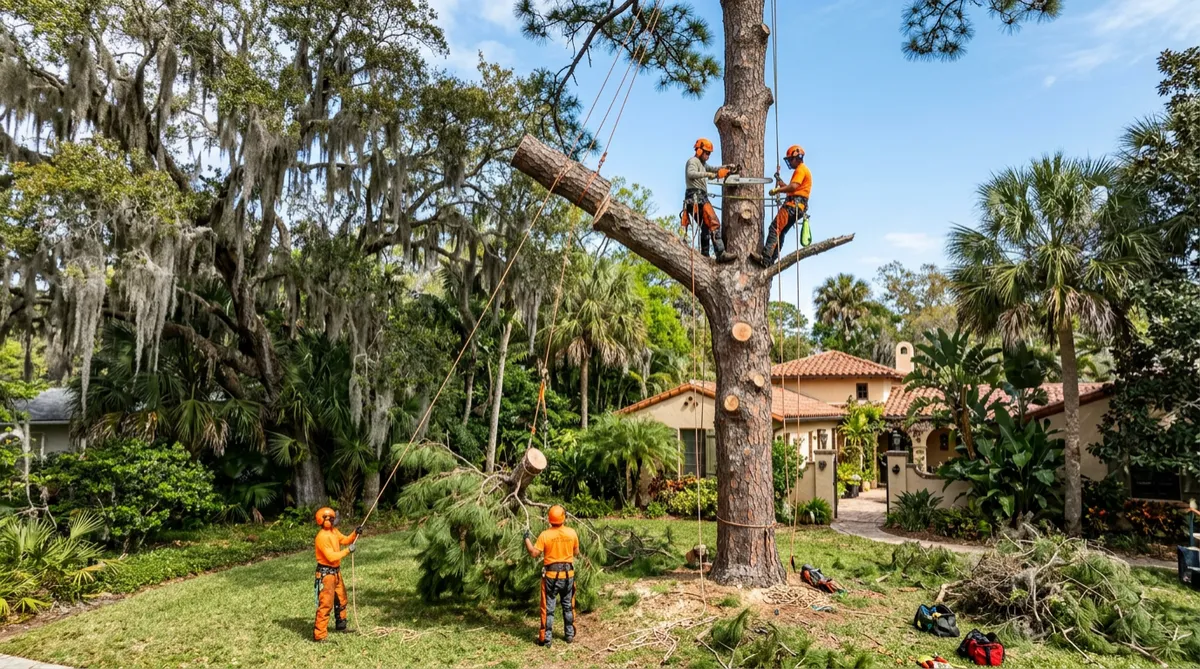
Where there is room and conditions allow, a tree may be brought down in a controlled direction. In tighter yards, a crew may dismantle it in sections, lowering limbs and trunk pieces with rigging to limit impact on nearby property. The team may use a bucket or climbing techniques suited to the site. Work near buildings, fences, landscape features, or utility lines needs particular care; only the appropriate utility provider should handle energized lines.
Before the job, confirm what the estimate includes: limb and trunk removal, wood handling, debris hauling, and the level of final raking or cleanup. Ask how vehicles and equipment will reach the tree, where materials will be staged, and whether gates, irrigation, or delicate landscaping need protection. If access is narrow, the plan may require smaller equipment or more sectional work. Clear communication helps avoid surprises and gives everyone a shared understanding of the work.

Safety, Equipment, and Your Property
Tree removal involves chainsaws, elevated work, heavy wood, and unpredictable forces. A professional crew uses task-appropriate protective equipment and plans for falling limbs, changing loads, and a clear work zone. Depending on the site, equipment may include climbing and rigging gear, a lift, a chipper, or machinery for moving larger logs. The right equipment is not simply the largest available; it is what can be used safely without creating unnecessary risk to the property.
Homeowners should keep children, pets, and visitors away from the work area and follow the crew’s safety instructions. Park vehicles outside the designated zone and secure loose yard items. Tell the tree service about underground irrigation, septic features, gates, narrow access, or other site details that may affect equipment placement. If overhead utility lines are present, point them out before work begins and ask how the plan accounts for them. Do not attempt to cut or move a hanging limb yourself.
Permits and Local Considerations in St. Augustine and St. Johns County
Tree rules can depend on the property’s location, the tree, the proposed work, and whether the site falls within a historic or otherwise regulated area. Before removing a protected or heritage tree, check current requirements with the City of St. Augustine or St. Johns County, as applicable. Do not assume that a tree can be removed without review simply because it is on private property, damaged, or close to a building. Ask the relevant local office what approvals, documentation, or inspections may apply to your specific address.
Respecting historic and natural settings
In historic St. Augustine, mature live oaks contribute to the feel of streets near Lightner Museum and the downtown district. Trees also frame familiar destinations such as the Castillo de San Marcos, the Bridge of Lions, the St. Augustine Lighthouse, and the Fountain of Youth Archaeological Park. Those landmarks are useful reminders of how established trees shape both private landscapes and the city’s public character; their presence does not by itself determine the rules for a nearby property. Confirm requirements for the actual parcel before scheduling work.
Beyond the historic core, the landscape changes from coastal neighborhoods near Anastasia State Park to inland communities and the St. Johns River and ravine areas. In Green Cove Springs, the setting around Spring Park offers another example of the region’s relationship with mature trees and public spaces. These place names provide context, not a substitute for a property-specific review. If a tree is near a public right-of-way, water feature, or protected area, ask the city or county whether additional review is needed. Allow time for any required process before setting a removal date.
What Affects the Cost of Tree Removal?
There is no reliable one-price answer for every tree. An estimate generally reflects the size and condition of the tree, how difficult it is to reach, the amount of controlled sectional work required, nearby structures or utilities, equipment needs, and the volume and handling of debris. A large tree in an open area can present different challenges from a smaller tree surrounded by a home, pool, landscaping, and fences.
Stump grinding, hauling, log splitting, and additional cleanup may be separate options, so compare estimates by scope rather than by the total alone. Ask whether the price includes the full removal and what happens to wood and chips. If an estimate is based only on a brief description or a distant photo, request clarification about what could change after an on-site inspection. A clear written scope helps you compare like with like without relying on generalized price claims.
Cleanup and Stump Options
Once the tree is down, decide how you want the remaining material handled. Common arrangements include chipping smaller branches, hauling debris, leaving usable logs on site, or cutting wood to lengths the homeowner specifies. Confirm the plan before work starts; disposal and wood handling affect both the final appearance and the job scope.
A stump can be left in place, ground below the surrounding grade, or addressed later. Grinding can make the area easier to landscape or use, but it does not remove every root, and the resulting chips may need to be moved or replaced with soil depending on the intended use. Roots decay over time, so the best choice depends on future plans for the space, access for equipment, and any nearby utilities. Ask what stump work includes and whether surface roots are part of the agreed scope.
Choosing a Tree Service
Choose a company that is willing to explain its assessment and work plan in plain language. Request a written estimate that identifies the tree, the services included, debris handling, stump options, access assumptions, and any exclusions. Ask who will supervise the work and how the crew will protect people and property. It is reasonable to ask about insurance and to verify applicable coverage before work begins.
Be cautious about pressure to sign immediately, vague promises, or a recommendation that offers no explanation of the tree’s condition. A trustworthy professional should welcome reasonable questions, distinguish urgent hazards from routine maintenance, and tell you when local approval may need to be checked. For a protected or heritage tree, confirm the local process independently rather than treating a contractor’s assurance as a permit determination.
Frequently Asked Questions
Do I need permission to remove a tree in St. Augustine?
Requirements can vary by location, tree, and property circumstances, particularly in historic areas or when a tree may be protected. Check with the City of St. Augustine or St. Johns County for the rules that apply to your address before scheduling removal.
Can a damaged tree wait until after storm season?
That depends on the damage and what could be struck if the tree or a limb fails. Keep people clear of any immediate hazard and arrange a professional assessment; do not delay if the tree has shifted, split, or partly uprooted.
Will a tree service remove the stump too?
Stump work is often an optional part of a tree-removal estimate. Confirm whether grinding is included, how deep it will go, and how chips or resulting debris will be handled.
What happens to the wood and branches?
Depending on the agreed scope, branches may be chipped, debris may be hauled away, and logs may be left or removed. Decide in advance whether you want usable wood kept on site and make sure the estimate states the handling plan.
How should I prepare for a removal appointment?
Keep people and pets away from the work zone, move vehicles and loose items, and tell the crew about irrigation, septic features, access limits, and overhead lines. Follow the crew’s site-specific instructions once they arrive.
Make a Safe, Informed Plan
Tree removal should balance safety, property needs, and the character of the local landscape. Look for warning signs, obtain a clear on-site assessment, check local requirements where applicable, and agree on the work and cleanup scope before the crew begins. If you have a tree concern in St. Augustine, St. Johns County, or Green Cove Springs, contact Arborman Tree Services today for a free estimate. We can discuss what you are seeing and help you understand the next steps for your property.
Website built by astreetgarage.com
