(904) 578-0996 Free Estimates — Fast Response East Palatka, FL & Surrounding Areas
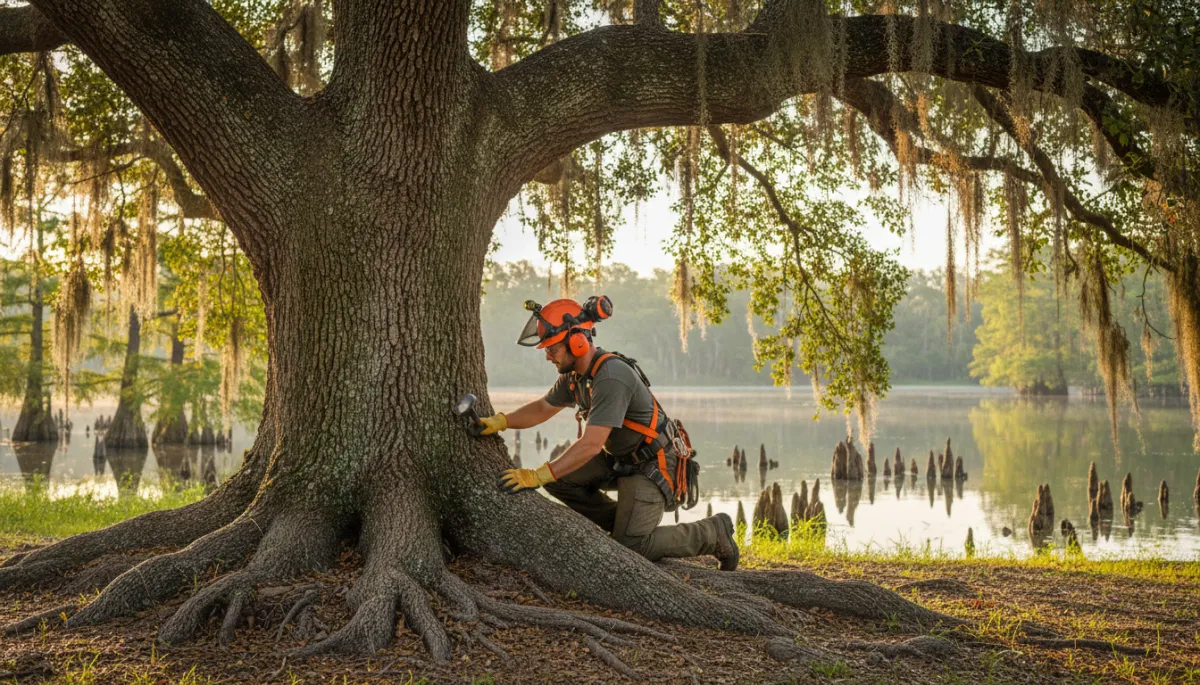
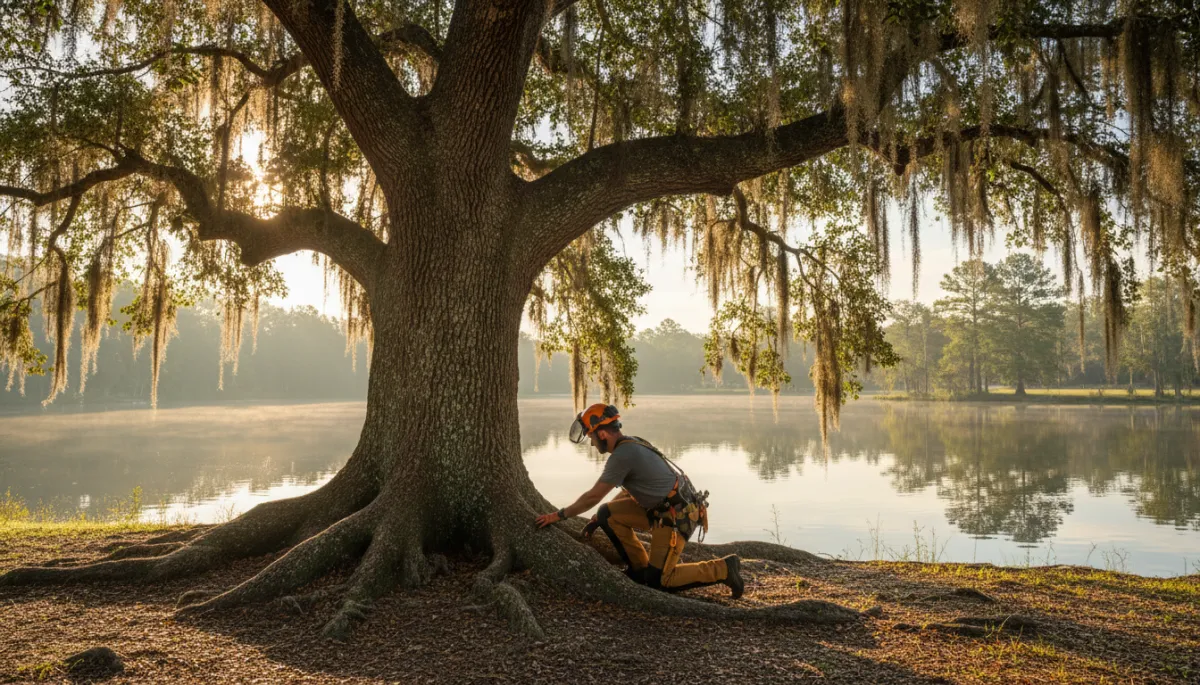
ISA-certified arborist inspecting the base of a large live oak tree on a Putnam County FL lakefront property

Tree Risk Assessment & Hazard Evaluation in Putnam County, FL | Arborman Tree Services

July 11, 202612 min read

Tree Risk Assessment, Hazard Tree Evaluation, Putnam County FL, ISA Certified Arborist

Tree Risk Assessment & Hazard Tree Evaluation in Putnam County, FL | Arborman Tree Services

Wondering if that big oak or pine near your home is dangerous—and whether you really need a tree risk assessment? If you see leaning trunks, dead branches over the roof, mushrooms at the base, or cracking soil around the roots, it is time to have an ISA certified arborist evaluate the tree before storm season does it for you. Arborman Tree Services provides expert, safety-focused tree risk assessment in Putnam County, FL, giving homeowners clear answers, written documentation, and practical options to reduce risk—not panic.

Custom HTML/CSS/JAVASCRIPT
photorealistic ISA-certified arborist in full safety gear carefully inspecting the base and root flare of a massive old-growth live oak tree on a quiet Florida lakefront rural property in Putnam County, golden morning light filtering through Spanish moss, calm water and cypress knees in background, neutral color palette

Professional Tree Risk Assessment on a Florida Lakefront Live Oak

Calm, thorough inspection to protect your home, family, and property value

1. How Do I Know If My Tree Is Dangerous—and Do I Need a Tree Risk Assessment?

A tree becomes truly dangerous when it has a defect—like decay, root damage, or large dead limbs—and there is something valuable in its “fall zone,” such as your home, driveway, dock, or play area. You may need a professional tree risk assessment if:

  • The tree leans more than it used to, especially after a storm or heavy rain.
  • You see cracks, cavities, or mushrooms on the trunk or at the base.
  • Large dead branches hang over your roof, driveway, or neighbor’s property.
  • The tree stands in saturated soil near a lake, canal, or the St. Johns River and sways excessively in wind.

If you are asking yourself, “Is this tree safe?”—or if an insurance company, neighbor, or attorney has raised concerns—then scheduling a tree risk assessment in Putnam County, FL is the responsible next step. Arborman Tree Services approaches each inspection calmly and systematically, so you get clear information, not scare tactics.

2. What a Professional Tree Risk Assessment Really Is (ISA TRAQ, Level 1 vs. Level 2)

A professional tree risk assessment is not a quick glance from the truck—it is a structured process based on the ISA Tree Risk Assessment Qualification (TRAQ) methodology. As an ISA certified arborist serving Putnam County, Arborman follows this international standard so your results are credible with insurance companies, attorneys, and municipalities.

Level 1: Limited Visual Assessment (Drive-by or Area Scan)

A Level 1 assessment is a broad overview—often used after storms or for large properties. The arborist scans many trees quickly from the ground or vehicle, looking for obvious high-risk issues such as broken tops, uprooting, or major lean. It is useful for triage, but it does not replace a detailed inspection of an individual tree near your home or dock.

Level 2: Basic Tree Risk Assessment (Full 360° Inspection)

For most concerned homeowners, a Level 2 tree risk assessment is the standard. The arborist inspects the tree from all accessible sides, evaluating:

  • Site conditions—soil, drainage, wind exposure, and nearby targets (homes, driveways, docks, playsets).
  • Tree structure—roots, trunk, major limbs, and crown for defects and decay.
  • Likelihood of failure—how likely a problem is to cause a break or uprooting.
  • Consequences of failure—what would be hit if the tree or part of it fails.

In some complex cases, a Level 3 advanced assessment with tools like resistographs or tomography may be recommended. For most residential situations in Palatka, Interlachen, Crescent City, Georgetown, and around Crescent Lake or Lake George, Level 1 and Level 2 assessments provide the clear, actionable information homeowners need.

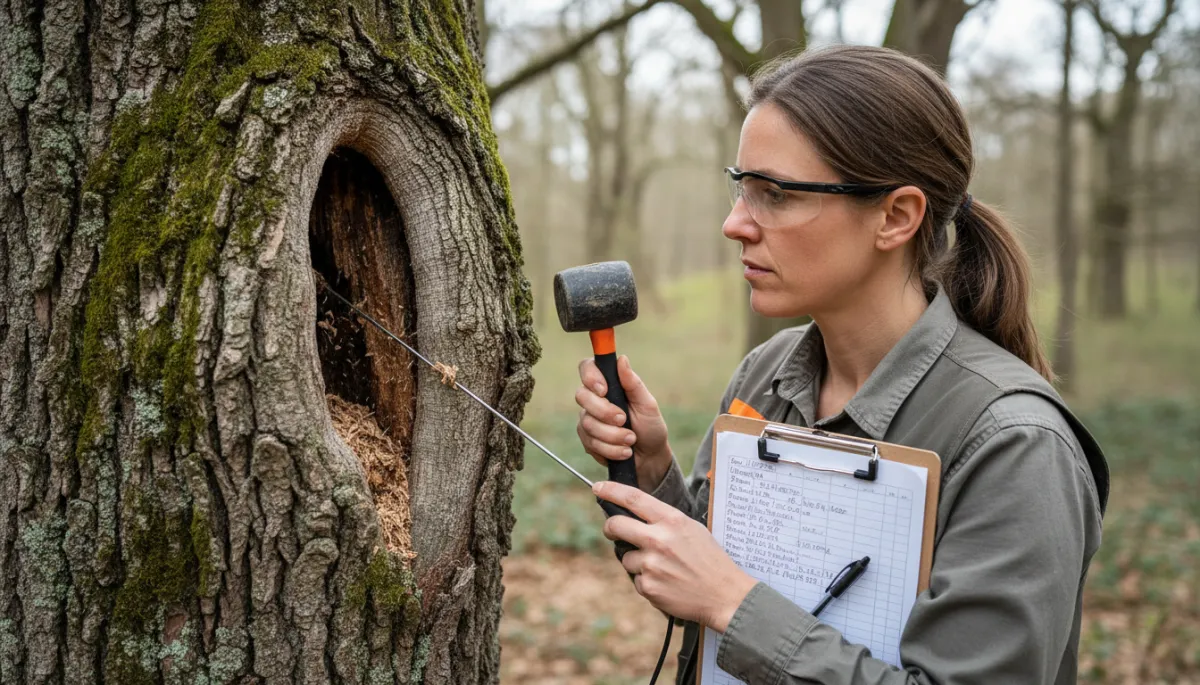
Certified arborist inspecting tree decay with tools and clipboard

Detailed cavity inspections help distinguish manageable defects from true hazard trees.

3. Clear Warning Signs of a Hazard Tree You Can Look for at Home

You do not need to be an expert to spot red flags. Before you call for a dangerous tree inspection in Florida, walk your property and look for these common warning signs:

  1. Leaning trunk — especially if the lean is recent, increasing, or the soil on the opposite side is cracking or lifting. A long-standing lean with good root support may be stable; a new lean often is not.
  2. Root upheaval — raised soil, exposed roots, or gaps opening on one side of the tree. This can indicate partial root plate failure, particularly common after heavy rain and wind along the St. Johns River or near Rodman Reservoir.
  3. Bark cracks and splits — vertical cracks, seams, or areas where bark is bulging. Deep cracks in the trunk or at major branch unions can signal structural weakness in large live oaks and water oaks common around Crescent Lake and Lake George.
  4. Dead or thinning crown — large dead branches, sparse foliage, or entire sections of the canopy without leaves. Longleaf pines with a thinning top or flat, dead “flag” of needles should be evaluated promptly.
  5. Mushrooms at the base — fungal fruiting bodies on the trunk or soil around the base often indicate internal decay. Not all mushrooms mean failure is imminent, but they always justify a closer look by an ISA certified arborist in Putnam County.
  6. Cavities and hollows — large openings where wood is missing, especially if they extend into the trunk or main crotch. A tree can tolerate some hollowing, but only a trained arborist can judge how much sound wood remains.
  7. Hanging or broken branches — “widow-makers” lodged high in the canopy are a serious hazard near driveways, patios, and docks, especially during high winds.

4. Why Large Lakefront Trees in Putnam County Carry Unique Risks

From the ravines around Ravine Gardens State Park in Palatka to the shorelines of Crescent Lake, Lake George, and the St. Johns River, Putnam County is blessed with massive live oaks, water oaks, and longleaf pines. These trees are beautiful—and they face unique stresses in our rural, lakefront environment.

  • Saturated soils — High water tables and periodic flooding along lakes and the St. Johns River can weaken root systems. Saturated soil loses strength, making even healthy trees more likely to uproot in strong winds, especially on slopes or near ravines.
  • Wind exposure — Trees on open shorelines or in cleared yards around Interlachen, Crescent City, and Georgetown take the full force of thunderstorm and tropical-storm winds. Tall pines and broad-crowned oaks with unbalanced canopies are especially vulnerable.
  • Root systems near water — Roots may grow shallow over compacted fill or old construction debris near seawalls, docks, and driveways. This can create a large, heavy canopy supported by a relatively thin, flat root plate—an issue a professional hazard tree evaluation in Palatka and neighboring communities will carefully consider.

None of this means you must remove your favorite lakefront oak or pine. It does mean that a calm, evidence-based tree safety inspection near you—especially before hurricane season—can prevent surprises and expensive emergency removals later.

5. What Happens During an Arborman Tree Risk Assessment in Putnam County

When you schedule a tree risk assessment in Putnam County, FL with Arborman Tree Services, you can expect a thorough, step-by-step process designed to keep you informed and at ease.

  1. Initial conversation — We start by listening. You point out the tree or trees you are worried about, share any history (previous pruning, lightning strikes, construction damage), and explain your priorities—safety, views, shade, or protecting a historic tree.
  2. Site evaluation — The arborist looks at the surroundings: soil moisture, drainage patterns, nearby structures, traffic areas, and prevailing wind exposure. A big oak over a lightly used back field is different from the same oak over your living room or dock on Crescent Lake.
  3. Tree inspection — Using ISA TRAQ guidelines, we examine the roots, trunk, major branches, and crown. We may tap the trunk with a mallet, probe cavities, or use diagnostic tools when appropriate to better understand internal decay or structural defects.
  4. Photos and documentation — We take clear photographs of key defects, the overall tree, and the areas it could impact. These photos are included in your written report so you can see exactly what we see—useful for insurance, legal questions, or discussions with family members and neighbors.
  5. Risk rating and recommendations — We assign a formal risk rating based on the likelihood of failure and the consequences if it fails. Then we outline practical mitigation options: pruning, cabling, monitoring, or removal. You receive a written report in clear language, not just technical jargon.

6. After the Assessment: Safe, Practical Mitigation Options

Not every concerning tree must be removed. Based on your risk assessment, Arborman Tree Services may recommend one or more of the following mitigation strategies:

  • Targeted removal — If a tree is truly hazardous and cannot be reasonably made safe, removal is often the most responsible choice. We plan removals carefully to protect your home, dock, and landscape, and can coordinate with stump grinding and replanting when desired.
  • Crown reduction and pruning — Proper pruning—not topping—can reduce wind load, remove deadwood, and balance the canopy. This is especially helpful for large water oaks and live oaks near structures in Palatka, Interlachen, and Crescent City. Pruning follows current UF/IFAS and ANSI A300 best practices to maintain long-term tree health.
  • Cabling and bracing — For valuable trees with weak branch unions or multiple stems, installing high-strength cables or braces can provide additional support and reduce the risk of limb failure. This is often used for cherished live oaks framing lake views or historic trees near homes and churches.
  • Monitoring and maintenance — Some trees can be safely retained with regular checkups, especially when defects are minor or the target area is low-use. We may recommend periodic re-inspection, seasonal pruning, or site changes such as moving play equipment or parking areas out of the fall zone.

Our goal is always the same—protect people and property while preserving as many healthy, structurally sound trees as possible. You receive options with pros and cons so you can make an informed decision that fits your budget and long-term plans for your property.

7. Tree Risk Assessment for Insurance and Legal Purposes

When a tree damages a home, vehicle, dock, or neighboring property, insurance companies and attorneys often ask the same questions: Was this risk known?Was it reasonable to leave the tree standing? A written, ISA certified arborist assessment can be invaluable in these situations.

  • Insurance claims — A documented hazard tree evaluation in Palatka and surrounding Putnam County can show that you acted responsibly by seeking professional advice. Some insurers may also request an assessment before renewing policies on heavily wooded or lakefront properties.
  • Neighbor disputes — When branches or roots cross property lines, a neutral, certified report helps clarify actual risk and reasonable options. This can reduce conflict and support fair agreements between neighbors in rural communities around Crescent Lake, Rodman Reservoir, and Lake George.
  • Legal documentation — In the event of an injury or property loss, a prior written assessment may help demonstrate that you either addressed known hazards or were not aware of any obvious defects at the time. While it is not a legal guarantee, it is far stronger than “I thought the tree looked fine.”

For these reasons, many homeowners now schedule a dangerous tree inspection in Florida as part of their overall risk management—just like roof inspections or electrical checks.

8. What Does a Tree Risk Assessment Cost in Putnam County, FL?

Costs vary with the number of trees, site complexity, and how detailed the documentation needs to be—especially for insurance or legal cases. Across central Florida, including Putnam County, homeowners can generally expect:

  • $150–$400 per tree for a standard Level 2 TRAQ assessment with a written report and photos for typical residential trees.
  • $300–$800 for a full-property assessment, depending on lot size and tree density.
  • $250–$500+ per tree if advanced Level 3 diagnostic tools (like resistographs or tomography) are required.

These ranges are based on current Florida industry data and UF/IFAS guidance on the importance of professional evaluations for hazardous trees. Your actual cost will depend on your specific situation. Arborman Tree Services offers clear, upfront pricing and can often bundle multiple trees on the same visit for better value.

9. Tree Risk Assessment FAQ for Putnam County Homeowners

Q1: Is my tree safe if it has been standing for 50 years?

Age alone does not make a tree safe—or unsafe. Many live oaks in Putnam County thrive well past 100 years, while some younger water oaks and pines fail early due to decay, root damage, or storms. A 50-year-old tree that has never been professionally inspected may have hidden defects, especially if the site has changed (construction, soil fill, storms). A tree safety inspection near you looks at current structure and health, not just age, to determine real-world risk.

Q2: My neighbor’s tree is hanging over my property—who is responsible?

Responsibility can be complex and often depends on local laws and the specific situation. In many Florida cases, you may trim branches back to the property line (without harming the tree), while the tree’s owner is responsible for overall tree health and obvious hazards. A neutral ISA certified arborist in Putnam County can provide a written assessment of the tree’s condition, which you and your neighbor can use to make informed decisions—or share with attorneys or insurers if needed. Always consult a legal professional for definitive advice on liability.

Q3: How much does a tree risk assessment cost in Putnam County?

For most residential properties in Palatka, Interlachen, Crescent City, and surrounding areas, expect roughly $150–$400 per tree for a Level 2 assessment with a written report and photos. Full-property assessments and advanced diagnostics can cost more. Because every property is different, the best way to know is to request a free estimate from Arborman Tree Services—we will review your needs and provide a clear, written quote before any work begins.

Q4: Can a tree risk assessment save me money on homeowner’s insurance?

Some insurers may not offer a direct discount for a tree risk assessment, but a professional report can still save you money. It can help you prioritize which trees to address before they cause damage, support your case in a claim, and demonstrate that you are managing known risks responsibly. In high-risk areas—like heavily wooded or lakefront lots—documented tree risk assessment in Putnam County, FL may also help when insurers review or renew your policy. Always check with your specific insurance provider about their requirements and potential benefits.

Q5: How quickly can you assess a tree after a storm in Putnam County?

After major storms, demand for dangerous tree inspection in Florida increases sharply. Arborman Tree Services prioritizes emergency and high-risk situations—trees on houses, blocking driveways, or threatening power lines—while scheduling other assessments as quickly as possible. In many cases, we can perform an initial Level 1 triage within 24–72 hours, followed by detailed Level 2 assessments as conditions allow. Calling early, especially at the start of hurricane season, helps ensure faster response when you need it most.

10. Ready for Peace of Mind? Schedule Your Tree Risk Assessment Today

If you are worried about a large live oak, water oak, or pine near your home, dock, or driveway in Putnam County, you do not have to guess whether it is safe. A calm, expert evaluation from Arborman Tree Services can clarify your risk, document your due diligence, and outline clear next steps—whether that means pruning, cabling, monitoring, or removal.

Arborman is an ISA certified tree care company serving northeast Florida, including Palatka, Interlachen, Crescent City, Georgetown, and lakefront communities around Crescent Lake, Lake George, and the St. Johns River. We combine professional training with local experience in Florida’s soils, weather patterns, and tree species, so your tree risk assessment in Putnam County, FL is grounded in real-world conditions—not theory.

Use the online contact form to request a hazard tree evaluation in Palatka or anywhere in Putnam County. Upload photos if you have them, and share any insurance or legal deadlines you are facing—we will respond promptly and help you prioritize what needs attention first.

With a professional assessment and a clear plan, that big tree in the yard becomes less of a question mark and more of a managed asset—either safely retained and cared for, or responsibly removed before it can cause harm. Arborman Tree Services is here to help you make that decision with confidence.

Back to Blog