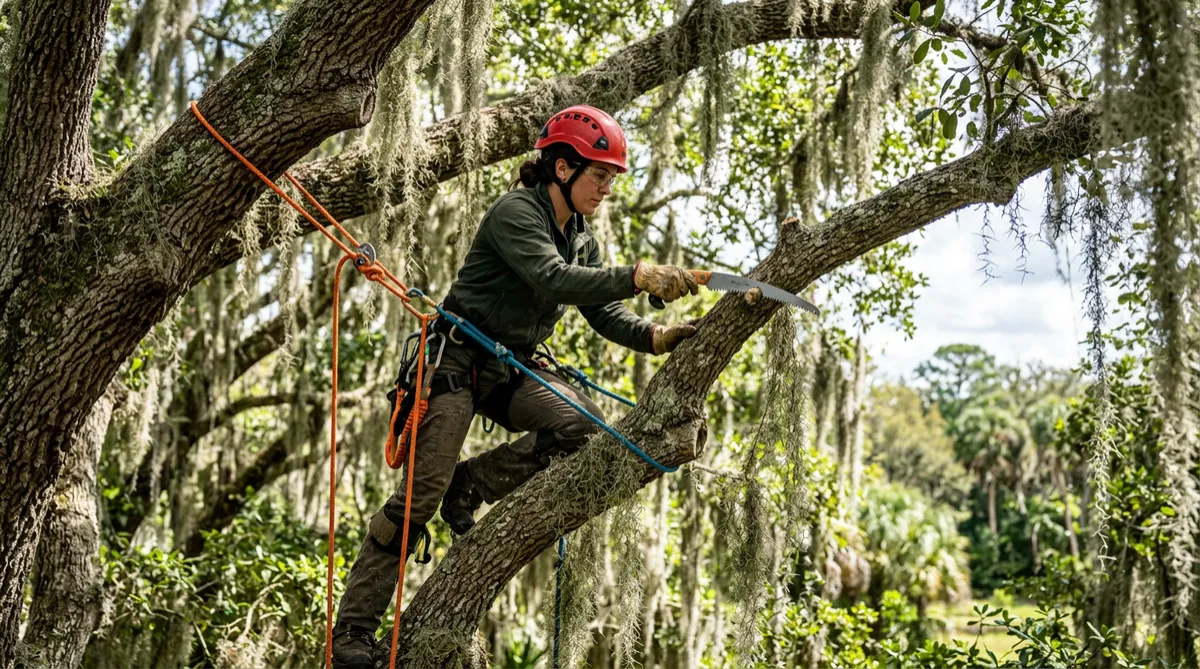
Tree Trimming in Green Cove Springs: A Guide for Northeast Florida
In Northeast Florida, a healthy, well-shaped tree can shade a porch, soften summer heat and make a yard feel at home in its landscape. But good tree care is about more than appearance. Thoughtful pruning can remove hazardous or damaged branches, preserve a strong structure and help a tree coexist with roofs, driveways and overhead space. Too much cutting, poorly placed cuts or the wrong timing can do the opposite.
For homeowners in Green Cove Springs, throughout Clay County and around Interlachen and Putnam County, local conditions matter. Warm weather, storms, sandy soils and a varied mix of native and ornamental trees all influence what a tree needs. Here is a practical guide to making informed decisions and knowing when to call a professional.

Why pruning matters
Pruning is the selective removal of branches for a defined purpose. It can improve a tree’s structure while it is young, remove dead or broken limbs, reduce rubbing between branches and maintain appropriate clearance from buildings and walkways. A well-planned cut preserves as much healthy canopy as possible; leaves are the tree’s energy-producing surface, so removing more than needed can place a tree under stress.
Pruning cannot make a tree storm-proof or guarantee that branches will not fail, but it can address defects and reduce avoidable conflicts. Mature shade trees add character near Spring Park and its historic spring and gazebo in Green Cove Springs. Along the St. Johns River, around Governors Park and near the Camp Blanding area, tree conditions and property settings vary; each tree deserves an individual assessment.
Choosing the right time in Florida
Florida’s long growing season means there is no single calendar date that suits every species or every pruning goal. Dead, broken or immediately hazardous limbs may need attention whenever they are discovered, provided the work can be done safely. For routine work, consider the tree’s species, current health, flowering cycle, recent weather and the purpose of the cuts. Avoid unnecessary heavy pruning during heat, drought or other stressful conditions, and seek species-specific advice when disease or pests are a concern.
Hurricane-season preparation is best handled well before a storm is approaching. A qualified arborist can inspect for deadwood, weak attachments, branches contacting structures and other concerns that can be corrected with appropriate pruning. Do not top a tree or strip its canopy in the belief that severe cutting will make it safer in high winds. Storms can break healthy trees too, and no pruning plan can eliminate that risk. After a storm, stay clear of hanging limbs and downed wires and arrange a professional assessment.
Notes for common Florida trees
- Live oaks and other oaks: Preserve a strong framework and avoid removing large amounts of live foliage at once. A young oak may benefit from structural pruning; a mature one often needs selective maintenance rather than dramatic reshaping. Timing can matter when disease is suspected, so ask an arborist familiar with local oak health concerns before scheduling extensive cuts.
- Pines: Pines do not respond to indiscriminate shearing like a hedge. Remove damaged or hazardous limbs with care and retain the tree’s natural form. If a pine is leaning, losing needles unusually or showing signs of decline, have the cause assessed rather than assuming pruning alone will solve it.
- Crepe myrtles: Make selective cuts to remove dead, crossing or poorly placed growth and preserve the plant’s graceful branching. Cutting large stems back to stubs year after year—often called “crepe murder”—creates knobby ends, invites weak shoots and spoils the natural structure. Choose a variety that fits the space instead of repeatedly forcing an oversized plant into it.
- Palms: Remove only fully dead or clearly damaged fronds when appropriate, and leave healthy green fronds in place. Over-pruning, cutting into the trunk or removing a palm’s healthy crown can injure it. Ask a palm-care professional about unusual discoloration, crown damage or suspected disease.
Trimming, pruning, thinning, raising and deadwooding
People often use “trimming” and “pruning” interchangeably. Trimming commonly describes shaping hedges or small landscape plants, while pruning is the more precise selection of branches from a woody plant or tree. In either case, the goal should be clear before cutting begins.
- Thinning selectively removes some branches to reduce crowding while preserving the tree’s natural outline. It is not a reason to strip out the interior or leave a sparse canopy.
- Crown raising removes selected lower branches to create clearance over a path, driveway or lawn. Removing too many lower limbs can weaken the tree’s form and should be avoided.
- Deadwooding means removing dead, dying or broken branches. It can reduce a particular hazard and improve appearance, but it does not mean cutting out every small interior twig.
- Structural pruning develops or maintains a sound branch framework, especially in younger trees, by addressing competing leaders, poor attachments or branches likely to rub.
A good plan uses the least amount of removal that achieves the desired result. Ask the tree-care professional to explain which branches are proposed for removal and why.

Good cuts versus harmful topping
Where a branch is being removed, the cut should be made just beyond the branch collar—the slightly swollen area where the branch meets its parent limb or trunk—without cutting flush into the trunk or leaving a long stub. The branch collar contains tissue that helps the tree close over a wound. For a large limb, proper technique often uses several controlled cuts so the limb’s weight does not tear bark as it falls. The right method depends on branch size, position and equipment.
Topping is the indiscriminate cutting of major limbs back to stubs or lateral branches too small to take over as leaders. It can leave large wounds, trigger clusters of weakly attached shoots and expose inner branches to harsh sun. The fast regrowth may seem like a quick fix, but it often creates recurring maintenance and future structural concerns. If a tree is too large for its location, discuss a suitable long-term option with a qualified arborist rather than topping it.
Signs a tree may need attention
Walk your property periodically and look for changes, especially after strong winds or heavy rain. Warning signs include a newly broken or hanging limb, branches rubbing against a roof, cracked or split unions, dead sections in the canopy, sudden leaning, exposed or heaving roots, decay around a major attachment, or a noticeable change in leaf color or density. Fungi near the base or on a trunk can also merit an assessment, though not every fungus means a tree must be removed.
Context matters: a limb over a busy entrance is different from a twig in a remote wooded lot. Around Lake Interlachen, Crescent Lake, Palatka, the Rodman Reservoir, the Ocklawaha River and Etoniah Creek State Forest, exposure and vegetation vary. Assess each tree on its own merits.
When to call a professional—and how to choose one
For a small shrub or a low, reachable twig, a homeowner may be able to do limited pruning with clean, sharp hand tools and a clear view of the work. Stop if the branch is larger than you can control, the cut is above shoulder height, a ladder would be needed, the tree is near a structure, or you are unsure how the cut could affect stability. Never climb with a running saw or work from a ladder while handling a chainsaw. A branch under tension can move suddenly, and even a modest limb can cause serious injury or property damage.
Keep well away from power lines. Do not prune, climb or use tools near energized lines; contact the electric utility or a qualified line-clearance professional for guidance. Treat a downed wire as live, stay back and report it to the utility or emergency services. Do not try to move it or clear branches tangled in it.
For work in a tree, large limbs, storm damage or anything near a home or utility line, hire a professional tree-care company. Ask for proof of liability insurance and workers’ compensation coverage, confirm any licenses or permits that apply to the work and location, and request a written description of the proposed work. An ISA-certified arborist has demonstrated tree-care knowledge through a professional certification; ask who will assess the tree and supervise the work. Be cautious of anyone recommending severe topping, demanding an immediate decision without explaining the issue, or offering a diagnosis without inspecting the tree.
A practical seasonal maintenance schedule
A simple routine can make problems easier to spot before they become urgent. The schedule below is a starting point, not a substitute for species-specific advice or a professional assessment.
- Late winter through early spring: Review the structure of deciduous trees and plan routine pruning around species needs and flowering. Look for deadwood and branches that may need clearance before spring growth.
- Spring and early summer: Check for rubbing branches, new damage and changes in growth. Avoid unnecessary heavy cutting during heat or drought, and ask about timing if disease is suspected.
- Before storm season: Arrange an inspection early enough to plan appropriate work. Clear routine debris from the ground, but do not cut large limbs or attempt risky work as a storm approaches.
- After severe weather: From a safe distance, look for hanging limbs, splits and leaning. Keep people away from danger areas and call a professional for damaged trees or branches.
- Year-round: Keep observations, note changes and address conflicts with roofs, driveways and walkways before they worsen. Avoid removing more healthy canopy than necessary.
Arborman Tree Services also serves Volusia and Flagler counties.
Frequently Asked Questions
How often should I have my trees pruned?
There is no universal schedule: a young tree being trained, a mature live oak and a palm have different needs. Inspect trees periodically and arrange an assessment when you notice a change, a conflict with a structure or a specific safety concern. A professional can recommend an interval based on the species, condition and site.
Should I prune a tree before hurricane season?
An inspection well before storm season can identify dead, damaged or poorly placed branches that may warrant attention. Pruning does not make a tree storm-proof, and aggressive cutting can create new problems. Plan routine work early rather than attempting major cuts when a storm is imminent.
Is it safe to remove a branch over my roof myself?
Not if the work requires climbing, a ladder, a chainsaw, controlling a heavy limb or working near a power line. Branches can shift or fall unpredictably, even when they appear manageable. Keep people away from the area and hire a qualified professional for elevated or large-limb work.
What is the difference between pruning and topping?
Pruning is selective removal of branches for a defined purpose while preserving the tree’s structure. Topping cuts major limbs back indiscriminately, often leaving stubs and prompting weak, crowded regrowth. If a tree is outgrowing its space, ask an arborist about appropriate alternatives.
How can I tell whether an arborist is qualified?
Ask about relevant experience, applicable local licensing, insurance coverage and who will supervise the work. You can also ask whether the person assessing the tree holds ISA certification and request a clear written scope. A trustworthy professional should explain the reasons for recommended cuts and answer questions without pressuring you.
Protect your trees with a thoughtful plan
Good pruning respects the way a tree grows and the conditions around it. Whether you care for a shaded Green Cove Springs yard, a property near Interlachen or a larger lot elsewhere in Clay or Putnam County, start with the tree’s health, the purpose of the work and the safety of everyone nearby. Contact Arborman Tree Services to discuss your trees and request an estimate.
Website built by astreetgarage.com

