Tree Trimming & Pruning in Northeast Florida | Arborman
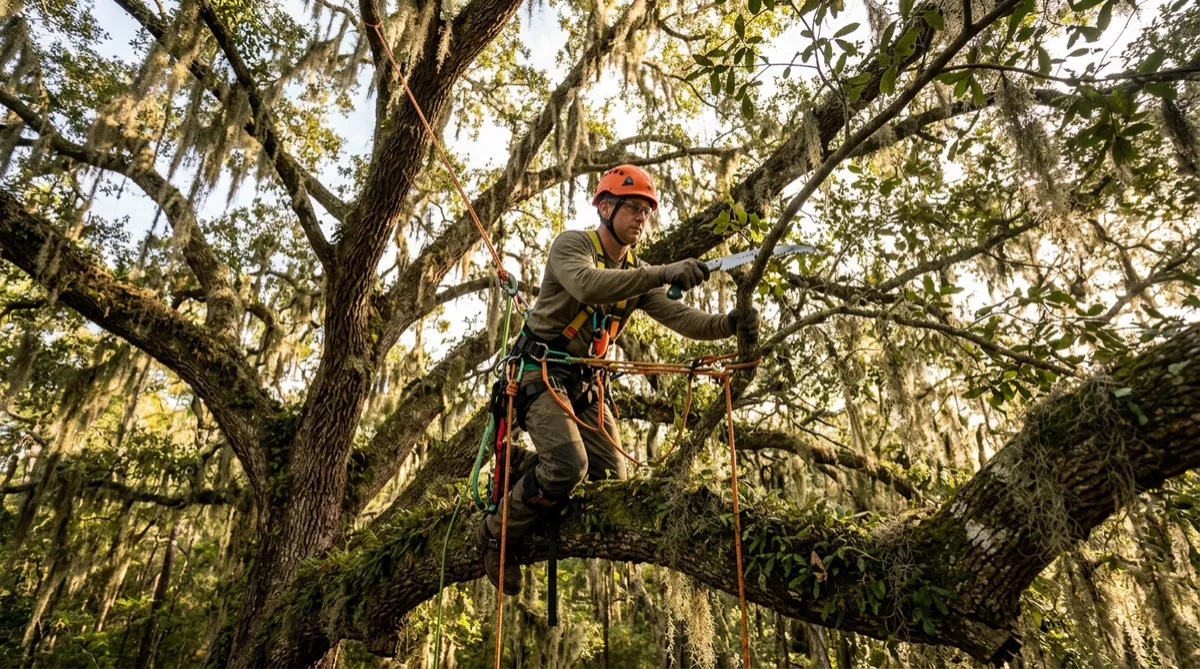
In northeast Florida, trees are part of the character of home: live oaks shade neighborhoods, palms frame coastal streets, and pines stand tall inland. Good pruning helps preserve that beauty while addressing dead or hazardous branches and making room for healthy growth. The right approach depends on the tree, its condition, the site and the season—not on a one-size-fits-all calendar or a dramatic cutback before a storm.

Why thoughtful pruning matters
Pruning can remove dead, broken, diseased or rubbing branches, improve clearance over a roof or walkway, and help a tree develop a sound structure while it is young. Removing a specific hazard may reduce the chance that a weak limb falls, but pruning cannot make a tree storm-proof. Strong winds, saturated soil, root problems and hidden decay can still cause failures.
In Volusia County, a shaded yard near Daytona Beach or Ponce Inlet faces different exposure than an inland property in DeLand. Flagler County homeowners in Palm Coast and Flagler Beach also contend with salt air and coastal winds. In every setting, preserving a tree's healthy crown and avoiding unnecessary wounds are better starting points than cutting as much as possible. Spanish moss commonly drapes local branches; its presence alone does not mean a tree is unhealthy or needs aggressive removal.
When should Florida trees be pruned?
There is no single best month for every species and every goal. A qualified arborist considers the tree's growth cycle, current condition, flowering or fruiting, nearby targets, and the kind of work proposed. Dead, broken or immediately hazardous branches should be assessed promptly, regardless of season. For planned structural pruning, work during a suitable period for that species and avoid unnecessary cuts during extreme heat, drought stress or other conditions that could add strain.
Plan ahead for hurricane season
Hurricane season is a good reminder to inspect trees before a storm is forecast, not a reason to strip or top them. Arrange an assessment well ahead of the season when possible, so there is time to identify defects and complete appropriate work safely. After a storm, stay clear of hanging limbs and leaning or split trees; a branch that appears caught can shift without warning. Do not attempt to cut a limb entangled with a power line.
Local weather and landscapes vary across the region. A property near the Daytona International Speedway, the Ponce de Leon Inlet Lighthouse or DeLeon Springs State Park may have different wind exposure and tree species than a coastal lot by Washington Oaks Gardens State Park or the Flagler Beach pier. Farther south, Marineland and the Castillo de San Marcos area are useful reminders of the varied coastal environments around St. Augustine. Inland yards near Ravine Gardens State Park in Palatka have their own site conditions. A local inspection is more useful than a blanket calendar.
Four pruning approaches—and what they mean
Crown thinning
Crown thinning selectively removes some smaller branches throughout the canopy to improve spacing and light penetration while retaining the tree's natural shape. It is not indiscriminate interior stripping. Removing too much foliage can reduce the tree's ability to make food and leave remaining limbs more exposed to wind.
Crown raising
Crown raising removes selected lower branches to provide clearance for people, vehicles, signs or buildings. The work should be gradual and preserve a balanced crown. Removing too many lower limbs at once can leave a tree with an unnaturally high, top-heavy canopy or create large wounds.
Crown reduction
Crown reduction decreases a tree's height or spread by cutting back to suitable lateral branches that can take over as the growing point. It is not the same as cutting every branch to a stub. Reduction may be appropriate when a specific branch conflicts with a structure, but a tree's species and condition determine whether the proposed amount is reasonable.
Deadwooding
Deadwooding means removing dead, broken or dying branches. It can reduce a particular hazard and improve the appearance of a tree, but it does not treat every underlying cause of decline. If branches are dying throughout the canopy, investigate possible root, pest, disease, soil or water issues rather than simply removing symptoms.

Avoid topping, “hurricane cuts” and crape murder
Topping cuts back large branches to stubs or indiscriminately lowers the whole canopy. The resulting shoots may be weakly attached, and large exposed wounds can invite decay. The tree may respond with rapid, poorly structured growth, creating more work rather than a durable solution. A so-called hurricane cut—severely stripping or shortening a tree in anticipation of a storm—does not guarantee safety and can harm the tree.
“Crape murder” is the common name for repeatedly cutting crape myrtles back to large stubs. It is unnecessary for routine care and can produce awkward regrowth and large wounds. Choose a crape myrtle suited to its location, preserve its natural form and make selective cuts only for a clear reason. If a tree is too large for its space, ask an arborist about realistic options instead of relying on severe cutting.
What a proper pruning cut looks like
Branches attach to the trunk or a larger limb at a branch collar, often visible as a slight swelling at the base. A proper removal cut is made just outside that collar, without cutting flush into the trunk or leaving a long stub. The collar contains tissue important to the tree's response to the wound. Wound paint is generally not a substitute for correct technique and is usually unnecessary unless a specific local recommendation applies.
For a heavy branch, trained workers use a sequence of cuts to control its weight and prevent bark from tearing down the trunk. They avoid climbing with chainsaws, cutting above shoulder height from a ladder, or working beneath an unsupported limb. These are not safe shortcuts for homeowners.
Power lines and other serious hazards
Branches touching or close to overhead electrical wires require special care. Keep people and tools away and contact the electric utility for guidance; do not prune, climb or move a branch near an energized line. A tree-care company should explain how it will handle line clearance and coordinate with the utility when needed. Also keep clear of branches over roofs, roads or occupied areas if they are cracked, hanging or under tension.
What a certified arborist contributes
An arborist assesses the whole tree, not just the branch that prompted the call. That can include species, structure, visible defects, canopy balance, root-zone conditions, nearby targets and the homeowner's goals. A credentialed professional should explain what work is recommended, what is optional, what risks remain and why. Certification is a meaningful qualification, but it does not replace a written scope, appropriate insurance or safe work practices.
For a tree with substantial decay, major structural defects, a disputed risk or a difficult preservation decision, ask whether an on-site evaluation by an appropriately qualified arborist is warranted. A careful explanation should distinguish observation from certainty: some defects are hidden, and no inspection can promise that a tree will never fail.
DIY pruning or professional help?
A homeowner may safely clip a small, reachable twig from stable ground with clean hand pruners. Do not use a ladder or make a cut near wires or structures; stop if you see cracks, cavities, major dead limbs or a sudden lean. Avoid overhead chainsaw work. Professionals are the safer choice for large or high branches, storm damage, climbing, rigging or work near buildings. In humid Florida weather, avoid repeated cuts that add stress; get advice if a limb's condition or removal is uncertain.
How often should live oaks, palms and pines be trimmed?
Live oaks
Live oaks need no automatic annual trim. Young trees may benefit from occasional structural pruning; mature trees should be assessed for condition, clearance and site. Address hazardous dead or broken limbs, but do not thin a healthy crown just to make it sparse.
Palms
For most palms, remove fully brown, dead fronds when needed; green fronds support the palm. Avoid the tight “hurricane” shape and never remove the growing point. Timing varies by species and frond condition, not a universal monthly schedule.
Pines
Established pines generally need little routine pruning. Remove dead, damaged or conflicting branches when justified; topping is not a way to control height. Leave tall-tree work to trained crews.
Choosing a trustworthy tree-care contractor
Ask who will assess and perform the work, the pruning objective, and how the crew will protect people and property. Get a written scope, and request current proof of appropriate liability and workers' compensation coverage. For a complex job, seek an appropriately credentialed arborist or a second opinion.
Be wary of blanket topping recommendations, storm-proof promises, pressure to decide immediately or unnecessary work without a clear reason. A reputable contractor explains options and welcomes questions. These checks apply in Daytona Beach, DeLand, Ponce Inlet, Palm Coast, Flagler Beach, St. Augustine and Putnam County.
After pruning: simple care and follow-up
Protect the root zone from digging, compaction and trunk injury. Water appropriately during dry periods, keep mulch away from the trunk, and do not apply wound sealant or fertilizer automatically. Follow any monitoring advice; after severe weather, inspect from a safe distance and leave hanging or wire-entangled limbs to qualified responders.
Frequently Asked Questions
Does pruning make my tree hurricane-proof?
No. Proper pruning can address selected defects and improve structure, but it cannot eliminate the risks from extreme wind, saturated ground, decay or root failure. A sound assessment and appropriate maintenance are more realistic goals than a guarantee.
Should I prune my trees before hurricane season?
It is sensible to arrange an inspection ahead of storm season so any justified work can be planned safely. Do not severely cut back a healthy tree as a storm precaution. If a tree is damaged during a storm, keep clear and seek qualified help.
Can I remove branches covered in Spanish moss?
Spanish moss is an epiphyte and its presence alone is not a reason to prune a tree. If the tree has dead, broken or hazardous limbs, assess those branches on their merits. Do not climb or cut large branches to remove moss.
How much of a tree can be removed in one visit?
There is no safe percentage that applies to every tree, species and condition. The amount should be limited to what the tree can reasonably tolerate and what the work objective requires. Ask the arborist to explain the proposed cuts and why they are needed.
When should I call a professional instead of pruning myself?
Call a professional for large or high branches, trees near wires or structures, storm-damaged limbs, climbing or chainsaw work, and visible cracks, cavities or sudden leaning. Stay well away from energized wires and suspended branches. When uncertain, arrange an assessment before cutting.
For thoughtful tree trimming and pruning in northeast Florida, contact Arborman Tree Services to discuss your trees and the right next step.
Website built by astreetgarage.com
