Tree Trimming & Pruning in Northeast Florida — 2026 Homeowner Guide
Tree Trimming & Pruning in Northeast Florida
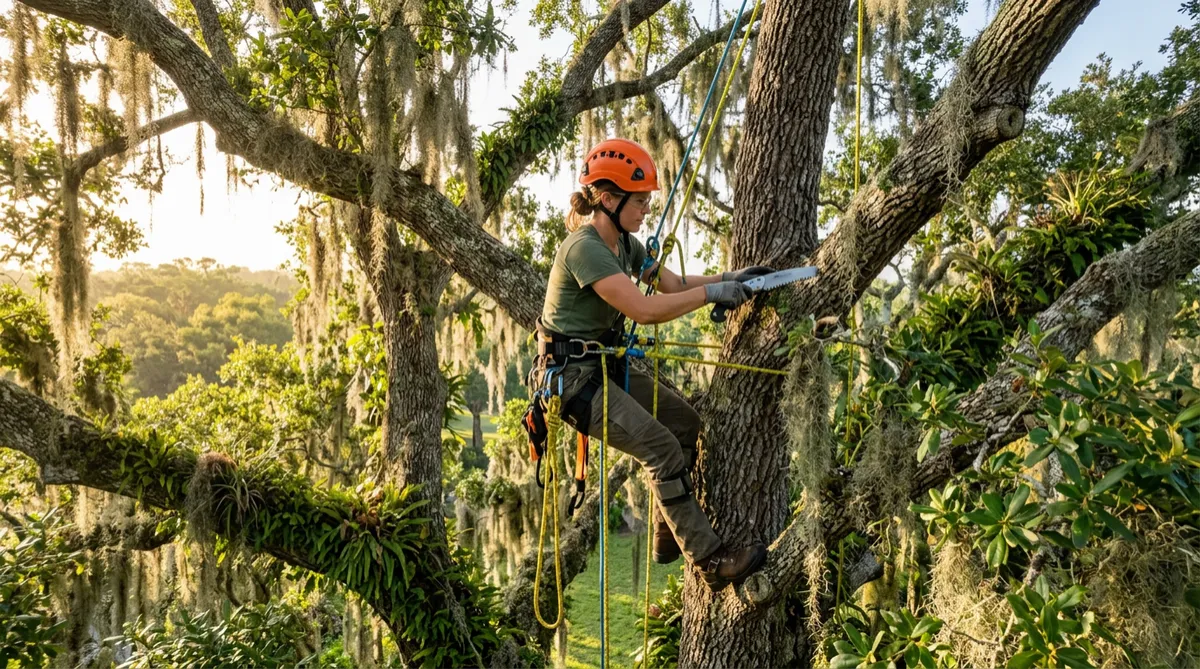
Healthy trees add shade, character, and a sense of place to Northeast Florida yards. But branches change as trees grow, storms pass, and landscapes mature. Thoughtful trimming and pruning can help a tree keep a sound structure, leave room around a home, and better suit its surroundings. The right approach depends on the species, its condition, and the reason for cutting.

For homeowners in St. Augustine, Green Cove Springs, Interlachen, Volusia County, Flagler County, St. Johns County, and Putnam County, tree care also means understanding local conditions. Coastal salt air, sandy soil, summer storms, and a mix of live oaks, palms, southern magnolias, and pines all shape what a tree may need. Whether you are near Daytona Beach, the St. Johns River, or Crescent Lake, start with the tree itself—not a one-size-fits-all cutting schedule.
Trimming and pruning: what is the difference?
People often use “trimming” and “pruning” interchangeably. Trimming commonly refers to shaping or maintaining clearance around a building, walkway, driveway, or view. Pruning is a more deliberate practice: removing selected branches to address structure, health, safety, or growth. In either case, the goal should be to make appropriate cuts while preserving the tree’s natural form and useful canopy.
Why homeowners schedule tree pruning
Pruning can help manage a tree’s growth and reduce conflicts with its surroundings. It may also make it easier to spot structural concerns and keep a landscape usable. Depending on the tree and the work, common goals include:
- Removing dead, broken, or diseased-looking branches: These limbs may be candidates for removal, though an arborist should assess uncertain symptoms and the tree’s overall condition.
- Improving clearance: Selected branches may be managed where they interfere with roofs, gutters, driveways, sidewalks, or other parts of a property.
- Addressing structure: A trained professional can assess crossing, rubbing, weakly attached, or crowded limbs and decide whether selective pruning is appropriate.
- Preparing for seasonal weather: A sound pruning plan can address identified defects and overgrowth before storm season. It cannot make a tree storm-proof or prevent all damage.
- Maintaining a natural shape: Thoughtful cuts can preserve a tree’s characteristic form instead of leaving a harsh or uneven outline.
In Volusia County and Flagler County, coastal exposure and strong winds make it especially useful to have concerning limbs evaluated before stormy periods. Salt air, sandy soil, site drainage, species, age, and past pruning all influence a tree’s response. A site-specific assessment is more useful than assuming every coastal tree needs the same treatment.
When is the best time to prune in Florida?
Timing depends on the species, the reason for pruning, and the tree’s condition. Some limited corrective work may be appropriate at different times of year, while larger structural decisions deserve careful timing and planning. Before hurricane season, a homeowner can look for visible issues and schedule an evaluation early enough to discuss options; pruning is not a guarantee against storm damage.
Oaks deserve particular care. Rather than applying a universal seasonal rule, consult a qualified arborist about the species, local conditions, and the purpose of the work. A professional can advise on timing and suitable practices for the individual tree. If a tree has freshly broken limbs or presents an immediate hazard, prioritize safety and seek qualified help rather than waiting for an ideal season.
Common pruning approaches
A professional may recommend one or a combination of pruning approaches, depending on the site and the tree:
- Crown cleaning: Selectively removing dead, damaged, or other identified problem branches.
- Crown thinning: Carefully removing selected branches within the crown to reduce crowding while retaining a balanced canopy. Over-thinning can be harmful.
- Crown raising: Removing or shortening selected lower branches to create appropriate clearance, while avoiding excessive removal.
- Crown reduction: Reducing a tree’s height or spread with suitable cuts to appropriate lateral branches, when the species and situation make this a reasonable option.
These terms describe different goals, not a checklist for every tree. The amount and location of cuts matter. A good plan should explain what will be removed and why, and should avoid stripping the crown or leaving large stubs.
How proper pruning cuts protect a tree
On many branches, a proper pruning cut is made just outside the branch collar—the slightly raised area where the branch joins its parent limb or trunk. This preserves the collar and avoids cutting flush into the trunk. A long stub is also undesirable. The cut should be made with suitable tools and placement, based on the size and position of the branch.
For a larger limb, a professional may use a three-cut method to help prevent bark from tearing as the branch comes down. The first cut is made on the underside, away from the trunk; a second cut farther out removes most of the limb’s weight; then a final cut removes the remaining stub just outside the branch collar. This is a technique for trained, properly equipped workers—not an invitation to climb or handle heavy limbs without experience.

Why topping and “hurricane cuts” are poor solutions
Topping removes large portions of a tree’s crown by cutting branches back to stubs or unsuitable points. It can leave large wounds, disrupt the tree’s natural form, and encourage poorly attached regrowth. It also does not reliably make a tree safer in high winds. Aggressive “hurricane cuts” that strip a canopy or leave a palm with only a few fronds are not a substitute for a sound, species-appropriate plan.
If a tree seems too large for its space, ask an arborist whether selective reduction is possible or whether another long-term option should be considered. The right recommendation may be to retain the tree, adjust the maintenance plan, or discuss removal if the tree’s condition or location warrants it. Avoid choosing a service based only on promises to make a tree storm-proof.
Palms need a different touch
Palms are not pruned like broad-canopy shade trees. Removing green fronds that are still upright can reduce the palm’s ability to support itself, and over-pruning can weaken it. A typical maintenance approach focuses on fronds that are fully brown or otherwise appropriate for removal, along with fruit or flower stalks when requested and suitable.
Do not remove fronds by climbing with spikes or by cutting close to the trunk. Avoid cutting the crown or removing healthy green growth to create a particular silhouette. A professional familiar with palm care can identify what is suitable for the species and the site.
Signs a tree may need an assessment
A tree does not need to be heavily cut just because it is large or drops leaves. Consider arranging an evaluation if you notice:
- Dead, hanging, split, or recently broken branches.
- Branches rubbing together, pressing against a roof, or obstructing a frequently used path.
- A change in the tree’s lean, visible cracks, or a damaged trunk or major limb.
- Branches close to overhead utility wires.
- Unusual leaf loss, dieback, or other changes that concern you.
These observations do not prove a tree is unsafe, and some conditions need assessment beyond pruning. If a limb is down near a utility line, keep away and contact the utility. Never touch a fallen wire or attempt to move a branch that may be in contact with one.
DIY pruning and safety
Small, reachable twigs may be manageable for a homeowner with appropriate hand tools and a clear understanding of the cut. The risk changes quickly when work involves a ladder, a chainsaw, a heavy limb, a roof, or a tree that is unstable. Branches can shift, fall unpredictably, or spring under tension. Falls and tool injuries can be severe.
Choose an insured professional for work that involves climbing, elevated cutting, large limbs, equipment, or proximity to buildings and wires. Ask what work is proposed, how the crew will protect people and property, and whether debris cleanup is included. For work near overhead utility lines, contact the utility; do not hire a tree crew to work on energized lines.
What to expect during a pruning visit
A visit should begin with a conversation about your concerns, such as clearance, storm preparation, or a particular branch. The tree and its surroundings can then be assessed, including access, nearby structures, visible defects, species, and the amount of work that may be suitable. You can ask the professional to explain the proposed cuts and what the finished canopy is expected to look like.
A clear estimate typically reflects the job’s actual conditions. Factors that can affect scope and cost include tree size and species, number and condition of trees, access for workers and equipment, proximity to structures or wires, the complexity of the cuts, and whether hauling or cleanup is requested. Ask which services are included before work begins; costs vary by property and project, so an on-site estimate is the way to understand your options.
In communities from St. Augustine and Green Cove Springs to Interlachen, and across St. Johns, Putnam, Flagler, and Volusia counties, local settings differ. A tree near the Bridge of Lions or Castillo de San Marcos has a different setting from one near Spring Park in Green Cove Springs, Ravine Gardens State Park near Palatka, or the sandy landscape around Crescent Lake. Volusia County and Flagler County homeowners may also consider coastal salt air and wind exposure. Landmarks can help describe a region, but the individual property—not the landmark—should guide the work.
Protecting trees and checking local rules
Before significant work, ask whether local requirements may apply to the tree or property. Rules can vary by location and circumstances, so check with your city or county about protected-tree rules rather than relying on a general online claim. If the property is in a neighborhood with additional requirements, check the applicable community guidance as well.
For trees near homes, public spaces, or well-known areas such as Washington Oaks Gardens State Park, Bulow Creek’s Fairchild Oak area, the Flagler Beach Pier, Ponce Inlet Lighthouse, or the Daytona International Speedway area, do not assume landmark proximity determines what work is allowed. Confirm the site’s jurisdiction and requirements with the relevant city or county. The same practical care applies near Daytona Beach, the St. Johns River, and other local features.
Frequently Asked Questions
How often should I have my trees pruned?
There is no single schedule that fits every species, age, and property. Have a tree assessed when you notice a concern, and ask an arborist what ongoing care is appropriate for that tree.
Will pruning make my tree hurricane-proof?
No pruning method can guarantee that a tree will withstand a storm. A thoughtful assessment can identify work that may be appropriate, but wind, soil conditions, tree health, and storm intensity still affect outcomes.
Can I cut branches that are close to power lines?
No—do not prune, climb, or move branches near overhead utility wires. Keep people away and contact the utility for guidance, especially if a limb or wire is down.
Is it okay to remove green palm fronds?
Removing healthy green fronds is generally not a sound routine practice and can stress a palm. A professional familiar with palm care can determine which fronds, if any, should be removed.
Do I need permission to prune a tree on my property?
Requirements depend on the location, tree, and circumstances. Check with your city or county about protected-tree rules before substantial work, and confirm any additional property or community requirements that may apply.
For careful tree trimming and pruning in Northeast Florida, contact Arborman Tree Services to discuss your trees and request an estimate. Share your goals—such as canopy care, clearance, or an assessment before storm season—and ask what approach is suitable for your property.
Website built by astreetgarage.com
