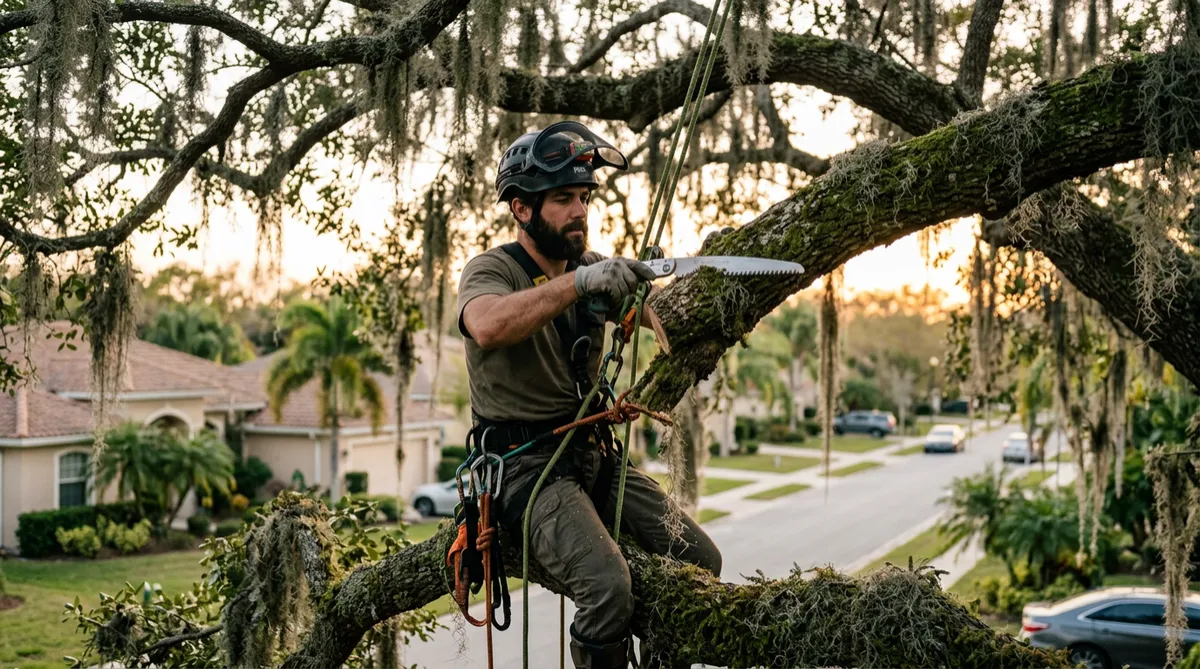
Tree Trimming & Pruning in Putnam and Flagler Counties
Trees bring shade, character, and value to a property, but a crowded canopy, a dead limb, or branches brushing a roof can call for attention. Good tree trimming is not simply cutting back whatever looks untidy. It is selective work that respects how a tree grows and what the property needs. In Putnam County, including Palatka and Interlachen, and in Flagler County, species, site conditions, and storm exposure all matter. Knowing what to request—and what to avoid—helps homeowners and property managers protect people, buildings, and the trees themselves.
Trimming, pruning, thinning, and reduction: what is the difference?
People often use “trimming” and “pruning” interchangeably. In everyday conversation, trimming may mean cutting back growth for clearance or appearance. Pruning is the more precise practice: choosing particular branches to remove or shorten for a defined reason, such as safety, structure, health, or clearance. A good plan starts with the goal, not with a predetermined amount to cut.
- Thinning selectively removes branches to reduce crowding while retaining the tree’s overall outline. It should not leave a bare outer shell or a few tufts of foliage.
- Crown reduction shortens the height or spread of a canopy with appropriate cuts back to suitable lateral branches. It is not the same as chopping the top off.
- Deadwooding removes dead, broken, or clearly declining branches that may pose a hazard or interfere with healthy growth.
- Clearance pruning addresses branches near a roof, walkway, driveway, sign, or other feature, without stripping the tree of needed lower limbs.
These terms describe different objectives, not permission to cut without limits. The species, age, condition, branch attachment, and available growing space influence what is appropriate. A qualified tree professional should explain which branches are proposed for removal and why. If the requested outcome cannot be achieved without severe damage, a responsible recommendation may be to consider another option rather than force the tree into an unsuitable shape.
Why thoughtful pruning matters
Pruning can address a specific hazard, maintain clearance, direct growth, admit light, and improve a landscape’s appearance. For young trees, early structural work can encourage well-spaced branches before defects become larger problems. The goal should be a clear, proportionate correction, not a dramatic cut simply because more work seems safer.
Pruning cannot guarantee that a tree will withstand a hurricane. Excessive thinning or one-sided cuts can stress a tree and change its balance. Ask the contractor to explain the goal and intended result in plain language before work begins.
What proper cuts look like—and what to avoid
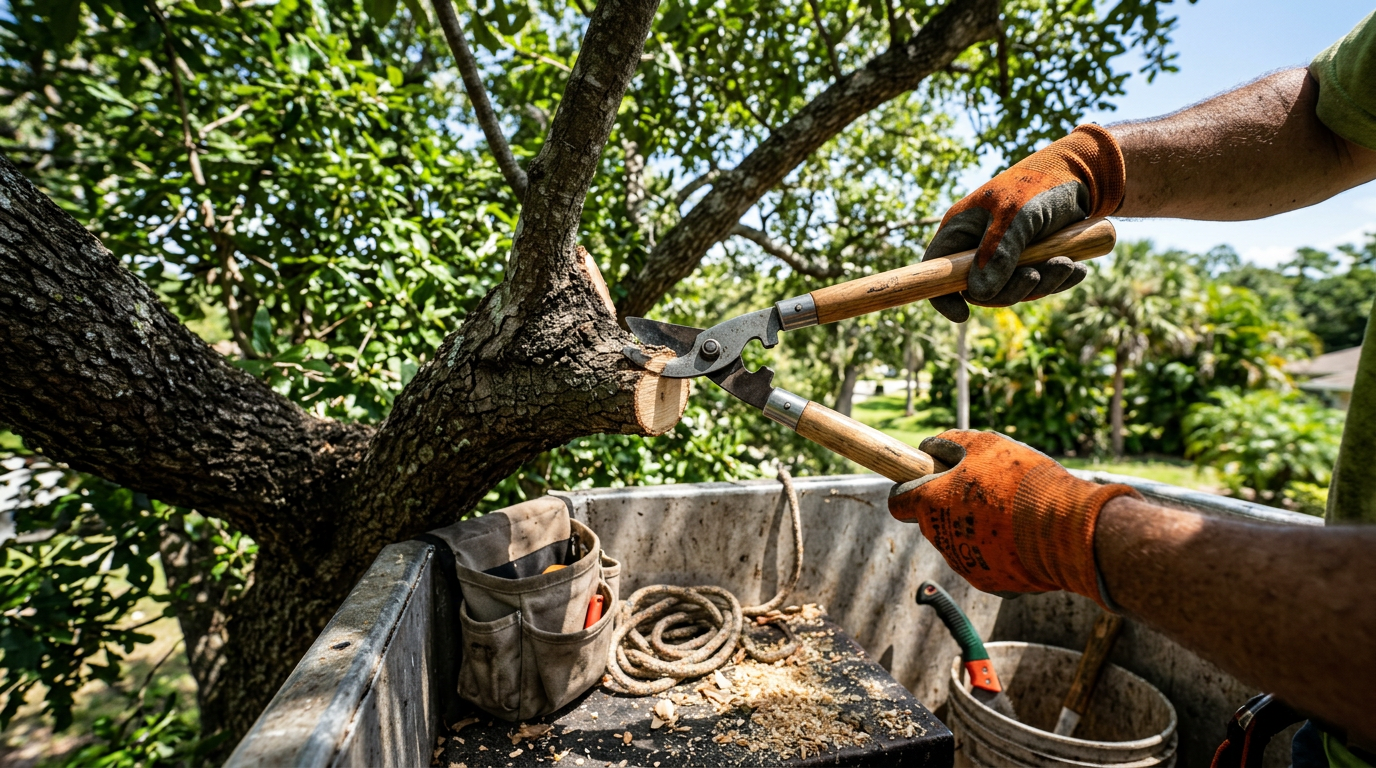
For a branch removal, the cut belongs just outside the branch collar—the slightly raised area where the branch joins the trunk or a larger limb. Cutting flush against the trunk removes protective tissue and can make the wound harder for the tree to close over. Leaving a long stub is also poor practice. The goal is a clean cut in the right place, not a wound covered with paint or a cut made for convenience.
Large or heavy limbs call for a three-cut method. A small undercut is made farther out along the limb, followed by a cut from above a little farther out to remove the branch’s weight. A final cut just beyond the branch collar removes the remaining stub without tearing bark down the trunk. This sequence is a principle of good practice, not a do-it-yourself instruction for a high, heavy, or unstable limb; those jobs require the right equipment and training.
Avoid topping: cutting back major limbs to stubs or flattening the crown. It often creates a harsh silhouette and can trigger clusters of weakly attached shoots. “Crape murder” is a familiar, blunt nickname for the severe, repeated topping of crape myrtles; it is not a pruning method. If height or clearance is a problem, ask whether careful reduction to suitable laterals—or a different landscape solution—is possible. Likewise, avoid “lion-tailing,” which strips inner branches and leaves foliage only at branch ends. Ask for pruning that follows the tree’s natural architecture and current ANSI A300 pruning standards.
Florida timing, live oaks, and storm preparation
Florida’s long growing season means many trees keep growing for much of the year, but that does not make every month equally suitable for every job. Routine structural pruning, removal of an immediate hazard, and preparation ahead of storm season are different situations. Plan non-urgent work with the tree’s species and condition in mind, and leave time for a professional assessment before seasonal storms arrive. UF/IFAS guidance emphasizes that correct pruning is an important part of preparing trees for hurricanes; it is not a last-minute substitute for sound structure and maintenance.
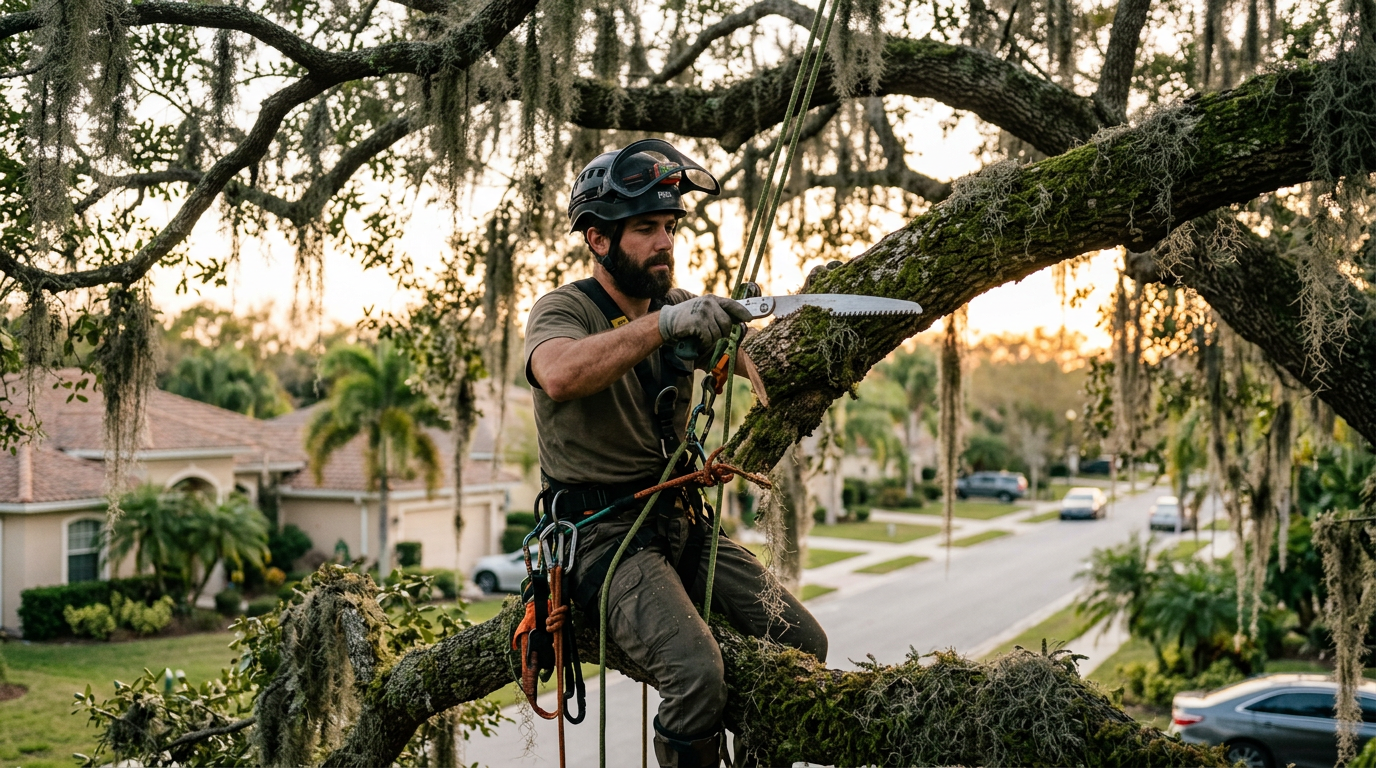
Live oaks deserve particular care. Their broad limbs and shade are familiar across North Florida, and many carry Spanish moss. Moss by itself is not a reason to strip a live oak’s canopy or remove every limb. Instead, evaluate the branches, attachments, clearance, and overall condition. Oak wilt is a serious disease in some regions, but UF/IFAS describes it as occurring in parts of Texas and perhaps isolated areas elsewhere; that does not justify assuming the same risk calendar applies everywhere in Florida. If oak wilt is known in the area or suspected, ask a local extension professional or qualified arborist about current precautions and timing. Do not postpone urgent hazard work based on generic seasonal advice.
Before hurricane season, an assessment can identify dead or damaged limbs, branches interfering with structures, and structural concerns that deserve attention. Pruning cannot promise storm-proof trees. Avoid a rushed, heavy cut intended to make a tree “windproof,” and do not wait until a storm warning to arrange routine work. After a storm, stay clear of hanging limbs and damaged trees; hidden cracks, unstable branches, and downed wires can make a familiar yard dangerous.
Palms and other trees need species-specific care
Palms are not pruned like broadleaf shade trees. Removing green fronds simply to make a palm look sparse—the practice often called a “hurricane cut”—is unnecessary and can harm the palm by removing foliage it still needs. Maintenance generally focuses on dead or broken fronds and other specific hazards, not a tight cluster of fronds at the crown. A palm professional can identify what should stay, what can be removed, and whether seed or fruit stalks are a concern at that site.
Safety limits and choosing a tree company
Homeowners can safely handle only small, reachable branches when they can stand firmly on the ground, use hand tools safely, and keep clear of people and property. Do not climb with a chainsaw, work from a ladder with cutting tools, or try to control a heavy limb as it falls. A branch can twist, split, or swing unpredictably. Leave large, high, cracked, leaning, or hard-to-reach limbs to trained professionals with suitable equipment.
Branches close to electrical lines are not a do-it-yourself job. Keep away and contact the utility for guidance; never touch a branch, ladder, tool, or tree that may be in contact with a line. If a line is down, assume it is energized and keep others away. For a hanging limb after a storm, block access from a safe distance and arrange professional help.
When comparing tree-care proposals, ask:
- What is the goal of each cut, and which branches will be removed or shortened?
- Will the work follow the current ANSI A300 pruning standards?
- Who will supervise the work, and can the company explain the crew’s qualifications and safety practices?
- How will the crew protect people, buildings, fences, and nearby landscaping?
- Will any work be near utility lines, and has the utility been contacted where needed?
Ask whether an ISA Certified Arborist will assess or supervise the work, and what relevant credentials the company holds. These are sensible questions to ask any contractor, not claims about a particular provider. A clear written scope helps prevent misunderstandings: it should distinguish removal of deadwood from thinning, reduction, or clearance and state what will remain. Be cautious of anyone who proposes topping as routine maintenance or promises that pruning will make a tree hurricane-proof.
Where we work
Arborman Tree Services serves homeowners and property managers in St. Augustine, Green Cove Springs, Interlachen, Volusia County, Flagler County, St. Johns County, and Putnam County. This article focuses on Putnam County—including the Palatka and Interlachen area—and Flagler County. The settings differ, but the same practical questions apply: which branches actually need attention, what cut suits the tree, and how can the work protect both the property and the tree?
Local landmarks offer a sense of the varied landscapes in this service region: Ravine Gardens State Park in Palatka, the St. Johns River alongside Palatka, Washington Oaks Gardens State Park near Palm Coast, and the Flagler Beach Pier. Around homes and commercial properties nearby, mature shade trees, coastal plantings, and palms call for different approaches. A site-specific assessment is more useful than applying one trimming pattern to every yard.
Frequently Asked Questions
How often should I have my trees pruned?
There is no single interval for every tree. Have a tree assessed when you notice dead or broken branches, rubbing limbs, clearance concerns, storm damage, or a change in condition. Young trees may benefit from structural guidance, while established trees may need only targeted maintenance. Ask for a reasoned plan tied to the tree, not a fixed cutting schedule for the whole property.
Is the best time to prune always winter?
No. Timing depends on species, purpose, growth stage, and local pest or disease concerns. In Florida, do not apply a calendar rule from another region without checking whether it fits local conditions. For a live oak in an area with known oak wilt concerns, ask a local extension professional or qualified arborist about precautions. Address urgent hazards promptly and safely.
Can pruning keep a tree from falling in a hurricane?
No pruning can guarantee that a tree will withstand a hurricane. Good structural maintenance can address specific defects and improve a tree’s form, but storms bring unpredictable wind, rain, soil saturation, and debris. Arrange an assessment well ahead of storm season, avoid severe cuts, and follow local emergency guidance when a storm threatens.
Should Spanish moss be removed from my live oak?
Not simply because it is present. Spanish moss is commonly seen on live oaks in Florida, and its presence alone does not mean the tree needs aggressive pruning. If branches are dead, damaged, crowded, or creating a specific hazard, ask a tree professional to evaluate those conditions directly and explain the proposed work.
Can I trim branches near a power line myself?
No. Stay away from the branch and line, and contact the utility for guidance. Do not use a ladder, pole saw, or other tool near electrical lines, and keep other people away from the area. A qualified professional can coordinate with the utility where necessary before any tree work begins.
If you have a tree that needs attention in Putnam County, Flagler County, or another service area, request a free estimate from Arborman Tree Services. Share what concerns you and where the tree is on the property so the proposed work can be discussed clearly.
Website built by astreetgarage.com
